On this page
Short answer
Mold in bathroom spaces comes from steam and leaks. Most of it sits on hard surfaces you can scrub off with detergent and water, but porous materials like drywall or ceiling tiles may have to be removed. The EPA says you can usually handle a patch less than about 10 square feet yourself. To stop it coming back, run the bathroom fan or open the window when showering.
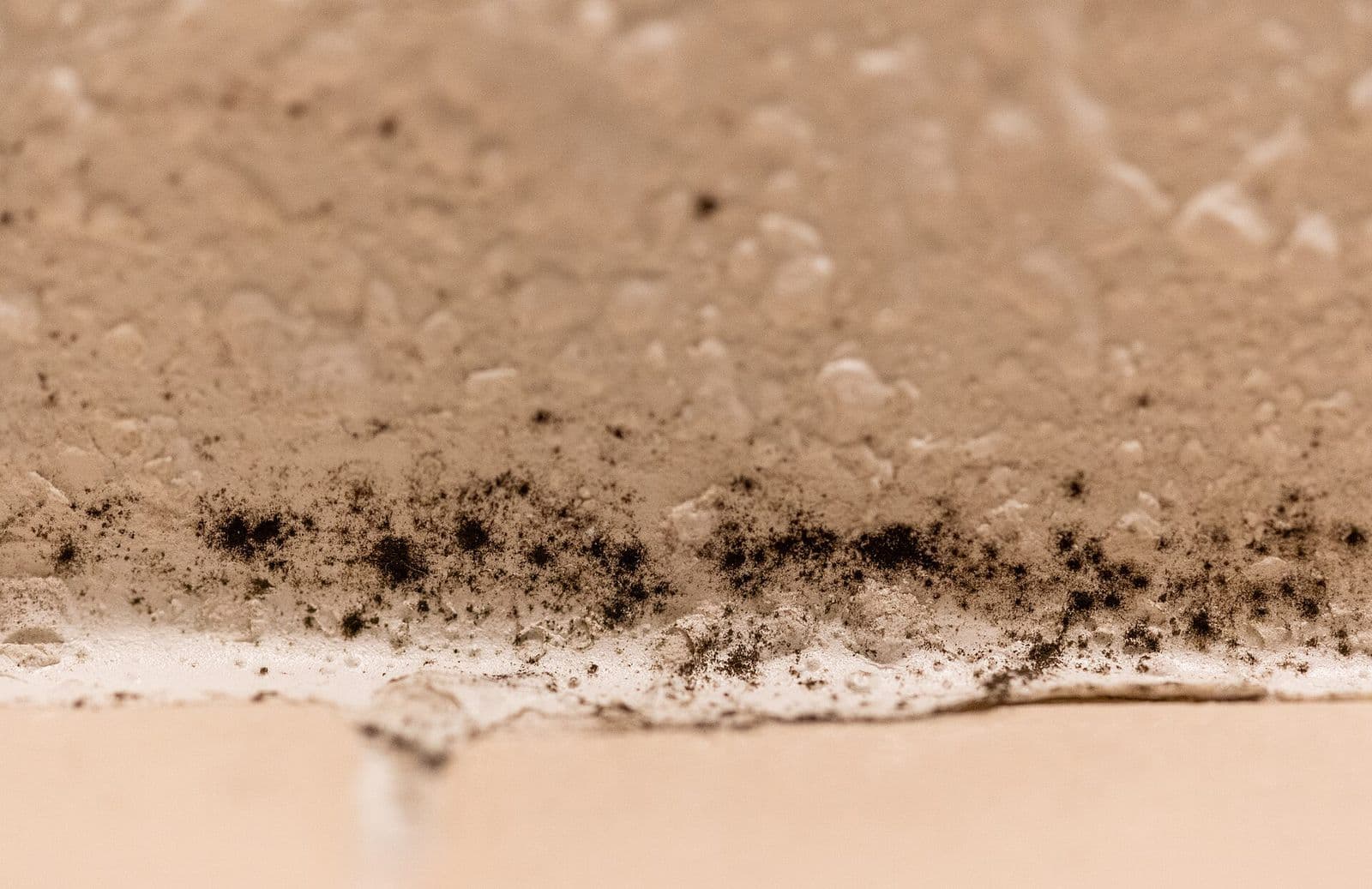
Mold in bathroom corners, on the ceiling, under the sink or around the toilet is one of the most common mold problems in any home. A bathroom gets wet every day, and in much of Texas the air outside is humid too. This guide covers the whole room: where mold grows, how to clean each surface, how to stop it, and when it becomes a job for a professional.
If your problem is mainly grout and caulk, see our mold in shower guide. This page covers the rest of the bathroom.
Why mold grows in the bathroom
Mold needs moisture, and bathrooms produce a lot of it. The Department of Energy's Building America Solution Center says baths and showers release a half pint of water for every 5 minutes the shower is running. It adds that with no exhaust fan, this moisture can lead to mold and mildew on tile, walls, and ceilings.
The EPA lists bathroom tile and grout among the common sites of indoor mold, and notes that a little condensation, in a bathroom or around a window sill, for example, can be enough.
The main causes:
| Cause | What it looks like | Where to look |
|---|---|---|
| No fan, a weak fan, or a fan nobody runs | Spots on the ceiling, upper walls and corners | Above the shower, ceiling corners |
| Fan venting into the attic | Bathroom looks fine; mold appears in the attic | Attic above the bathroom |
| Slow plumbing leak | Stains, soft spots, musty smell in one place | Under the sink, behind the toilet, behind the tub |
| Overflow or spill not dried | Swollen baseboards or vanity bottoms | Floor edges, inside cabinets |
| Bathroom carpet or rugs that stay wet | Musty smell from the floor | Under bath mats and carpet |
Table: common causes of bathroom mold.
TDLR, the Texas agency that licenses mold professionals, lists pipe leaks, roof leaks, floodwaters, sewage back-ups and over-flowing toilets/sinks/bathtubs as common moisture problems. The EPA adds that places that are often or always damp can be hard to maintain completely free of mold, which is why bathrooms need routine care, not one big cleanup.
The exhaust fan: your best defense
An exhaust fan removes steam before it settles on cold surfaces. The CDC says to use exhaust fans in the kitchen and bathroom that vent to outside your home.
Check where your fan vents. Oregon State University Extension warns that if the exhaust flows into the attic, it may can cause mold to grow there. The Department of Energy says it is quite common to find houses in which kitchen ranges, bathroom exhaust fans, and dryers vent their moist air into the attic rather than outside where it belongs. If you can, look in the attic above the bathroom: the duct should run to a roof or wall cap, not end in the insulation. Our mold in attic guide covers what to do if it doesn't.
Run it long enough. Turn it on when you start the shower and leave it on until the mirror and walls are clear. North Dakota State University Extension describes low-volume bathroom fans that either run continuously or are controlled by a humidistat, switching on when humidity rises.
Replace a weak or noisy fan. People skip fans that are loud. ENERGY STAR says its certified ventilation fans use about 48% less energy than standard models and provide better efficiency and comfort with less noise.
No fan? The EPA's fallback is to open the window while showering, and to increase ventilation or air movement by opening doors and/or windows, when practical.
How to get rid of mold in bathroom surfaces
Before you start, measure the area. If the mold covers more than about 10 square feet, the EPA points you to professional guidance (see the last section). For smaller patches:
- Fix the water first. Stop the leak, repair the fan or dry the floor. The EPA says that if wet or damp materials or areas are dried 24-48 hours after a leak or spill happens, in most cases mold will not grow.
- Protect yourself. The EPA's minimum for small cleanups is gloves, goggles/eye protection and an N-95 respirator. It recommends goggles that do not have ventilation holes.
- Scrub hard surfaces with detergent and water. That is the EPA's standard method: scrub mold off hard surfaces with detergent and water, and dry completely.
- If you use bleach, dilute it and air out the room. The CDC's limit is no more than 1 cup of household laundry bleach in 1 gallon of water. The EPA says bleach is not recommended as a routine practice during mold cleanup, so detergent is the better default.
- Dry everything. Run the fan, open the door and wipe surfaces dry.
- Throw out porous items that stay moldy. The EPA says absorbent or porous materials, such as ceiling tiles and carpet, may have to be thrown away if they become moldy.
Never mix cleaners. Bathrooms are full of products that react with bleach. The Washington State Department of Health lists toilet bowl cleaners and vinegar among acid products, and says that when chlorine bleach is mixed with an acid, chlorine gas is given off. See our vinegar vs bleach for mold guide.
Surface by surface
| Surface | What to do | More detail |
|---|---|---|
| Shower grout and caulk | Scrub grout; replace caulk that's moldy inside | Mold in shower |
| Tub and tub caulk | Scrub the tub; cut out moldy caulk | Mold in bathtub |
| Toilet bowl and tank | Scrub; check for mineral stains | Mold in toilet |
| Ceiling | Wipe painted ceilings; check above if it returns | Mold on ceiling |
| Painted walls | Scrub sealed paint; drywall may need cutting out | Mold on walls |
| Window and sill | Wipe glass and frame; fix condensation | Mold on windows |
| Vanity cabinet | Clean the inside; look for a drain or supply leak | This page |
Table: where to go for each bathroom surface.
Mold in bathroom ceiling
The ceiling is the most common spot after the shower, because steam rises and condenses there. The DOE Solution Center specifically names tile, walls, and ceilings as the surfaces at risk without a fan. UF/IFAS Extension notes that steam wets the ceiling and the walls and suggests shorter showers, and use cooler water.
Small spots on a painted ceiling can usually be wiped clean. Repainting doesn't fix it: the EPA says do not paint or caulk moldy surfaces. If the stain spreads beyond the shower area, or the drywall sags or feels soft, the moisture may be coming from above. Our mold on ceiling guide explains how to tell.
Black bathroom mold: does the color matter?
Black bathroom mold on grout, caulk or ceilings is common, and the color alone tells you little. The CDC says you do not need to know the type of mold, and the EPA says that in most cases, if visible mold growth is present, sampling is unnecessary. Treat it the same way as any other mold: remove it and fix the moisture.
The CDC notes that for some people, mold can cause a stuffy nose, sore throat, coughing or wheezing, burning eyes, or skin rash. If you're worried about symptoms, see a doctor. A mold test can't diagnose illness, and TDLR also recommends people consult a health care provider if they are concerned about the effects of mold on their health. For more, read is black mold dangerous? and our black mold guide.
Preventing bathroom mold
- Dry wet surfaces. TDLR says to use a towel or squeegee to dry off wet surfaces after bathing.
- Clean regularly. TDLR's tip sheet says to clean bathroom with mold-killing products; UF/IFAS says to clean showers/tub regularly so mildew cannot grow on soap scum and moisture.
- No carpet. TDLR says do not carpet bathrooms.
- Keep humidity down. The EPA recommends indoor humidity below 60 percent (ideally between 30 and 50 percent). TDLR recommends no higher than 50%, and says an air conditioner or dehumidifier will help. A small dehumidifier for mold can help in a windowless bathroom.
- Use mold-inhibiting paint. The CDC suggests you add mold inhibitors to paints before painting, on clean, dry surfaces only.
- Check under the sink every few months for drips and swelling.
When you need bathroom mold remediation
Call a professional when:
- It covers more than about 10 square feet. The EPA says if mold growth covers more than 10 square feet, consult its professional remediation guidance.
- The water was dirty. If the damage was caused by sewage or other contaminated water, such as a toilet overflow, the EPA says to call a professional with that experience.
- You suspect hidden mold. The EPA says mold may be hidden on the back side of dry wall, wallpaper, or paneling and inside walls around leaking pipes. Our mold in walls guide covers this.
- It keeps returning right after a thorough cleaning.
Texas licensing. TDLR says that in most instances, areas of visible mold less than 25 contiguous square feet in area may be cleaned or removed by people who are not licensed. Bigger jobs generally need a licensed mold remediation contractor (some owner exemptions apply).
Cost. Fixr puts bathroom mold removal at $500 to $1,500 and warns that if mold is behind a tub, sink or vanity, the project's cost may increase dramatically. See our mold remediation cost guide.
Who to hire. For the cleanup, use a licensed mold removal company. If you want an assessment first, hire a separate mold testing company: Texas law says a license holder may not perform both mold assessment and mold remediation on the same project. Find companies in San Antonio, Dallas or anywhere in Texas, and confirm any license with our license check.
Renters: tell your landlord in writing. TDLR says conversations should be followed up with a letter to the landlord. See mold in your apartment in Texas.
FAQ
How do I get rid of mold in bathroom surfaces for good?
Clean it, then remove the moisture that feeds it. Scrub hard surfaces with detergent and water, dry them, and run the bathroom fan or open the window when showering. Make sure the fan vents outside, not into the attic.
Why does mold keep growing on my bathroom ceiling?
Usually steam with nowhere to go. The DOE says that with no exhaust fan, this moisture can lead to mold and mildew on tile, walls, and ceilings. If the fan works and the spot still grows, check for a leak from above.
Is black bathroom mold dangerous?
It's usually ordinary mold, and the CDC says you do not need to know the type of mold to deal with it. Some people get symptoms like a stuffy nose or wheezing. If you're concerned about your health, see a doctor; a mold test can't diagnose illness.
How much does bathroom mold remediation cost?
Fixr puts it at $500 to $1,500 for a typical bathroom. Mold behind a tub, sink or vanity can push the cost much higher, since walls have to be opened.
Can I clean bathroom mold myself in Texas?
For small areas, yes. The EPA says you can usually handle a patch less than about 10 square feet, and TDLR says areas under 25 contiguous square feet can in most instances be handled by people who aren't licensed.
Licensed Mold Pros directory
Find a licensed mold removal company
Removal companies hold a Texas mold remediation license. They remove the mold to a plan written by a separate, licensed testing company.
Sources
- EPA: A Brief Guide to Mold, Moisture and Your Home (accessed Oct 2026)
- EPA: What are the basic mold cleanup steps? (accessed Oct 2026)
- EPA: Mold Course Chapter 1 (accessed Oct 2026)
- EPA: Mold Course Chapter 6 (accessed Oct 2026)
- CDC: Mold (Sept 26, 2024)
- U.S. DOE Building America Solution Center (PNNL): Bathroom Exhaust Fan (accessed Oct 2026)
- U.S. DOE: Guide to Durable Attics (PDF) (accessed Oct 2026)
- ENERGY STAR: Ventilation Fans (accessed Oct 2026)
- Oregon State University Extension: How to get rid of mold in my home? (accessed Oct 2026)
- NDSU Extension: Window Condensation a Common Problem (Jan 14, 2011)
- UF/IFAS Extension: Keeping It Clean: Controlling Mildew (PDF) (accessed Oct 2026)
- Washington State Department of Health: Dangers of Mixing Bleach with Cleaners (accessed Oct 2026)
- TDLR: Help! I have mold (Mold Remediation Consumer Protection) (Jan 2025)
- Fixr: Mold Remediation Cost (updated Aug 29, 2025)
- Texas Occupations Code § 1958.155 (texas.public.law) (accessed Oct 2026)
We link every number, rule and health claim to its source. See our editorial policy.