On this page
Short answer
Mildew is mold. The EPA says mildew refers to certain kinds of mold or fungus, usually thin, flat growth on damp surfaces such as shower walls and windowsills. It can be white, gray or black, and it gives off a musty smell. On hard surfaces it cleans off with detergent and water, and it stays gone only if you keep the area dry; the CDC says to keep indoor humidity no higher than 50%.
Mildew is the everyday name for the thin film of mold that shows up on grout, window frames, closet walls, old books and the leather jacket you forgot at the back of a closet. It's common, it's usually shallow, and it's very fixable. This guide explains what mildew is, what white mildew looks like, where the mildew smell comes from, and how to get rid of mildew on the surfaces where it shows up most.
If you're trying to decide whether a patch is mildew or something deeper, see our mold vs mildew comparison first. This page is about dealing with mildew itself.
What is mildew?
Mildew isn't a separate organism from mold. The EPA says mildew refers to certain kinds of mold or fungus and that the term is often used generically for mold growth with a flat growth habit. The EPA's mold course opens the same way: molds are also called fungi or mildew.
Texas regulators use the word the same way. The TDLR mold FAQ says a lot of people use this name to describe small black spots of fungus that can start to grow on damp surfaces.
So "mildew" is a description, not a species. It tells you the growth is thin and on the surface. That's good news, because surface growth on a hard material is a cleaning job, not a demolition job.
Mildew on plants is a different thing
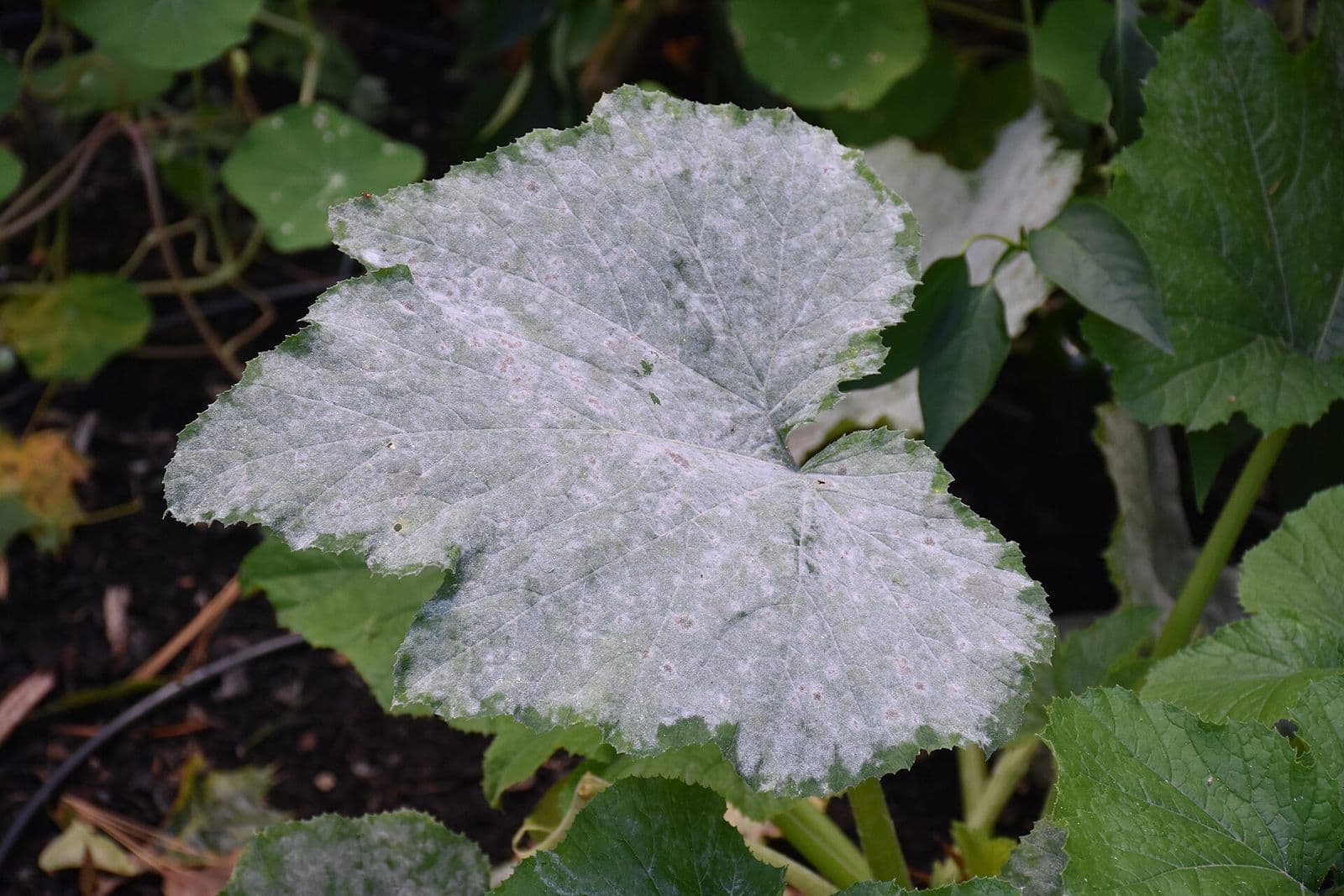
If you searched "mildew" because of white powder on your crape myrtle or squash leaves, that's a plant disease. University of Florida's gardening extension explains that powdery mildew shows up as circular white spots that can be anywhere on the leaf, while downy mildew has an angular and gray appearance limited by the leaf veins. The rest of this guide is about household mildew.
What does mildew look like?
Household mildew is usually flat and thin. Bob Vila describes it as white or gray and dry, or even powdery, and says it always appears flat. TDLR's description of small black spots on damp surfaces is just as common, especially in showers and on window caulk.
What mildew looks like on common surfaces
| Where | What you usually see |
|---|---|
| Shower grout, caulk, tile | Small black or gray spots; the EPA says mildew often lives on shower walls, windowsills |
| Window frames and sills | Black specks where condensation collects; the EPA says a little condensation around a window sill can be enough for mold |
| Leather shoes, bags, furniture | A white or gray dusty film |
| Closet walls and stored clothes | Gray or white patches, often with a musty smell |
| Painted walls | A dirty-looking discoloration; Virginia Tech Extension says molds feed on the paint |
Table: common mildew appearance by surface. Sources linked where available.
Color won't tell you how harmful it is. The CDC says mold can look like spots of many different colors, and NIOSH says the color of mold does not necessarily indicate that it is more or less dangerous. Our types of mold guide goes deeper on colors.
White mildew
White mildew is just mildew that happens to be pale. The EPA notes that molds come in many colors including white. You may notice white mildew on leather, wooden furniture, stored items and closet walls.
One caution: on furniture, a white film that appears after cleaning may not be mildew at all. UF/IFAS Extension's storm-cleanup sheet notes that if a white film develops after cleaning wood furniture, wax buildup has probably occurred.
Why mildew smells musty
The mildew smell is one of the first signs people notice. Bob Vila describes it as a milder, musty smell, and the EPA says that in unaired places such as basements, molds can produce a strong musty odor.
A musty smell with no visible growth deserves a look. The EPA says you may suspect mold, even if you can't see it, if a building smells moldy. University of Georgia Extension suggests checking behind cabinets, behind wallpaper, and under carpeting. Our mold smell in house guide walks through where to search.
The good news: once the area is truly dry and the growth is cleaned off, the smell usually goes too. Virginia Tech Extension notes that usually musty odor disappears if the area is dry. Air fresheners only cover it.
What mildew needs to grow
Mildew needs moisture and something to feed on, and household dirt is enough. Virginia Tech Extension notes that soil on articles can supply sufficient food for mildew, and that greasy films on kitchen and bathroom walls contain many nutrients for mildew organisms. The EPA says molds can thrive on organic matter including clothing, leather, paper.
Moisture is the deciding factor. The EPA says moisture is the most important factor influencing mold growth indoors. Everyday life adds a lot of it: Virginia Tech Extension notes that cooking, laundering and bathing may add two or more gallons of water to a house in a day without good ventilation.
That's why mildew is so common in Texas. NOAA says the Gulf serves as the primary source of moisture for the state, and that moisture is most available to eastern Texas, from Houston and Beaumont to Corpus Christi.
How to get rid of mildew
Before you clean, deal with the moisture. Virginia Tech Extension puts it in capitals: eliminate the source of moisture or mildew will soon be back.
Wear gloves and eye protection. For small mold cleanups the EPA's minimum is gloves, an N-95 respirator, and goggles/eye protection. Open a window. If you use bleach, the CDC says to use no more than 1 cup of household laundry bleach in 1 gallon of water and never mix bleach with ammonia or other cleaners.
Bathrooms: tile, grout and caulk
The EPA says to scrub mold off hard surfaces with detergent and water, and dry completely. An old toothbrush works for grout. More detail is in mold in the shower and mold in the bathroom.
If the pink or orange film in your shower isn't black or gray, it may not be mildew at all; see types of mold for the bacteria that cause it.
Painted walls and ceilings
Clean with detergent and water, rinse and dry. UF/IFAS Extension's sheet suggests scrubbing mildewed interior paint or plaster with 3/4 cup household bleach to 1 gallon water, then letting it dry thoroughly before repainting. Don't paint over mildew; the EPA says do not paint or caulk moldy surfaces.
If the stain comes back in the same spot, or the drywall is soft or stained through, it's no longer surface mildew. See mold on walls and mold on ceilings.
Wood furniture
UF/IFAS Extension recommends vacuuming off the mildew, then cleaning with a soft cloth dipped in a mild detergent and water solution and wrung almost dry, working a small area at a time and drying each area before moving on. It notes that mildew often feeds on the dirt and greasy film that builds up on furniture. See mold on wood and mold on furniture.
Leather
Take the item outside and brush off the loose growth. University of Georgia Extension then advises cleaning with water and a non-phosphate detergent and wiping with a 50/50 mix of water and isopropyl alcohol, then drying and conditioning. Test an inconspicuous spot first. Full steps are in mold on leather.
Books and paper
UF/IFAS Extension says to dry damp books in a breezy place and brush off loose mold with a clean, dry cloth outdoors. If pages are still damp, it suggests sprinkling cornstarch between leaves, leaving it several hours, then brushing it off. See mold on books and paper.
Upholstery, mattresses and rugs
Vacuum or brush off the mildew, ideally outdoors, and dispose of the vacuum bag, since UF/IFAS notes it will contain mildew spores. Then sun-dry if you can. Be realistic about mattresses: NC State Extension says they are seldom salvageable if damaged by water and mold. See mold in a mattress and mold in carpet.
Clothes and fabric
Wash at the hottest temperature the label allows. Our mold on clothes guide has the full method, including bleach-safe and bleach-free options.
How to keep mildew from coming back
Mildew prevention is humidity control plus air movement.
- Keep humidity down. The EPA recommends indoor humidity below 60 percent (ideally between 30 and 50 percent). An air conditioner or dehumidifier does this; see dehumidifier for mold.
- Vent the bathroom and kitchen. Run exhaust fans while cooking and showering, and for a while after.
- Dry the shower. TDLR's prevention tips say to use a towel or squeegee to dry off wet surfaces after bathing.
- Let closets breathe. Virginia Tech Extension suggests opening the closet doors, hanging clothes loosely, and making sure clothing is dry before you put it away.
- Keep things clean. Dirt and grease feed mildew, so regular cleaning of bathroom and kitchen walls helps.
- Dry spills and leaks fast. The EPA says to dry water-damaged areas and items within 24-48 hours.
When mildew is more than mildew
Surface mildew is a cleaning job. Call for help when:
- It covers a large area. The EPA suggests professional help when growth covers more than 10 square feet. In Texas, TDLR says unlicensed people may generally clean areas less than 25 contiguous square feet; bigger jobs call for a licensed mold removal company.
- It keeps coming back after cleaning, which points to a hidden leak. A licensed mold testing company can find the source. Texas law says the tester and the remover may not be the same license holder on the same project.
- Someone has symptoms. The CDC says mold can cause a stuffy nose, sore throat, coughing or wheezing, burning eyes, or skin rash in some people. A doctor, not a mold test, decides whether mold is the cause.
You can verify any company's TDLR license with our license check and find companies across Texas, including Austin and Corpus Christi.
FAQ
What is mildew?
Mildew is a type of mold. The EPA says mildew refers to certain kinds of mold or fungus, usually flat growth on damp surfaces like shower walls and windowsills. It's a common name, not a separate species.
What is white mildew?
It's mildew that grows in a pale color; the EPA notes that molds come in many colors including white. It's common on leather, wood furniture and in closets. Clean it the same way as any other mildew and lower the humidity.
How do you get rid of mildew for good?
Clean it off (detergent and water on hard surfaces), then remove the moisture that let it grow. Keep humidity below 60 percent (ideally between 30 and 50 percent), use exhaust fans, and dry the shower after use.
How do I get rid of the mildew smell?
Find and clean the growth, then dry the area. Virginia Tech Extension notes that usually musty odor disappears if the area is dry. If you smell mildew but can't see it, check behind furniture, under carpet and inside cabinets for hidden growth.
Is mildew harmful?
Mildew is mold, so it can bother sensitive people. The CDC says people with asthma or mold allergies may have severe reactions. If you're worried about symptoms, see a doctor.
Licensed Mold Pros directory
Find a licensed mold removal company
Removal companies hold a Texas mold remediation license. They remove the mold to a plan written by a separate, licensed testing company.
Sources
- EPA: What is the difference between mold and mildew? (accessed Oct 2026)
- EPA: Mold Course Chapter 1 (accessed Oct 2026)
- EPA: Mold Course Chapter 2 (accessed Oct 2026)
- EPA: Mold Course Chapter 6 (accessed Oct 2026)
- EPA: A Brief Guide to Mold, Moisture and Your Home (accessed Oct 2026)
- EPA: Mold Cleanup in Your Home (accessed Oct 2026)
- CDC: Mold (Sept 26, 2024)
- CDC/NIOSH: Mold Testing and Remediation (reviewed Feb 25, 2025)
- TDLR: Mold Assessors and Remediators FAQ (accessed Oct 2026)
- TDLR: Help! I have mold (Mold Remediation Consumer Protection) (Jan 2025)
- Virginia Cooperative Extension: How to Prevent and Remove Mildew in Relation to the House and Household Furnishings (Pub. 356-643) (reprinted 1981)
- UF/IFAS Extension Wakulla County: After the Storm, Mildew Removal (accessed Oct 2026)
- University of Georgia Extension: Removing Mold in Your Home (C1047-2) (Mar 2023)
- NC State Extension: Removing Mold From Household Items (Apr 22, 2022)
- UF/IFAS Gardening Solutions: Powdery Mildew vs Downy Mildew (accessed Oct 2026)
- Bob Vila: What's the Difference? Mold vs. Mildew (updated Mar 11, 2021)
- NOAA/NCICS: Texas State Climate Summary (accessed Oct 2026)
- Texas Occupations Code § 1958.155 (texas.public.law) (accessed Oct 2026)
We link every number, rule and health claim to its source. See our editorial policy.