On this page
Short answer
Mold on ceiling surfaces comes from moisture: shower steam in bathrooms, or water from above (a roof leak, an attic problem or a leaking pipe). Small spots on a painted bathroom ceiling can be cleaned with detergent and water. Stains, sagging or bubbling paint away from a bathroom usually mean a leak above, and Bob Vila notes that stains, sagging drywall, or bubbling paint could point to a roof leak. Ceiling tiles that get moldy are usually thrown out.
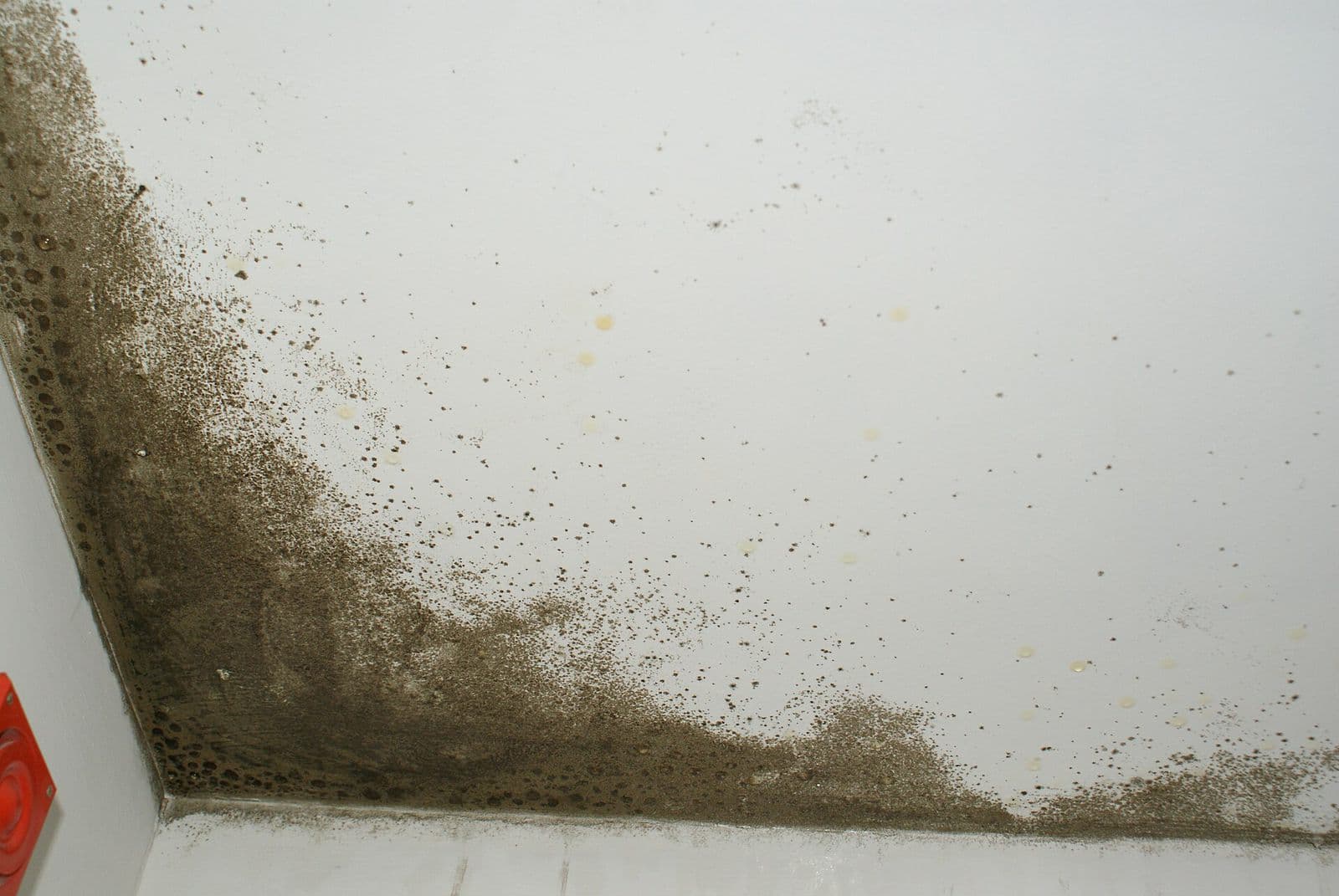
Mold on the ceiling is easy to ignore until it spreads. The key question isn't how to clean it. It's where the water is coming from. A ring of spots over the shower is a ventilation problem. A brown-edged stain in a bedroom is often a leak. This guide helps you tell the two apart, clean what's safe to clean, and know when to call for help.
What causes mold on the ceiling
The EPA lists roof leaks and condensation due to high humidity or cold spots in a building among the most common moisture sources indoors. On ceilings, it usually comes down to one of four things.
| Cause | Typical location | Typical look |
|---|---|---|
| Shower steam, weak or unused fan | Bathroom, above the tub or shower | Many small dark specks, often in corners |
| Roof leak | Top floor, often near walls, chimneys or vents | Brown or yellow stain with a ring, sometimes sagging |
| Attic moisture (fan venting into attic, poor insulation) | Top floor ceilings and corners | Gray or dark haze in corners and along exterior walls |
| Plumbing leak from above | Ceiling under an upstairs bathroom or laundry | Stain directly below fixtures, may drip |
Table: common causes of mold on the ceiling and how they look.
Bathroom steam
The Department of Energy's Building America Solution Center says shower moisture without an exhaust fan can lead to mold and mildew on tile, walls, and ceilings. Bob Vila explains the mechanism: in bathrooms, where warm, humid air from hot showers rises and meets the cooler ceiling, condensation forms. If the mold is in a bathroom, Bob Vila says excess humidity from showers combined with poor ventilation is the most likely culprit. Our mold in bathroom guide covers the whole room.
Roof leaks
In Texas, roofs take a beating. NOAA's Texas climate summary notes that Texas has been struck by 59 hurricanes since the beginning of the 20th century, and during Hurricane Harvey, large areas received more than 30 inches of rainfall. After any big storm, check top-floor ceilings for new stains. The EPA warns hidden mold can grow in roof materials above ceiling tiles (due to roof leaks or insufficient insulation). Left alone long enough, the EPA says molds can weaken floors and walls as the molds feed on wet wood.
The attic
What happens in the attic shows up on the ceiling below. The Department of Energy says it is quite common to find houses in which kitchen ranges, bathroom exhaust fans, and dryers vent their moist air into the attic rather than outside where it belongs. Bob Vila adds that mold around ceiling corners or in attic spaces could be a sign of condensation caused by poor insulation or inadequate airflow. See our mold in attic guide if the ceiling mold sits right under the attic.
Plumbing above
Bob Vila notes that a leaky pipe in an upper floor bathroom or ceiling void can create moisture buildup behind walls or ceiling panels, and that mold below an upstairs bathroom might signal a plumbing issue. A toilet, tub or washing machine overflow upstairs can soak a ceiling fast.
Black mold on ceiling: what it means
Black mold on ceiling paint, especially in a bathroom, is usually ordinary surface mold. The color isn't a diagnosis. The CDC says you do not need to know the type of mold, and the EPA says that in most cases, if visible mold growth is present, sampling is unnecessary.
What matters more is the pattern. Small, scattered spots on a bathroom ceiling point to steam. A stain that grows outward from one spot points to water from above. If someone in the home has symptoms, see a doctor; the CDC notes mold can cause a stuffy nose, sore throat, coughing or wheezing, burning eyes, or skin rash in some people, but a mold test can't diagnose illness. See our black mold guide for more.
Signs it's a bigger problem above
Treat ceiling mold as a warning sign when you see:
- Stains with rings or brown edges. These usually mean water soaked through, not condensation.
- Sagging or soft drywall. Bob Vila lists stains, sagging drywall, or bubbling paint as signs of a roof leak.
- Mold away from the bathroom. Bob Vila says that if the mold is in a different room—like a bedroom, hallway, or near an exterior wall—you'll want to investigate further.
- Mold that returns soon after cleaning, even with the fan running.
- A musty smell with no visible source. The EPA says you may suspect hidden mold if a building smells moldy, but you cannot see the source. Our mold smell in house guide can help.
When those signs show up, the mold you see is often the small part. The EPA lists the top side of ceiling tiles among the places hidden mold grows, and Fixr notes that porous ceiling materials absorb moisture and grow mold, including drop, acoustic, and typical drywall ceilings.
Bathroom ceiling mold removal (small patches)
This is for small spots, under about 10 square feet, on a painted ceiling with no sign of a leak.
- Fix the moisture. Make sure the fan works and vents outside. Fix any leak first.
- Gear up. The EPA's minimum for small cleanups is gloves, goggles/eye protection and an N-95 respirator. Goggles matter more than usual, because you're working overhead and drips fall toward your face. The EPA recommends goggles that do not have ventilation holes.
- Protect the floor and fixtures. Lay down a drop cloth or old towels.
- Wipe with detergent and water. The EPA's method is to scrub mold off hard surfaces with detergent and water, and dry completely. Use a damp sponge or cloth, not a soaking one. Too much water in a drywall ceiling causes new problems.
- If you use bleach, dilute it to no more than 1 cup of household laundry bleach in 1 gallon of water, open the window, and never mix it with other cleaners. The CDC says mixing bleach with ammonia or other cleaners will produce a poisonous gas.
- Dry it. Run the fan and leave the door open for a few hours.
- Repaint only when clean and dry. The EPA says do not paint or caulk moldy surfaces, and that paint applied over moldy surfaces is likely to peel. The CDC suggests you add mold inhibitors to paints before painting.
Popcorn or textured ceilings. Their rough, porous surface is hard to wipe clean without soaking or scraping it. If mold is on a textured ceiling, get a professional opinion before you scrape.
Ceiling tiles and drywall
Porous ceiling materials usually can't be saved once mold grows into them. The EPA says absorbent or porous materials, such as ceiling tiles and carpet, may have to be thrown away if they become moldy. Even before mold appears, the EPA's water-damage table gives one action for wet ceiling tiles: discard and replace.
For drywall ceilings, the EPA's remediation table lists HEPA vacuuming for small areas of wallboard mold, and adds removal and disposal for areas over 10 square feet (EPA Table 2). Fixr notes that depending on whether the mold is on the surface, some of the ceiling material may need to be removed and replaced. Cutting into a moldy ceiling releases spores and debris right over your head, so larger jobs need containment.
Ceiling mold cost
| Item | Cost (Fixr, updated Aug 2025) |
|---|---|
| Ceiling mold remediation | $1,000 to $9,000 |
| Bathroom mold removal | $500 to $1,500 |
| Roof leak repair | $400 to $2,500 |
| Repairing mold damage (on top of remediation) | Between $75 and $3,000 |
Table: typical national costs related to mold on ceilings.
Insurance may or may not help, depending on what caused the water. See does insurance cover mold? and our mold remediation cost guide.
When to call a professional
- More than about 10 square feet. That's the EPA's line for when mold growth covers more than 10 square feet and professional guidance applies.
- Sagging, soft or stained drywall, or tiles that are wet.
- Mold you can't trace, or that comes back after cleaning.
- Contaminated water, such as a toilet overflow from upstairs. The EPA says to call a professional if damage was caused by sewage or other contaminated water.
Fix the source too: a roofer for the roof, a plumber for the pipes. Then the mold work.
Texas licensing. TDLR says that in most instances, areas of visible mold less than 25 contiguous square feet in area may be cleaned or removed by people who are not licensed. Larger jobs generally need a licensed remediation contractor.
Testing and removal are separate. If you want to know how far mold has spread above the ceiling, hire a licensed mold testing company. For the cleanup, hire a separate mold removal company. Texas law says a license holder may not perform both mold assessment and mold remediation on the same project. Browse companies in Houston, Corpus Christi or across Texas, and check any license with our license check.
FAQ
What causes mold on the ceiling?
Moisture from below or above. In bathrooms, it's usually shower steam and poor ventilation. Elsewhere, it's often a roof leak, attic moisture or a pipe leak. The EPA lists roof leaks and condensation due to high humidity or cold spots among common causes.
Is black mold on the ceiling dangerous?
Usually it's common surface mold. The CDC says you do not need to know the type of mold; remove it and fix the moisture. If you have symptoms, see a doctor, since a mold test can't diagnose illness.
How do I do bathroom ceiling mold removal myself?
For small spots on painted drywall, wear gloves, goggles and an N-95 mask, wipe with detergent and water, and dry the area. Don't paint over mold. Then make sure the fan vents outside and runs during and after showers.
Can I paint over mold on ceiling drywall?
No. The EPA says do not paint or caulk moldy surfaces. Clean and dry the ceiling first, then paint. Paint over mold tends to peel and the mold keeps growing.
Does mold on the ceiling mean a roof leak?
Not always. Spots over a shower usually come from steam. A stain with rings, sagging drywall or bubbling paint on a top-floor ceiling more often means a roof leak. Bob Vila lists stains, sagging drywall, or bubbling paint as roof-leak signs.
Licensed Mold Pros directory
Find a licensed mold removal company
Removal companies hold a Texas mold remediation license. They remove the mold to a plan written by a separate, licensed testing company.
Sources
- EPA: A Brief Guide to Mold, Moisture and Your Home (accessed Oct 2026)
- EPA: What are the basic mold cleanup steps? (accessed Oct 2026)
- EPA: Mold Course Chapter 1 (accessed Oct 2026)
- EPA: Mold Course Chapter 6 (accessed Oct 2026)
- EPA: Mold Remediation in Schools and Commercial Buildings, Chapter 3 (accessed Oct 2026)
- EPA: Table 1, Water Damage: Cleanup and Mold Prevention (PDF) (accessed Oct 2026)
- EPA: Table 2, Guidelines for Remediating Building Materials with Mold Growth Caused by Clean Water (PDF) (accessed Oct 2026)
- CDC: Mold (Sept 26, 2024)
- U.S. DOE Building America Solution Center (PNNL): Bathroom Exhaust Fan (accessed Oct 2026)
- U.S. DOE: Guide to Durable Attics (PDF) (accessed Oct 2026)
- NOAA/NCICS: Texas State Climate Summary (accessed Oct 2026)
- Bob Vila: How to Get Rid of Mold on the Ceiling (updated Apr 11, 2025)
- Fixr: Mold Remediation Cost (updated Aug 29, 2025)
- TDLR: Help! I have mold (Mold Remediation Consumer Protection) (Jan 2025)
- Texas Occupations Code § 1958.155 (texas.public.law) (accessed Oct 2026)
We link every number, rule and health claim to its source. See our editorial policy.