On this page
Short answer
Mold on furniture with hard surfaces (finished wood, metal, plastic, wicker) usually wipes off with detergent and water, followed by thorough drying. Mold on upholstered furniture is harder: surface mildew can be brushed off outdoors, vacuumed, dried and wiped with a mix of 1 cup denatured or rubbing alcohol and 1 cup water, but if the padding is moldy or soaked, the EPA notes upholstered furniture may be difficult to completely dry within 48 hours, and replacing it is often the realistic choice.
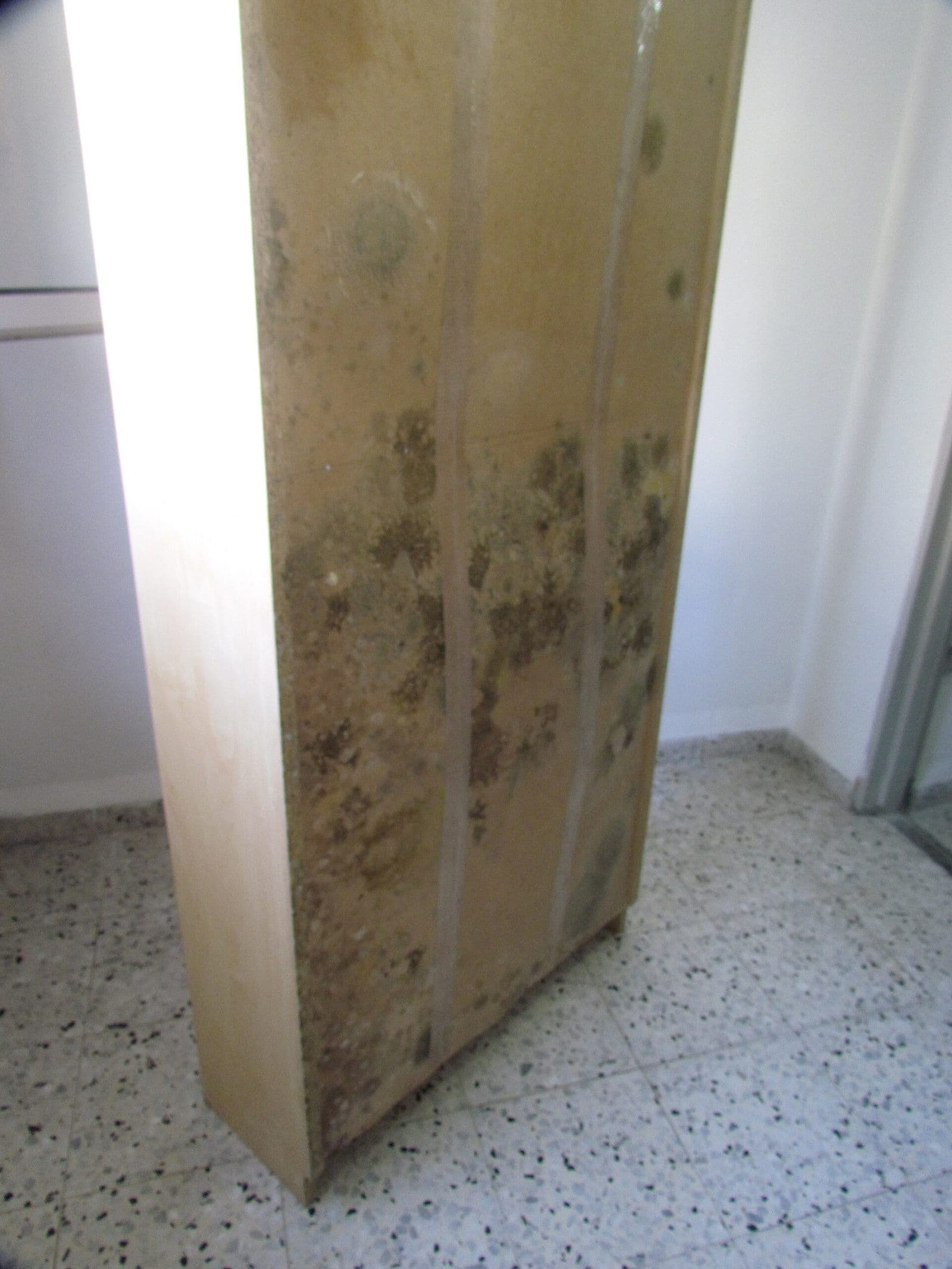
Mold on furniture shows up in a few predictable ways: spots on a sofa cushion, a white or green film on the back of a dresser pushed against an outside wall, or mildew on patio chairs after a wet spring. What you do depends on what the piece is made of. This guide sorts furniture by material, then walks through upholstered furniture mold, mold in sofa cushions, and mold on wood furniture.
For leather pieces, see our mold on leather guide. For beds, see mold in mattress.
Why mold grows on furniture
Mold needs moisture. The EPA says moisture is the most important factor influencing mold growth indoors, and that mold can feed on organic materials such as cloth and wood, both common in furniture.
Common causes:
- Furniture against outside walls. NDSU Extension warns that there is a chance mold might be growing behind furniture, particularly against an outside wall. When you look for mold, TDLR says to pay special attention to hidden areas including behind mirrors and furniture.
- High humidity. NDSU says mold growth is likely with humidity levels above about 70%.
- Spills and food stains. UF/IFAS Extension lists remove food stains from furniture as quickly as possible among its mildew-prevention steps.
- Leaks and floods. The EPA's flood guide says you may see or smell mold on clothing, drywall, furniture, cardboard boxes, or books after a flood, and that it can hide under cushions.
If mold is growing on the back of furniture, look at the wall behind it too. A moldy wall is a building problem, not a furniture problem. See mold on walls.
Clean or toss? Sort by material
Mold on furniture by material
| Furniture type | What to do |
|---|---|
| Metal, plastic, glass, vinyl, wicker, rattan, bamboo | UGA: wipe stain with a cloth dipped in warm sudsy water, rinse and wipe dry. If a stain remains, test and use a commercial mildew stain remover per its label |
| Finished or painted wood | EPA: treated or finished wood surfaces may be cleaned with mild detergent and clean water and allowed to dry. See mold on wood for mold in the grain |
| Upholstered, surface mildew only | Brush outdoors, vacuum, dry, wipe with diluted alcohol (steps below) |
| Upholstered, moldy or soaked padding | Usually replace. NC State: it may be best to discard the upholstered furniture after flooding |
| Valuable or antique pieces | EPA: consider a restoration/water damage professional who specializes in furniture |
The hard line for upholstery comes from how mold behaves in porous materials. The EPA explains that molds will infiltrate porous substances and grow on or fill in empty spaces or crevices, so the mold can be difficult or impossible to remove completely. TDLR says mold is difficult to clean from absorbent (porous) surfaces such as drywall, carpet, fleecy furnishings and insulation, and that these should be removed and discarded.
How to get rid of mold spots on fabric furniture
These steps for upholstered furniture mold come from University of Georgia Extension and Texas A&M AgriLife Extension. They're for surface mildew, not mold that's grown into the cushions.
Protect yourself. Wear gloves, goggles and an N95. The CDC recommends at least a NIOSH Approved N95 respirator and says not to touch mold with bare hands.
1. Brush it off outdoors
UGA says to remove loose spores from upholstery by brushing with a soft-bristled broom, outdoors if possible, to avoid scattering spores in the house. Texas A&M agrees: clean mildewed items outdoors. Wash the broom afterward.
2. Vacuum
Texas A&M recommends a HEPA vacuum, if available, to remove visible mold growth, then discarding the bag. With a regular vacuum, empty the bag outdoors right away.
3. Dry it, in the sun if you can
If the piece is damp, UGA suggests drying it with a fan and heater and, if possible, placing it in direct sunlight and air to stop mold growth. (Wood frames are an exception; see below.)
4. Treat the remaining spots
Texas A&M suggests sponging remaining mildew with thick suds or a commercial cleaner designed for the type of material, wiping with a barely damp cloth, then wiping stains with a cloth dampened in diluted alcohol (1 cup rubbing or denatured alcohol to 1 cup water). Dry thoroughly.
UGA lists a commercial dry-cleaning solvent as another option for upholstery.
5. Watch the cautions
UGA's cautions for upholstery are worth reading before you start:
- Overwetting with water may cause the finish on the upholstery fabric to migrate and leave a ring.
- Solvents can destroy the foam padding used in upholstery, so don't soak the fabric.
- Alcohol will damage acetate, triacetate, modacrylics and acrylic fibers.
- Always pretest each cleaning agent on an inconspicuous area first.
Bleach is a last resort, not a first step. An older Texas Cooperative Extension sheet suggests that after brushing, vacuuming and detergent suds, one-quarter teaspoon chlorine bleach to one cup of water can be used on remaining mildew. Only use it on fabric you've tested for color loss, and never mix it with other cleaners. The EPA says bleach is not recommended as a routine practice during mold cleanup.
Mold in sofa cushions
A sofa can look clean outside while the cushion foam is moldy inside. Signs: a musty smell when you sit down, spots on the inner side of the cover, or a cushion that never quite dries after a spill.
What to do:
- Unzip and look. Check the foam and the batting, not just the cover.
- Covers. If the label allows washing, the cover can go through the laundry. Our mold on clothes guide covers washing fabric with mold.
- Foam inserts. If the foam is stained or smells musty, replacing the insert is usually easier and more reliable than trying to clean it, for the porous-material reasons above.
- The frame and deck. Check the platform under the cushions and the frame for spots.
If the whole sofa got wet, Texas Cooperative Extension says furniture that has been heavily soaked with flood waters might not be salvageable. For a special piece, it suggests removing the upholstery and stuffing, throwing away cotton stuffing, and drying the frame slowly. NC State recommends stripping it to the frame and getting a reupholsterer's estimate to decide whether to reupholster or buy new.
Mold on wood furniture
Solid wood is the most salvageable furniture material. The EPA says treated or finished wood can be cleaned with mild detergent and clean water and allowed to dry. Our mold on wood guide covers sanding, mold under finishes and when wood is too far gone.
Drying is where people go wrong:
- Dry it slowly, out of the sun. Texas A&M says to dry furniture slowly out of direct sunlight because sun will warp furniture, and that it may take several weeks to several months.
- Wait for low moisture. Kentucky Extension says wood furniture should dry out to a moisture content of 20% or less before making any necessary repairs. NC State notes mildew may keep growing on a frame until the wood drops below 20 percent.
- Don't refinish early. Texas A&M says do not refinish or wax until thoroughly dry.
- Open it up. Remove drawers and doors so air can reach every surface.
Furniture after a flood
After a flood, Texas A&M AgriLife Extension says to remove all furniture, bedding, and carpeting to outdoors to be cleaned and dried (or discarded). For furniture it adds: brush off mud, remove all drawers and doors, discard flooded padding, and use cleaners designed for the material.
The EPA's rule for the rest: throw away anything that was wet with flood water and can't be cleaned and dried completely within 24 to 48 hours. Kentucky Extension agrees that porous items such as couches should be discarded, but suggests weighing each item's condition and sentimental or monetary value.
Photograph everything first. Texas A&M advises taking photos for use as an inventory for your insurance claim. See mold after flood Texas for the rest of the house.
How to prevent mold on furniture
- Pull furniture off outside walls. Leave a few inches for air. Museum conservators avoid storing collections directly against outside walls where they are more susceptible to high RH, condensation, and leaks.
- Control humidity. The EPA recommends indoor humidity below 60 percent (ideally between 30 and 50 percent), and TDLR suggests no higher than 50%. A dehumidifier for mold helps in damp rooms.
- Use fans. UF/IFAS suggests ventilation fans to draw moist air out of the home and ceiling fans to circulate the air.
- Clean up spills fast and dry cushions completely after any upholstery cleaning. The EPA lists drying carpets, drapes, furniture, and other furnishings promptly after cleaning as a moisture-control step.
When to call a professional
If mold keeps returning on furniture in the same room, or you find it on the wall behind a piece, look for the moisture source. A licensed mold testing company in San Antonio, Houston or another city on our Texas page can inspect. A separate mold removal company handles cleanup, because Texas law says a license holder may not perform both mold assessment and mold remediation on the same project. Verify licenses with our license check tool and read how we verify companies.
If someone in the home has symptoms, see a doctor. A mold test doesn't diagnose illness, and the CDC says individuals with persistent symptoms should see their physician.
FAQ
How do you get rid of mold spots on fabric furniture?
Brush the mold off outdoors, vacuum (HEPA if possible), dry the piece, then sponge spots with detergent suds and wipe with 1 cup rubbing or denatured alcohol to 1 cup water. Test first, because alcohol damages acetate and acrylic fibers. Don't overwet the fabric.
Can a sofa with mold be saved?
If the mold is only on the cover, usually yes. If the cushion foam or padding is moldy, replace the inserts. If the whole sofa was soaked, Texas Cooperative Extension says heavily soaked furniture might not be salvageable.
How do you clean mold on wood furniture?
Wash finished wood with mild detergent and water, then let it dry slowly out of direct sunlight. Kentucky Extension says to let wood dry to a moisture content of 20% or less before repairs, and Texas A&M says not to refinish or wax until it's thoroughly dry.
Why is there mold behind my furniture?
Outside walls are more prone to high humidity and condensation, as the National Park Service notes, and furniture pushed against them limits airflow. NDSU warns mold may be growing behind furniture, particularly against an outside wall. Move the piece out a few inches, lower the humidity and check the wall itself.
Is mold on furniture dangerous?
It can bother some people. The EPA says mold exposure can lead to asthma attacks, eye and skin irritation, and allergic reactions. Clean or remove it, and talk to a doctor about any symptoms. See our mold exposure guide.
Licensed Mold Pros directory
Find a licensed mold removal company
Removal companies hold a Texas mold remediation license. They remove the mold to a plan written by a separate, licensed testing company.
Sources
- University of Georgia Extension: Remove Stains From Mildew, Mold (accessed Oct 2026)
- Texas A&M AgriLife Extension: Cleaning Flood-damaged Homes (accessed Oct 2026)
- Texas A&M AgriLife Today / Texas Cooperative Extension: Household Fabrics Need Cleaning After Flood (July 5, 2002)
- NC State Extension: Cleaning Flooded Upholstered Furniture, Curtains, Bedding, Table Linens and Other Household Textiles (June 5, 2014)
- University of Kentucky Extension: How to care for flooded possessions (Aug 11, 2022)
- UF/IFAS Extension: Keeping It Clean: Controlling Mildew (FCS5232) (revised May 2014, accessed Oct 2026)
- NDSU Extension: Remove Mold for a Healthy Home (AE1202) (reviewed Apr 2023)
- National Park Service: Conserve O Gram 3/4, Mold: Prevention of Growth in Museum Collections (Aug 2007)
- EPA: Mold Remediation in Schools and Commercial Buildings, Chapter 3 (updated Apr 29, 2026)
- EPA: Mold Remediation in Schools and Commercial Buildings, Chapter 4 (Table 1) (updated Sept 8, 2026)
- EPA: Mold Course Chapter 1 (updated Feb 18, 2026)
- EPA: Mold Course Chapter 2 (updated Dec 1, 2025)
- EPA: A Brief Guide to Mold, Moisture and Your Home (updated Feb 18, 2026)
- EPA: Should I use bleach to clean up mold? (updated Sept 8, 2026)
- EPA: Homeowner's and Renter's Guide to Mold Cleanup After Disasters (accessed Oct 2026)
- CDC: Mold Cleanup (Feb 16, 2024)
- CDC: Facts About Mold and Dampness (May 29, 2024)
- TDLR: Help! I have mold (Mold Remediation Consumer Protection) (Jan 2025)
- Texas Occupations Code § 1958.155: Conflict of Interest (accessed Oct 2026)
We link every number, rule and health claim to its source. See our editorial policy.