On this page
- Why mold grows on books and paper
- Signs of mold in a book
- Safety first
- Is it worth saving?
- How to clean mold off books and papers
- Does freezing kill mold on books?
- Wet books and documents after a flood
- Saving moldy or wet photos after a flood
- How to store books and papers so they don't mold
- When the bookshelf points to a bigger problem
- FAQ
- Sources
Short answer
To deal with mold on books, dry them first, then remove the mold only once it's dry and powdery: the National Archives says to work outdoors with a soft, clean, light-colored brush and a gentle pushing motion, or use a HEPA vacuum. If wet books or papers can't be air dried within about two days, freeze them, which the Library of Congress recommends for newly wet or moldy papers. Ordinary books are often cheaper to replace; the EPA says for non-valuable items, discard books and papers.
Mold in a book usually starts quietly: a musty smell when you open it, then gray or brown spots on the edges and pages. Paper is a favorite food for mold, so a damp bookshelf, a box in the garage or a flooded room can affect a whole library. This guide covers how to clean mold off books and papers, how to save wet documents and photos after a flood, and how to store paper so it doesn't happen again.
Why mold grows on books and paper
Paper is made from plant fiber. The National Park Service's conservation guidance says cellulose-based materials, such as cotton, linen, paper and wood are particularly susceptible to mold. It also notes mold can cause scattered brown spots on paper known as foxing, and can make paper absorb water more easily, which sets it up for the next round.
The conditions that help mold are familiar to anyone in Texas. The National Archives lists high temperature, high relative humidity, stagnant air, and darkness. The NPS says relative humidity should ALWAYS be kept below 65%.
Timing matters with wet paper. The NPS says mold may begin to grow when objects are left damp for approximately 72 hours, and its photo guidance warns mold can begin to grow within 48 hours. Plan on a window of about two days.
Signs of mold in a book
- A musty smell. The NPS says the first sign is often a characteristic musty odor.
- Velvety or powdery growth. Mold can appear as a velvety growth of almost any color, or a powdery deposit.
- Stains and spots on page edges, the gutter and the cover.
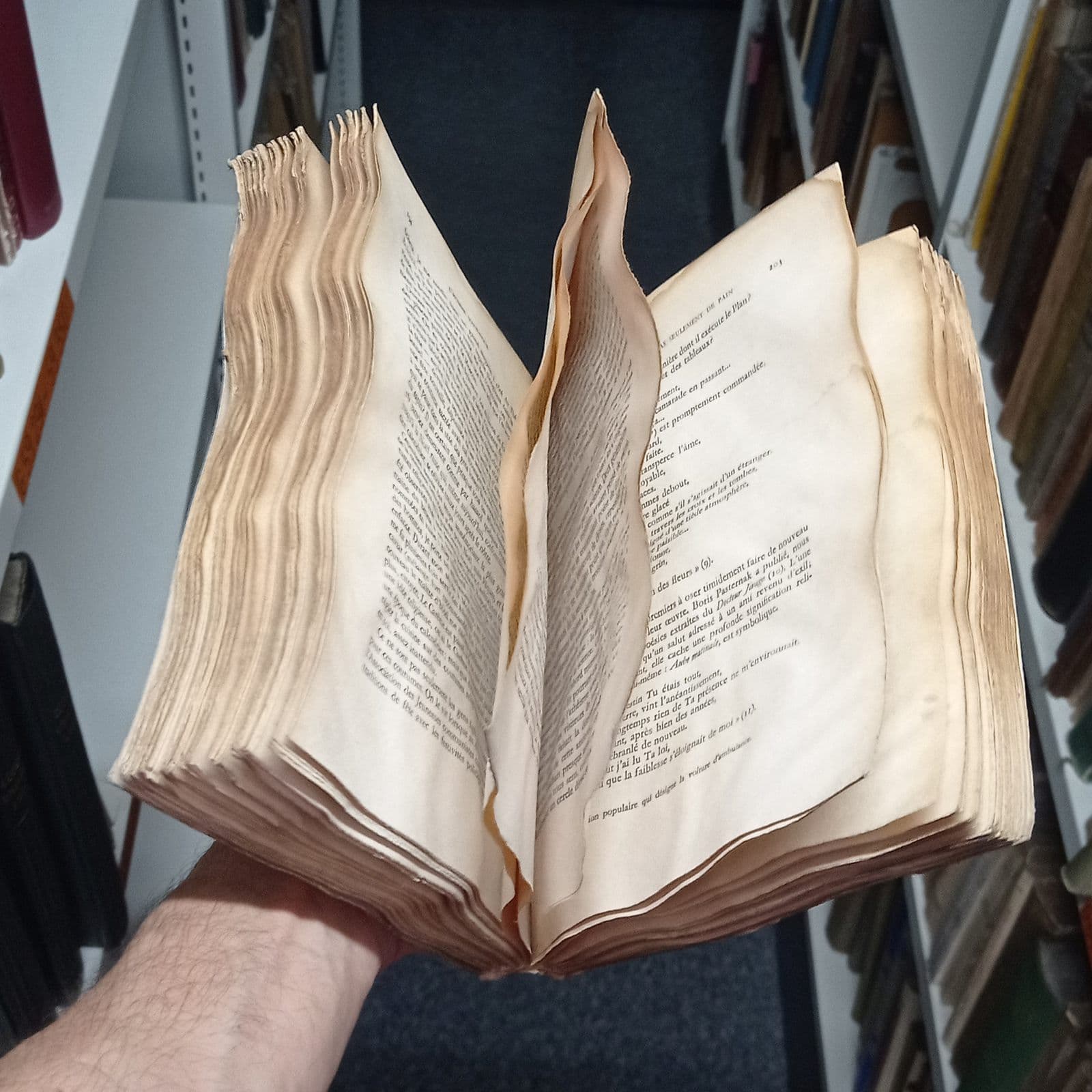
- Pages stuck together or wavy pages in a book that got wet.
Check the whole shelf, not just the one book. The NPS isolates moldy objects specifically to prevent the spread of spores to other objects.
Safety first
Mold on paper is the same mold that affects people elsewhere. The National Archives notes that many people are sensitive to mold, and NARA's family archives page advises you limit handling of the moldy items.
For a small number of books, the EPA lists a minimum of an N-95 respirator, gloves and goggles (EPA Table 2). People with asthma, allergies or weakened immune systems should leave the work to someone else.
Is it worth saving?
Be honest about value before you spend hours on a book. EPA guidance gives three paths for water-damaged books and papers (EPA Table 1):
What to do with water-damaged books and papers
| Item | EPA guidance |
|---|---|
| Non-valuable books and papers | Discard |
| Valuable or important papers | Photocopy valuable/important items, discard originals |
| Items you need to keep in original form | Freeze (in a frost-free freezer or meat locker) or freeze-dry |
The NPS puts it plainly: drying books takes effort, and not everything can be saved. Items that have little value or can be easily replaced should be a lower priority or considered for disposal.
For family Bibles, letters, diaries and rare books, NARA advises: consult a conservator to have valuable or sentimental items treated.
How to clean mold off books and papers
These steps come from the National Archives, the National Park Service and the Library of Congress.
1. Isolate the item
The NPS says to seal a moldy object in a polyethylene bag or enclose it in polyethylene sheeting so spores don't spread to other books. It also warns: do not touch the mold, as this will spread the spores. Don't leave wet items sealed for long, though; they need to dry or be frozen.
2. Dry it first
The National Archives says the first priority is to dry moldy items. The NPS suggests a room with circulating air and, if possible, run a dehumidifier. NARA cautions against fans that aim air flow directly at drying materials.
3. Tell active mold from dormant mold
This is the step most people skip. NARA explains that active mold looks fuzzy or slimy. Dormant mold is dry and powdery. Don't try to remove active mold, because it may only spread or smear. Dry the item until the mold is powdery.
NARA says active mold may be treated with brief (1-2 hours) exposure to ultraviolet radiation from the sun, but too much sun will speed deterioration and may cause fading. Keep it short.
4. Brush or vacuum off the dry mold, outdoors
Once it's dry and powdery, take it outside. NARA recommends a soft, clean, light-colored brush and a gentle pushing motion, changing brushes often.
A HEPA vacuum is the other option. The EPA lists HEPA vacuuming as the cleanup method for moldy books and papers of any size (EPA Table 2). The NPS says to vacuum with the lowest effective suction and protective screening, and to use a soft brush to dislodge stubborn mold toward the nozzle.
5. Throw out the dirty materials
The NPS says to seal the vacuum bag, gloves and other contaminated materials in a plastic bag and put them in the trash outside, and to dispose of all contaminated storage materials that held the object. That includes the cardboard box the books were in.
6. Watch for regrowth
For items with mold stains, the Library of Congress says to keep relative humidity between 35-55% to prevent regrowth and check them regularly. Stains often remain after cleaning; NPS notes mold can produce irregular stains that may permanently damage an object.
What not to do: don't spray books with bleach or household disinfectants. The NPS says chemical treatment should only be done with a conservator's advice, partly because a biocide could itself become a potential nutrient for certain types of fungus as it breaks down.
Does freezing kill mold on books?
No. Freezing stops it, buys you time and keeps wet books from getting worse, but it doesn't kill mold. NARA says placing damaged items in a personal or commercial freezer will not kill mold, and the NPS says extreme cold, freezing and heat deactivate spores or spore growth but do not kill them. When thawed items warm up, mold can grow again, so dry them as soon as they come out.
Wet books and documents after a flood
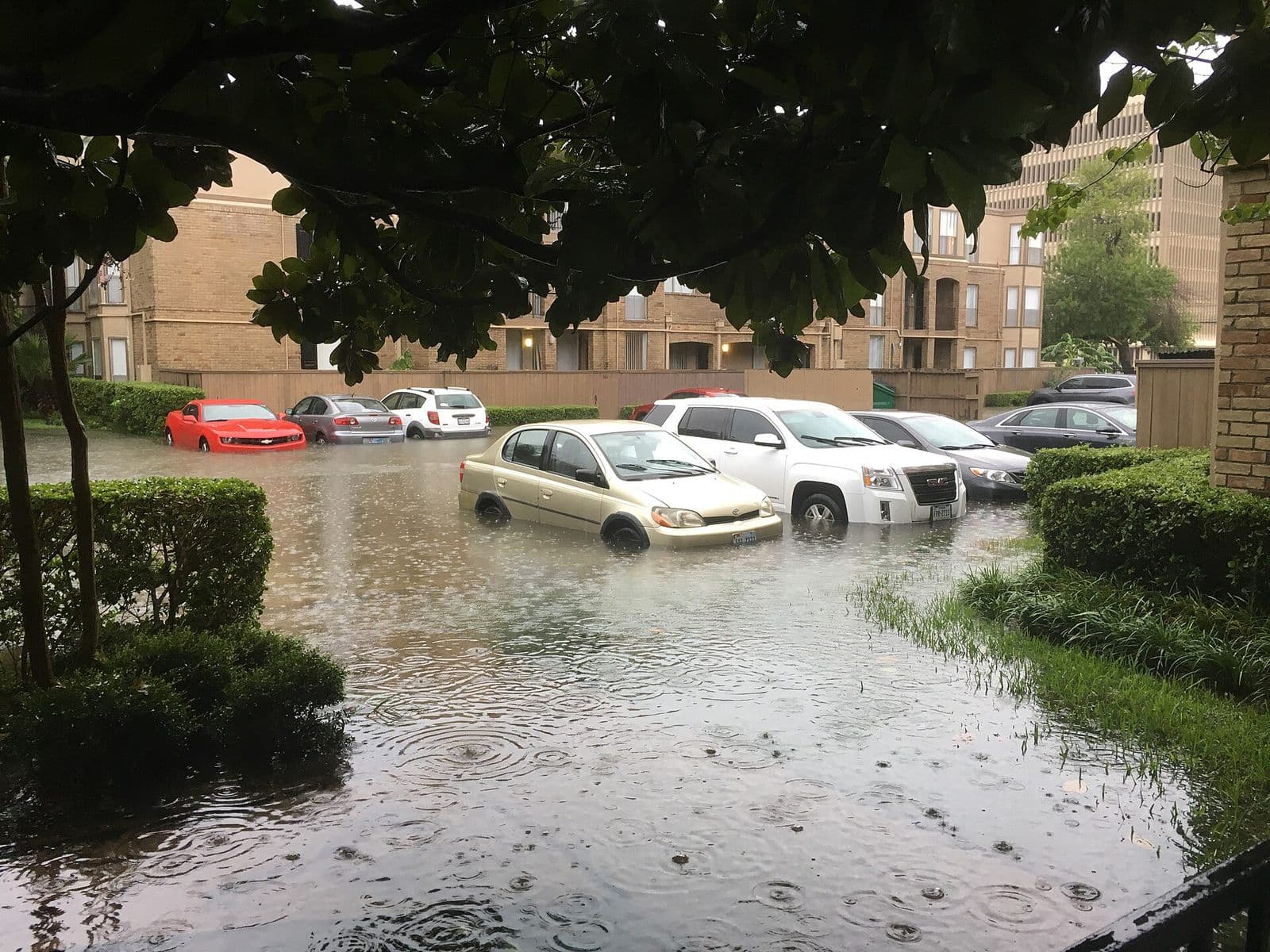
After Hurricane Harvey, rainfall exceeded 30 inches in many locations in southeast Texas. If your papers and books got wet in a flood or leak, here's how to triage.
If you can't dry them within two days, freeze them. NARA says wet items that can't be air dried within two days should be frozen to inhibit mold growth. The NPS suggests wrapping wet books in wax paper, freezer paper, paper towels, or unprinted newspaper, gently shaping them first, then freezing them and taking out small batches to dry.
Air drying books (NPS method):
- Interleave paper towels or unprinted newspaper every 20-30 pages.
- Stand damp books on end on absorbent towels and fan the pages slightly. Don't force the book wide open.
- Replace interleaving as it gets soaked, and flip the book head to tail each time.
- Run a dehumidifier and keep air moving in the room.
- When dry, press the books gently under boards or between other books to reduce swelling.
Glossy and coated paper (magazines, art books, yearbooks) sticks to itself. NARA says bound glossy items must be interleaved between every page, and recommends wax paper.
Loose documents: NARA says to air dry them flat in small piles or one at a time, changing the blotting paper underneath as it gets soaked.
Saving moldy or wet photos after a flood
Photos need gentler handling than paper.
- Don't touch the image. The NPS says do not touch the image surface of a wet photo until it is dry.
- Dry face up. Lay photos flat and make sure the emulsion (the side with the image) is facing up.
- Rinse only if needed. The NPS allows rinsing photos one at a time in clean water only if they're visibly dirty and the image layer is intact. NARA is more cautious and warns rinsing or soaking some photos could cause irreversible damage. If in doubt, don't.
- Take them out of albums and frames where they aren't stuck.
- Be careful with freezing. The NPS says do not freeze older or valuable photos without first consulting a professional conservator.
- Stuck photos: for valuable photos stuck together or to glass, the NPS says do not pull them apart; consult a professional conservator.
Our mold after flood Texas guide covers the rest of the house after a flood.
How to store books and papers so they don't mold
- Control humidity. The NPS says spore germination is less likely if RH is controlled between 45 % and 55 %. For the whole house, the EPA recommends below 60 percent (ideally between 30 and 50 percent). A dehumidifier for mold helps in a damp study or storage room.
- Pick the right spot. The NPS advises avoiding storage in or near damp areas such as attics, basements, sinks, windows, or directly on floors, keeping items at least four inches above the floor, and away from outside walls.
- Keep air moving. NPS says a fan helps increase circulation.
- Keep it clean. Dust and dirt feed mold; NPS recommends keeping storage areas clean and using dust covers.
- Don't seal damp paper in plastic. Kentucky Extension says items should never be stored in airtight plastic.
When the bookshelf points to a bigger problem
If books on one wall keep molding, the wall or room is the problem. Look for leaks, condensation or a musty smell; our mold smell in house and signs of mold in house guides can help. An air purifier for mold won't fix a moisture source.
For hidden mold, a licensed mold testing company in Austin, Houston or another city on our Texas page can inspect. A separate mold removal company handles building cleanup, since Texas law says a license holder may not perform both mold assessment and mold remediation on the same project. Check licenses with our license check tool.
If you have symptoms you think come from mold, see a doctor; a mold test can't diagnose illness. The CDC says individuals with persistent symptoms should see their physician. See also our mold allergy guide.
FAQ
How do you clean mold off books?
Dry the book until the mold is dry and powdery, then work outdoors with gloves and an N95. Use a soft, clean, light-colored brush and a gentle pushing motion, or a HEPA vacuum on low suction. Don't wipe fuzzy or slimy active mold; it will smear.
Is it safe to keep a book with mold in it?
A cleaned, dry book can be kept, but stains may remain, and the NPS notes that inactive mold may cause allergic reactions in sensitive people. If it's an ordinary book, the EPA's advice is simple: for non-valuable items, discard books and papers. Valuable items are worth a conservator.
Does freezing kill mold on books?
No. NARA says a freezer will not kill mold. Freezing stops growth and buys time until you can dry the book. Dry it as soon as it thaws.
How do I save wet photos after a flood?
Dry them face up on a flat surface without touching the image side, take them out of albums and frames where they aren't stuck, and change the blotting paper as needed. The NPS says do not freeze older or valuable photos without first consulting a professional conservator.
What humidity prevents mold on books?
The National Park Service recommends 45 to 55 percent relative humidity and says it should ALWAYS be kept below 65%. Keep books off the floor, away from outside walls, and out of attics and garages.
Licensed Mold Pros directory
Find a licensed mold removal company
Removal companies hold a Texas mold remediation license. They remove the mold to a plan written by a separate, licensed testing company.
Sources
- National Archives: Emergency Salvage of Flood Damaged Family Papers (Aug 1993, reviewed Aug 15, 2016)
- National Archives: How to Preserve Family Archives, Mold and Insects (reviewed Aug 3, 2021)
- Library of Congress: What should I do with a wet/moldy collection item? (updated Mar 4, 2025)
- National Park Service: Conserve O Gram 3/4, Mold: Prevention of Growth in Museum Collections (Aug 2007)
- National Park Service: Preservation Matters, Disasters: Saving Wet Books After a Flood (updated Sept 29, 2022)
- National Park Service: Preservation Matters, Disasters: Saving Wet Photographs (updated Sept 29, 2022)
- EPA: Mold Remediation in Schools and Commercial Buildings, Chapter 4 (Table 1) (updated Sept 8, 2026)
- EPA: Mold Remediation in Schools and Commercial Buildings, Chapter 5 (Table 2) (updated Apr 14, 2026)
- EPA: A Brief Guide to Mold, Moisture and Your Home (updated Feb 18, 2026)
- University of Kentucky Extension: How to care for flooded possessions (Aug 11, 2022)
- CDC: Facts About Mold and Dampness (May 29, 2024)
- Texas Occupations Code § 1958.155: Conflict of Interest (accessed Oct 2026)
- NOAA/NCICS: Texas State Climate Summary (accessed Oct 2026)
We link every number, rule and health claim to its source. See our editorial policy.