On this page
Short answer
Mold in bathtub surfaces usually scrubs off, because the tub itself is hard and non-porous. Mold on bathtub caulk is different: if dark spots stay after scrubbing, cut the caulk out and replace it, since the EPA says do not paint or caulk moldy surfaces. Jetted tubs also need their internal lines flushed. Fixr puts professional mold removal from a tub at $500 to $1,500, rising if mold is behind it.
A moldy bathtub is common, especially in a tub that doubles as the shower or sits in a bathroom with a weak fan. Most of the time it's a cleaning job. This guide focuses on what's specific to tubs: the caulk joint where tub meets wall, the jets and plumbing in whirlpool tubs, and the signs that mold has spread behind the tub. For tile walls and grout, see our mold in shower guide.
Why you get mold in bathtub caulk, drains and jets
Tubs hold water, soap scum and body oils, and they stay wet after every use. TDLR, the Texas agency that licenses mold professionals, says bathtub or showers corners and joints, including tile crevices, are more susceptible to mold growth. UF/IFAS Extension says mildew grows on soap scum and moisture.
Where mold in bathtubs usually shows up:
| Spot | Why it gets moldy | Fix |
|---|---|---|
| Caulk line where tub meets wall | Stays wet, porous sealant, water gets behind it | Clean, or cut out and recaulk |
| Under the faucet and around the drain | Constant drips | Scrub; fix leaky faucet |
| Bath mat suction cups, toys, caddies | Trapped water | Clean or replace; let dry |
| Jetted tub lines | Water left in pipes after draining | Flush the jets |
| Behind the tub or under it | Leaks you can't see | Professional |
Table: where mold grows in a bathtub and what to do.
Black mold in bath tub: what it is
Black mold in a bath tub, usually along the caulk, is almost always ordinary mold or mildew. Color doesn't tell you the species, and you don't need to know it. The CDC says you do not need to know the type of mold, and the EPA says that in most cases, if visible mold growth is present, sampling is unnecessary.
The CDC notes that for some people, mold can cause a stuffy nose, sore throat, coughing or wheezing, burning eyes, or skin rash. If you have symptoms, talk to a doctor; a mold test can't diagnose illness. See our black mold guide for more.
Mold removal: bathtub surface step by step
Acrylic, fiberglass, porcelain-enameled steel and cast iron tubs are all hard surfaces. That makes mold removal from the bathtub itself fairly simple.
- Ventilate. Turn on the fan, open a window if you have one.
- Wear protection. The EPA's minimum for small mold cleanups is gloves, goggles/eye protection and an N-95 respirator. If you use bleach, the EPA recommends gloves made from natural rubber, neoprene, nitrile, polyurethane or PVC.
- Scrub with detergent and water. The EPA's default is to scrub mold off hard surfaces with detergent and water, and dry completely. Use a soft brush or non-scratch sponge on acrylic and fiberglass.
- For stubborn spots, Bob Vila suggests a cleaning paste by combining equal parts baking soda and water, or two parts baking soda to one part hydrogen peroxide. If you use bleach, the CDC's limit is no more than 1 cup of household laundry bleach in 1 gallon of water.
- Rinse and dry. Towel the tub, ledges and corners.
Never mix bleach with vinegar or ammonia. The Washington State Department of Health says when chlorine bleach is mixed with an acid, chlorine gas is given off, and lists vinegar among acid products. See vinegar vs bleach for mold, and our guides to hydrogen peroxide for mold and baking soda for mold.
Mold on bathtub caulk: clean or replace?
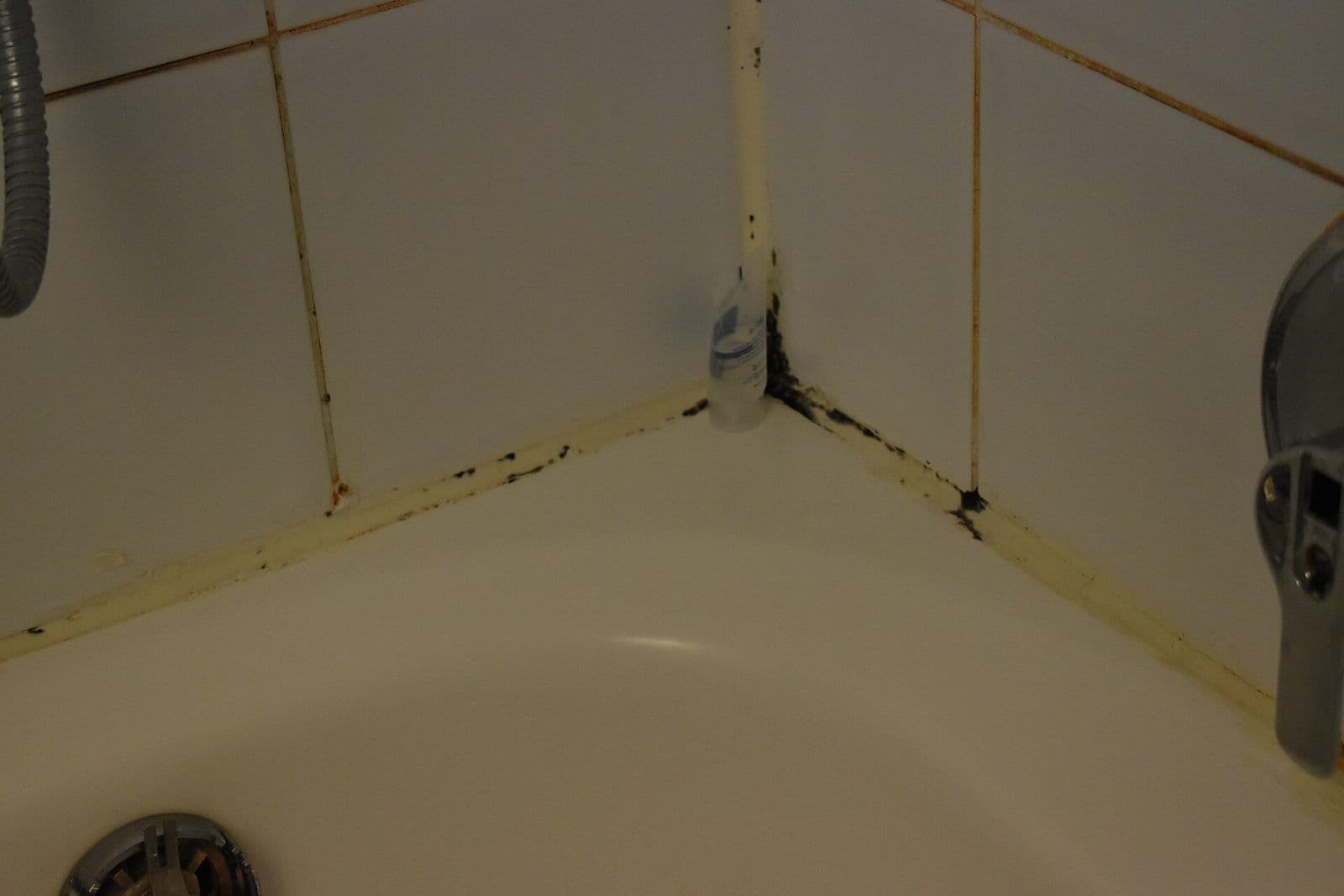
Mold on bathtub caulk is the most common tub problem. Caulk is soft, it flexes, and water can get behind it. Surface spots sometimes clean off. Mold that sits inside or under the bead won't.
Try cleaning first. Bob Vila suggests scrubbing caulk with a baking soda paste and a toothbrush, and notes that if baking soda doesn't leave the caulk clean enough, it may be necessary to use bleach.
Replace it if the spots stay. The EPA says do not paint or caulk moldy surfaces. Bob Vila is blunt about why: moldy caulk doesn't just go away because you cover the mold with new caulk, and the mold continues to grow and spread inside the walls, as it thrives in dark, moist locations. Its rule: never caulk over damaged or moldy caulk.
How to replace moldy tub caulk
- Soften the old caulk. Apply a caulk remover. Bob Vila notes that the caulk remover, rather than making the sealant magically disappear, simply softens it, and that you should allow at least four hours.
- Cut and pull it out. With the caulk now soft, remove it either with a caulk remover tool or a simple utility knife. Be careful on acrylic and fiberglass tubs, which scratch.
- Clean the joint. Scrub mold out of the gap with detergent and water, wearing gloves and goggles.
- Let it dry completely. Bob Vila says caulk won't adhere to a wet surface. Run the fan for a day if you can.
- Pick the right caulk. Check that the label says it's designated for use in kitchens and baths. Bob Vila notes some clear shower caulks contain special inhibitors that protect against mold and mildew.
- Tape and apply. Painter's tape makes a great guide to ensure a clean bead. Pull the tape while the caulk is still wet.
- Let it cure. Bob Vila says to allow the caulk to dry and cure for at least 24 hours before returning to regular use, or follow the label.
Plan on checking it yearly. Bob Vila notes a thorough caulking job should last at least a year.
Mold in jetted and whirlpool tubs
Jetted tubs have a hidden problem: water stays in the plumbing. Bob Vila explains that when you drain the water from a jacuzzi tub, some water stays in the lines, and that over time, oil, bacteria, mold, and mildew can collect in the jets, which will release those unwanted particles back into the tub when it is filled with water. If you see black flakes come out when you run the jets, that's what's happening.
How to flush the jets (summarized from Bob Vila):
- Fill the tub with hot water a few inches above the jets.
- Add a cleaner. Bob Vila's first option is to add about 2 cups of white vinegar into the water. Its alternative is 1/2 cup of bleach along with a few teaspoons of powdered or liquid dishwashing detergent. Use one, never both.
- Run the jets on high for 10 or 15 minutes, or until debris from the internal plumbing stops washing into the water in the tub, then drain.
- Scrub the tub and jet openings with baking soda and a toothbrush.
- Refill with plain warm water and run the jets again to flush out any mold or bacteria that remains.
Check the manual before using bleach. Bob Vila notes that some manufacturers do not recommend bleach, which can dry out the gaskets over time. It also says standard bubble bath products should not be used in a jetted tub.
How often: if you use the tub often, Bob Vila says to aim to clean it about once a month.
Preventing a moldy bathtub
- Dry the tub after use. TDLR says to use a towel or squeegee to dry off wet surfaces after bathing, paying attention to corners and joints.
- Clean weekly. UF/IFAS says to clean showers/tub regularly so mildew cannot grow on soap scum and moisture.
- Hang bath mats and toys to dry. Anything that traps water against the tub will grow mold underneath.
- Run the fan. The EPA says to run the bathroom fan or open the window when showering. The same goes for baths. See our mold in bathroom guide.
- Fix drips. A leaky faucet keeps the tub wet around the drain.
Signs of mold behind the tub
Some tub mold isn't in the tub at all. Watch for:
- Loose or cracked tiles, or a gap opening between tub and wall
- Soft or stained drywall on the other side of the tub wall
- Stains on the ceiling below an upstairs tub (see mold on ceiling)
- A musty smell that stays after cleaning
The EPA warns mold can hide on the back side of dry wall, wallpaper, or paneling and inside walls around pipes. Fixr says that while mold removal from the tub costs $500 to $1,500, removing it from behind the tub increases the cost to that of treating other walls and porous areas, which it puts at $1,000 to $12,000 for walls. Our mold in walls guide covers what happens next.
Who to call. For the work, hire a licensed mold removal company. If you want to know how far it has spread first, hire a separate mold testing company: Texas law says a license holder may not perform both mold assessment and mold remediation on the same project. TDLR says visible mold less than 25 contiguous square feet can, in most instances, be handled by people who aren't licensed. Verify any license with our license check, or browse companies across Texas.
FAQ
How do I get rid of mold in bathtub surfaces?
Scrub the tub with detergent and water or a baking soda paste, then dry it. For caulk that stays stained, cut it out and recaulk. Run the fan during and after baths so it doesn't come back.
Why is there black mold in my bath tub caulk?
Caulk stays damp and water can seep behind it. TDLR says bathtub or showers corners and joints are more prone to mold. If scrubbing doesn't remove it, the mold is inside the caulk and it needs replacing.
Can I caulk over moldy bathtub caulk?
No. The EPA says do not paint or caulk moldy surfaces. Remove the old caulk, clean and dry the joint, then apply a bath-rated caulk and let it cure at least 24 hours.
How do I get mold out of jetted tub jets?
Fill the tub with hot water above the jets, add about 2 cups of white vinegar, run the jets on high for 10 to 15 minutes, drain, then repeat with plain water. Check your manual before using bleach.
How much does professional mold removal for a bathtub cost?
Fixr puts mold removal from a tub at $500 to $1,500. If the mold has spread behind the tub, expect wall-level pricing. See our mold remediation cost guide.
Licensed Mold Pros directory
Find a licensed mold removal company
Removal companies hold a Texas mold remediation license. They remove the mold to a plan written by a separate, licensed testing company.
Sources
- EPA: A Brief Guide to Mold, Moisture and Your Home (accessed Oct 2026)
- EPA: What are the basic mold cleanup steps? (accessed Oct 2026)
- EPA: Mold Course Chapter 6 (accessed Oct 2026)
- CDC: Mold (Sept 26, 2024)
- Washington State Department of Health: Dangers of Mixing Bleach with Cleaners (accessed Oct 2026)
- UF/IFAS Extension: Keeping It Clean: Controlling Mildew (PDF) (accessed Oct 2026)
- Bob Vila: How to Clean a Jetted Tub (updated Mar 6, 2025)
- Bob Vila: How to Remove Caulk (updated Aug 26, 2024)
- Bob Vila: How to Caulk a Shower or Tub Like a Professional (updated Jan 10, 2024)
- Bob Vila: Solved! Can You Caulk Over Caulk? (updated Mar 31, 2022)
- Fixr: Mold Remediation Cost (updated Aug 29, 2025)
- TDLR: Help! I have mold (Mold Remediation Consumer Protection) (Jan 2025)
- Texas Occupations Code § 1958.155 (texas.public.law) (accessed Oct 2026)
We link every number, rule and health claim to its source. See our editorial policy.