On this page
- What baking soda is and what it does well
- Does baking soda kill mold? The honest evidence level
- Why "doesn't kill mold" isn't a dealbreaker
- Baking soda mold removal: where it works
- How to use baking soda for mold removal on a small patch
- Baking soda and vinegar for mold: should you combine them?
- Using baking soda for musty odors
- Is baking soda safe to use?
- When baking soda isn't enough
- FAQ
- Sources
Short answer
Baking soda for mold is a scrubbing and deodorizing aid, not a proven mold killer. A local health department notes that it is not a disinfectant, and the one lab study we found showed molds needed 40 g/L of sodium bicarbonate before most were inhibited. That's fine, because the EPA's goal is removal: scrub mold off hard surfaces with detergent and water, and dry completely. Baking soda helps with the scrubbing and the musty smell, on hard surfaces only.
Baking soda for mold shows up in nearly every DIY cleaning list. It's cheap, it doesn't have harsh fumes, and it's safe to keep around kids. Those are real advantages. But the claims about it "killing mold" run well ahead of the evidence. This guide sorts out what baking soda actually does, where it fits in a cleanup, and how to use it without wasting your time on a problem it can't solve.
What baking soda is and what it does well
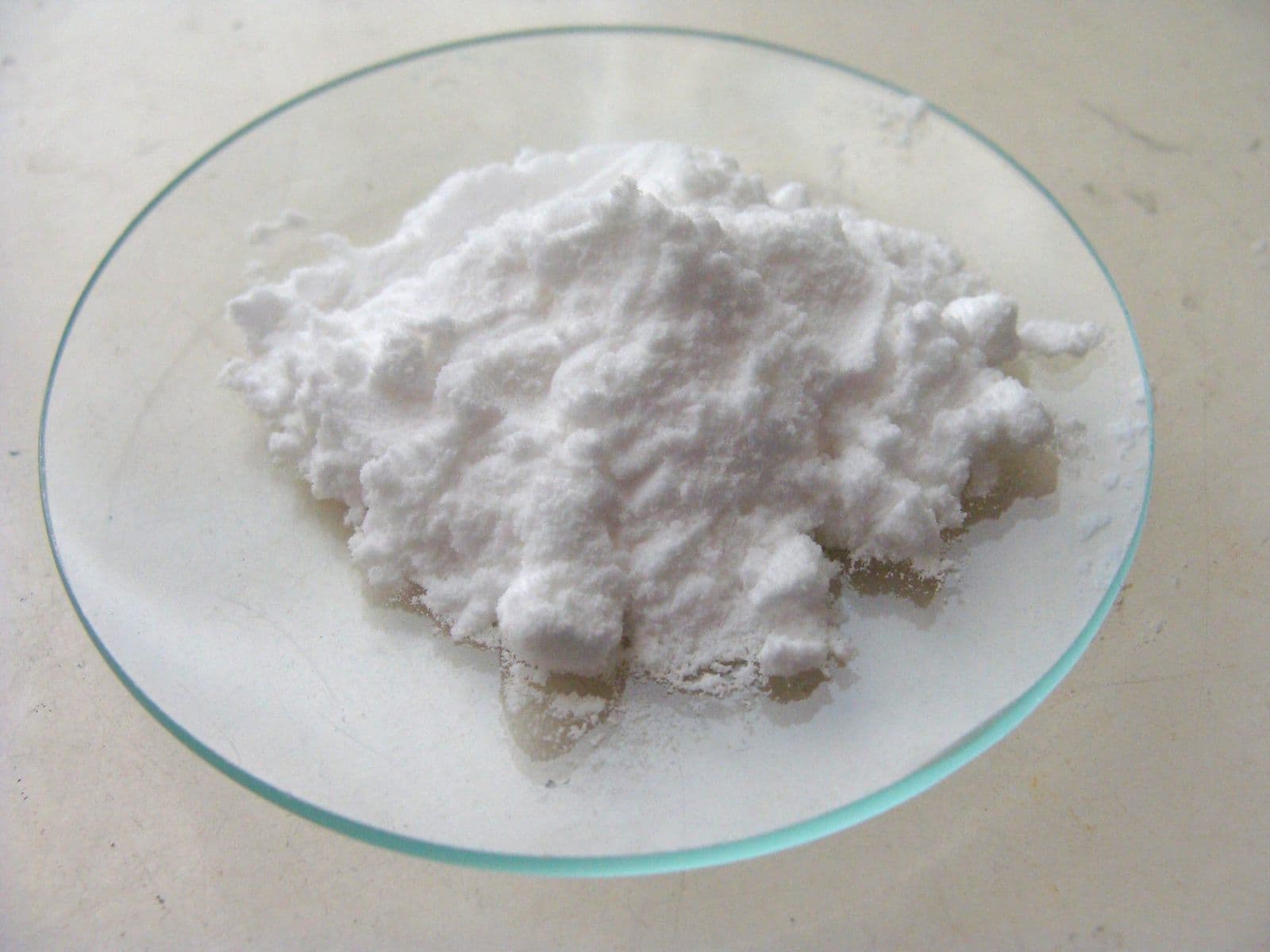
Baking soda is sodium bicarbonate. Tioga County Public Health in New York describes it as a simple, non-toxic, and inexpensive household product and lists three things it does well:
- Scrubbing: it breaks down grease and grime through mild abrasion.
- Odor control: it works by neutralizing acids and odors by balancing pH.
- Bathroom grime: the department suggests you scrub surfaces to remove soap scum and mildew in sinks, tubs and tile.
The same handout is clear about its main limit: it is not a disinfectant. It also warns you to avoid using it on aluminum or unfinished wood to prevent surface damage.
Does baking soda kill mold? The honest evidence level
Low. We could not find a peer-reviewed study that tested household baking soda against mold on walls, tile or wood in a home.
The closest study is a 2013 paper in Mycopathologia that tested sodium bicarbonate against 70 fungal isolates from skin and nail infections, including 12 molds. In the lab, the concentration needed to inhibit 90% of the molds was 40 g/L for the molds, compared with much lower amounts for yeasts. Forty grams per liter is about a 4% solution, far stronger than the "quarter teaspoon in a spray bottle" recipes online. And those were lab plates of clinical fungi, not household mold growing on drywall.
So the fair summary is:
| Claim | Evidence | Verdict |
|---|---|---|
| Baking soda kills household mold on walls | No peer-reviewed home study found | Unproven |
| Sodium bicarbonate inhibits some fungi in a lab | Yes, but molds needed 40 g/L | Limited, lab only |
| Baking soda is a disinfectant | Health department says it is not a disinfectant | No |
| Baking soda helps scrub grime | Works through mild abrasion | Yes |
| Baking soda reduces odors | Bob Vila: baking soda absorbs and neutralizes odor molecules well | Yes, for odor |
Why "doesn't kill mold" isn't a dealbreaker
The EPA doesn't ask you to kill mold. It asks you to remove it and dry the area. Its Mold Course says a biocide is not recommended as a routine practice during mold cleanup, because dead mold is allergenic and may cause allergic reactions. In the EPA's words, it is not enough to simply kill the mold. It must also be removed.
That puts baking soda in a reasonable spot. On a hard surface, the work that matters is physical: loosen the growth, wipe it away, dry the surface. The EPA's own recipe is detergent and water. A baking soda paste is just another way to add scrubbing power. It won't keep mold from coming back; only drying will. The EPA recommends keeping indoor humidity below 60% relative humidity (RH), ideally 30-50%, if possible, and TDLR's Texas advice is stricter: no higher than 50% -- all day long.
Baking soda mold removal: where it works
TDLR says mold growth should be cleaned from non-porous surfaces such as concrete, metal, glass, tile, and solid wood. Those are the surfaces where baking soda mold removal makes sense:
- Glazed tile and grout in a shower or bathtub
- Sinks, glass, sealed countertops and plastic
- Sealed or painted hard surfaces (not unfinished wood, per the health department's warning)
- Small spots on window frames or sills (see mold on windows)
It will not fix mold in drywall, carpet, ceiling tiles or insulation. TDLR says mold is difficult to clean from absorbent (porous) surfaces such as drywall, carpet, fleecy furnishings and insulation, and those materials should be removed and discarded. The EPA adds that absorbent or porous materials, such as ceiling tiles and carpet, may have to be thrown away if they become moldy.
How to use baking soda for mold removal on a small patch
This method is for small areas. The EPA says you can usually do the job yourself if the moldy area is less than about 10 square feet.
- Stop the water. Fix the leak, drip or condensation first. The EPA calls moisture control the key to mold control.
- Put on gear. For small areas the EPA lists gloves, N-95 respirator, goggles/eye protection as the minimum. Our mold removal protective gear guide explains each piece.
- Make a paste. The Tioga County handout's all-purpose recipe is baking soda with just enough water to form a thick paste. Adding a little dish detergent brings it closer to the EPA's detergent-and-water method.
- Scrub. Work the paste into grout and corners with a stiff brush. Scrubbing is the step that removes the mold.
- Wipe and rinse. Wipe off the paste and loosened growth with a damp cloth. Rinse the cloth often or use several.
- Dry completely. The EPA's instruction ends with dry completely. A fan pointed at the area, or a dehumidifier, speeds this up.
- Bag the waste. Seal used rags and sponges in a plastic bag before you carry them through the house.
If the spot comes back within a few weeks, the moisture source is still active, maybe inside the wall. Stop cleaning and investigate.
Baking soda and vinegar for mold: should you combine them?
Many recipes pair them. There's no peer-reviewed evidence that the combination beats either one alone on mold. The fizz is the two ingredients reacting with each other, and the county health department warns to avoid mixing baking soda with vinegar in a closed container, as the reaction can cause pressure buildup. Never mix them in a capped spray bottle.
If you want to use both, use them one after the other: scrub with baking soda paste, rinse, then wipe with vinegar, or the reverse. Vinegar's own evidence is mixed. A 2015 lab study found household vinegar inhibited the growth of Penicillium chrysogenum but not Aspergillus fumigatus. Our vinegar vs bleach for mold guide covers vinegar in detail.
One firm rule: if you've used bleach anywhere in the cleanup, don't follow it with vinegar. The Washington State Department of Health says that when bleach is mixed with an acid, chlorine gas is given off, and it lists vinegar among acid products. The CDC says to never mix bleach with ammonia or other cleaners.
Using baking soda for musty odors
This is where baking soda earns its place. Musty smells usually point to mold or mildew. TDLR says that if you can see mold or smell a musty odor, carefully inspect the home, checking places like plumbing access areas, crawl spaces and behind furniture.
After you've found and fixed the source:
- Open containers. Bob Vila suggests small bowls of baking soda around a musty room, since baking soda absorbs and neutralizes odor molecules well.
- Laundry. For washable items with a mildew smell, the health department suggests adding baking soda to your laundry load to neutralize smells. See mold on clothes.
- Fridges and small spaces. An open box in the fridge or freezer to absorb odors is a classic use; for moldy fridges see mold in refrigerator.
Be careful with one common tip: sprinkling baking soda on a moldy carpet and vacuuming. A regular vacuum can blow mold back into the air (see our HEPA vacuum for mold guide), and moldy carpet usually has to go, per the EPA. Deodorizing a carpet that still has mold only hides the warning sign. If the smell persists after cleaning, read mold smell in house.
Is baking soda safe to use?
It's among the gentlest options, which is a fair reason to choose it. The health department calls it free of harsh chemicals, fragrances, and irritants. The risk in a mold cleanup comes from the mold, not the baking soda. Scrubbing releases spores, so wear the N-95, gloves and goggles anyway. The EPA says dead mold may still cause allergic reactions in some people.
If you have asthma, allergies or a weakened immune system, have someone else do the cleanup. If you have symptoms, see a doctor; a mold test can't diagnose illness. Our mold allergy guide covers what the CDC says.
When baking soda isn't enough
Call in help when mold covers more than about 10 square feet, comes back after cleaning, smells strongly with no visible source, or follows a flood. In Texas, TDLR says that in most instances areas of visible mold less than 25 contiguous square feet in area may be cleaned or removed by people who are not licensed. Larger jobs generally need a licensed remediator.
Texas law says a license holder may not perform both mold assessment and mold remediation on the same project. Hire a mold testing company to find hidden mold, and a separate mold removal company to remove it. We list both across Texas, including Houston and San Antonio. Check any company with our license check and read how we verify listings. For more DIY options, see how to get rid of mold and hydrogen peroxide for mold.
FAQ
Does baking soda for mold actually work?
It works as a scrubber and deodorizer, not as a proven mold killer. A public health handout says it is not a disinfectant. The EPA's goal is removal anyway: scrub mold off hard surfaces with detergent and water, and dry completely.
How do I use baking soda for mold removal?
Make a thick paste with water, scrub the moldy hard surface, wipe it off, and dry the area fully. Wear gloves, N-95 respirator, goggles/eye protection. Use it only on small areas under about 10 square feet.
Is baking soda and vinegar for mold better than either alone?
There's no peer-reviewed evidence that it is. The two react with each other, and a health department warns to avoid mixing baking soda with vinegar in a closed container. Use them one after the other if you want both.
Can baking soda mold removal work on drywall or carpet?
No. TDLR says mold is difficult to clean from absorbent (porous) surfaces such as drywall, carpet, fleecy furnishings and insulation and those should be removed and discarded. Baking soda can only reach the surface.
Will baking soda get rid of a musty mold smell?
It can absorb lingering odor once the mold and moisture are gone; Bob Vila notes baking soda absorbs and neutralizes odor molecules well. If the smell comes back, there's still mold or moisture somewhere.
Licensed Mold Pros directory
Find a licensed mold removal company
Removal companies hold a Texas mold remediation license. They remove the mold to a plan written by a separate, licensed testing company.
Sources
- Tioga County Public Health (NY): How to Clean Using Baking Soda (PDF) (Oct 2025)
- Letscher-Bru et al.: Antifungal activity of sodium bicarbonate against fungal agents causing superficial infections, Mycopathologia 2013 (PubMed) (2013; accessed Oct 2026)
- Rogawansamy et al.: An Evaluation of Antifungal Agents for the Treatment of Fungal Contamination in Indoor Air Environments (PMC) (2015)
- Bob Vila: How to Get Rid of Musty Smell in a Basement (updated Oct 5, 2025)
- EPA: What are the basic mold cleanup steps? (accessed Oct 2026)
- EPA: Mold Course Chapter 1 (accessed Oct 2026)
- EPA: Mold Course Chapter 6 (accessed Oct 2026)
- EPA: A Brief Guide to Mold, Moisture and Your Home (accessed Oct 2026)
- EPA: Mold Remediation in Schools and Commercial Buildings, Chapter 2 (accessed Oct 2026)
- CDC: Mold (accessed Oct 2026)
- Washington State Department of Health: Dangers of Mixing Bleach with Cleaners (accessed Oct 2026)
- TDLR: Help! I have mold (Mold Remediation Consumer Protection) (Jan 2025)
- Texas Occupations Code § 1958.155 (texas.public.law) (accessed Oct 2026)
We link every number, rule and health claim to its source. See our editorial policy.