On this page
- The EPA's protective gear for mold removal, by job size
- N95 mask for mold removal: what to buy
- N95 respirator fit for mold removal
- Mold removal gloves: what type to use
- Goggles without vents
- Clothing, boots and after-cleanup steps
- Your mold removal protective gear checklist
- Who shouldn't do mold cleanup at all
- When the job is too big for DIY gear
- FAQ
- Sources
Short answer
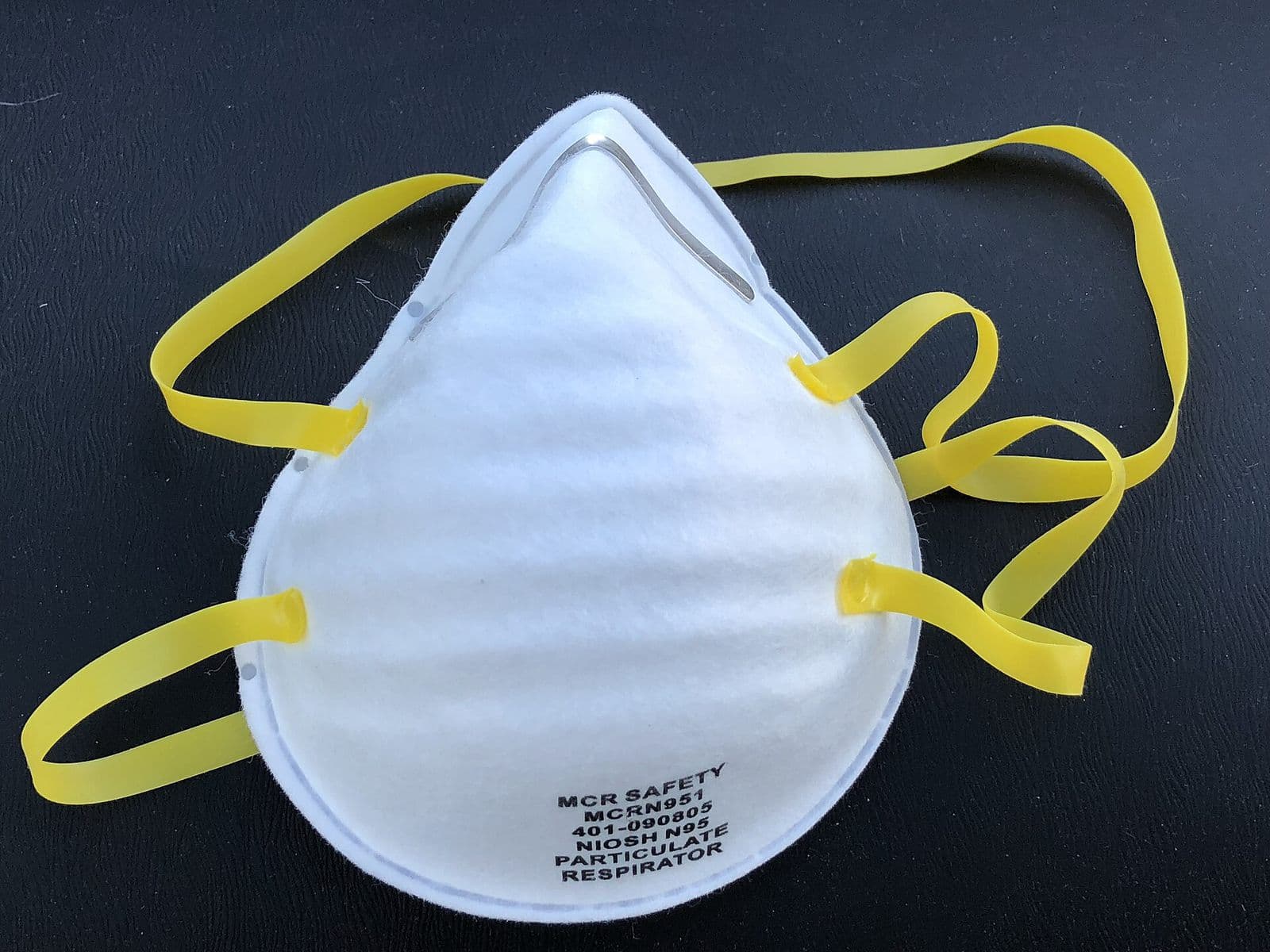
For a small mold cleanup, the EPA's minimum mold removal protective gear is gloves, N-95 respirator, goggles/eye protection. Use a NIOSH-approved N95 that seals to a clean-shaven face, long gloves that reach the middle of the forearm, and goggles that do not have ventilation holes. Jobs from 10 to 100 square feet call for more, and anything bigger is a job for a licensed remediator.
Mold removal protective gear matters because cleanup is when you stir up the most spores. Scrubbing, scraping and bagging release mold particles that you'd otherwise never breathe. The good news: the gear for a small job is cheap and sold at most hardware stores. The catch: an N95 only works if it's the real thing and fits your face. This guide covers what the EPA, CDC and NIOSH recommend, piece by piece.
The EPA's protective gear for mold removal, by job size
The EPA's Mold Course sorts protective gear into three levels:
| Job size | EPA level | Gear |
|---|---|---|
| Small (under 10 sq ft) | Minimum | Gloves, N-95 respirator, goggles/eye protection |
| Medium (10-100 sq ft) | Limited | Gloves, N-95 respirator or half-face respirator with HEPA filter, disposable overalls, goggles/eye protection |
| Large (over 100 sq ft) | Full | Gloves, disposable full body clothing, head gear, foot coverings, full-face respirator with HEPA filter |
The EPA's schools and commercial buildings guide sets the floor for any mold work: The minimum PPE is an N-95 respirator, gloves and eye protection. The CDC's shopping list for mold cleanup adds waterproof rubber boots, which make sense after a flood.
N95 mask for mold removal: what to buy
The first thing to know is the difference between a mask and a respirator. NIOSH explains that filtering facepiece respirators fit tightly against the face creating a seal (tight-fitting), while masks are designed to cover your nose and mouth but not form a tight seal to your face. A cloth or surgical mask isn't a substitute.
The EPA says only respirators approved by the National Institute for Occupational Safety and Health (NIOSH) should be worn. An N-95 respirator covers the nose and mouth, filters out 95 percent of airborne particulates. The CDC's shopping list says to buy N-95 respirators, or ones that provide more protection (check packaging for "N-95").
How to tell an N95 is NIOSH-approved
Counterfeits are common, so check the respirator itself. NIOSH's guidance says the label on the facepiece or strap should show the approval holder's name, the model or part number, "N95," the approval number and "NIOSH" (NIOSH video transcript). The Virginia Department of Health summarizes the check:
- Look for the NIOSH testing and certification (TC) approval number, such as TC 84A-XXXX.
- Verify the approval number, manufacturer, and model using the NIOSH Certified Equipment List (CEL).
- Be cautious of products with unusual or incorrect labeling, misspellings, or claims that seem too good to be true.
NIOSH also lists warning signs such as a misspelled "NIOSH," decorative add-ons, or claims of approval for children (NIOSH).
N95 respirator fit for mold removal
An N95 that leaks around the edges isn't filtering much. Fit is where most people go wrong.
Seal. NIOSH says the respirator must fit the user's face snugly (i.e., create a seal). For home use without formal fit testing, the CDC says to make sure the respirator fits properly, even if not fit-tested, by following the instructions on the package.
Seal check every time. NIOSH says to conduct a user seal check every time you put on the respirator, and that NIOSH-approved respirators include instructions on how to conduct a user seal check. Follow the steps printed with yours.
Facial hair. This is the big one. The CDC says that to get the most protection users should be clean-shaven in the areas where the mask seals to the face. NIOSH reports that facial hair under the seal causes 20 to 1000 times more leakage compared to clean-shaven individuals. If you have a beard and can't shave, have someone else do the work.
When to throw it away. The CDC says N-95 respirators should be thrown away whenever they are damaged, soiled, or are noticeably harder to breathe through.
Not for children. The CDC notes that NIOSH-approved respirators are not designed for children, and that children should not take part in disaster cleanup work.
What an N95 won't protect you from
An N95 filters particles like mold spores. NIOSH says a particulate respirator does not filter out harmful gases or vapors. That matters if you use bleach or other strong cleaners: the N95 won't stop the fumes, so ventilate. The EPA says that if disinfectants or biocides are used, always ventilate the area and exhaust the air to the outdoors. And never mix products: the CDC says to never mix bleach with ammonia or other cleaners because it will produce a poisonous gas. Our vinegar vs bleach for mold guide explains the chemistry.
The N95 also offers no eye protection. The EPA notes that an N-95 offers no eye protection, which is why goggles are on the list.
Mold removal gloves: what type to use
The EPA says long gloves that extend to the middle of the forearm are recommended, and that you should avoid touching mold with bare hands.
The material depends on what you're cleaning with:
| You're using | EPA/CDC glove guidance |
|---|---|
| Mild detergent and water | Ordinary household rubber gloves are fine |
| Chlorine bleach or strong cleaners | Gloves of natural rubber, neoprene, nitrile, polyurethane, or PVC |
| Flood cleanup | Non-latex, vinyl, nitrile, or rubber |
If you're allergic to latex, note that nitrile appears on both lists. Throw disposable gloves away in the same sealed bag as your moldy rags.
Goggles without vents
Eye protection is easy to get wrong. The EPA says goggles must be designed to keep out dust and small particles, and its schools guide says safety glasses or goggles with open vent holes are not acceptable. For a home job, look for:
- Goggles that do not have ventilation holes, as the EPA's home guide recommends
- Goggles that provide complete eye protection, per the EPA and CDC flood guide
- Not vented safety glasses: the same guide says safety glasses or goggles that have open vent holes will not protect you against dust and small particles
A full-face respirator covers your eyes too. The EPA notes you can protect your eyes with properly fitted goggles or a full-face respirator with HEPA filter.
Clothing, boots and after-cleanup steps
For small jobs, old clothes you can wash right away work. The EPA says disposable clothing is recommended for medium and large remediation projects. After a flood, add rubber boots: the CDC says to wear rubber boots, rubber gloves, and goggles during cleanup.
When you finish, the EPA and CDC flood guide says to shower and change your clothes so you don't carry mold into clean parts of the house.
Your mold removal protective gear checklist
For a small DIY job under about 10 square feet:
- NIOSH-approved N95 respirator, with a TC approval number you've checked
- Spare N95s (replace when soiled, damaged or hard to breathe through)
- Long gloves to mid-forearm (nitrile or rubber if using bleach)
- Unvented goggles
- Old clothes or disposable coveralls
- Rubber boots for wet or flooded areas
- Heavy plastic bags for moldy waste
- A fan or open window to vent cleaner fumes outdoors
If you're scrubbing, you may also want a HEPA vacuum for the final pass and a dehumidifier to dry the area.
Who shouldn't do mold cleanup at all
The CDC says that if you have a respiratory condition like asthma or COPD or a weakened immune system stay away from moldy spaces. It also says to stop working and see a medical provider if you have trouble breathing while wearing a respirator. Gear lowers your exposure; it doesn't make cleanup safe for everyone.
If you think mold is affecting your health, see a doctor. A mold test can't diagnose illness. Our guides to mold exposure and mold and lungs cover what the CDC and EPA say.
When the job is too big for DIY gear
The EPA says that if the moldy area is less than about 10 square feet, in most cases you can handle it yourself. For heavier work, the EPA and CDC flood guide says that if you plan to spend a lot of time ripping out moldy drywall, wear a half-face or full-face respirator. At that point, a professional crew with containment is usually the better call.
In Texas, TDLR says that in most instances areas of visible mold less than 25 contiguous square feet in area may be cleaned or removed by people who are not licensed. Larger jobs generally need a licensed remediator. Texas law also says a license holder may not perform both mold assessment and mold remediation on the same project, so hire a mold testing company to assess and a separate mold removal company to remediate. We list both in Houston, Austin and across Texas. Use our license check to confirm a license and see how we verify every listing. For DIY methods, see how to get rid of mold.
FAQ
What is the minimum mold removal protective gear?
The EPA's minimum for small jobs is gloves, N-95 respirator, goggles/eye protection. Add rubber boots after a flood, and step up to a half-face respirator with HEPA filter and disposable overalls for jobs from 10 to 100 square feet.
Is an N95 mask for mold removal enough?
For a small job, yes, if it's NIOSH-approved and seals to your face. It filters out 95 percent of airborne particulates but does not filter out harmful gases or vapors, so ventilate when using cleaners.
What are the best mold removal gloves?
Long gloves that reach the middle of the forearm. With bleach or strong cleaners, choose natural rubber, neoprene, nitrile, polyurethane, or PVC; household rubber gloves are fine with mild detergent.
Does an N95 respirator mask for mold removal work with a beard?
Not well. NIOSH says facial hair under the seal causes 20 to 1000 times more leakage compared to clean-shaven individuals. Shave where the respirator seals or let someone else do the cleanup.
What protective gear for mold removal protects my eyes?
Goggles designed to keep out dust, without open vents. The EPA says safety glasses or goggles with open vent holes are not acceptable. A full-face respirator with a HEPA filter also protects your eyes.
Licensed Mold Pros directory
Find a licensed mold removal company
Removal companies hold a Texas mold remediation license. They remove the mold to a plan written by a separate, licensed testing company.
Sources
- EPA: Mold Course Chapter 6 (accessed Oct 2026)
- EPA: Mold Course Chapter 1 (accessed Oct 2026)
- EPA: A Brief Guide to Mold, Moisture and Your Home (accessed Oct 2026)
- EPA: Mold Remediation in Schools and Commercial Buildings, Chapter 3 (accessed Oct 2026)
- EPA/CDC: Homeowner's and Renter's Guide to Mold Cleanup After Disasters (PDF) (accessed Oct 2026)
- CDC: Mold (accessed Oct 2026)
- CDC: Shopping List for Cleaning Mold in Your Home After a Flood (Mar 28, 2024)
- CDC: What You Can Do to Protect Your Respiratory Health During Disaster Cleanup (reviewed Aug 26, 2026)
- CDC/NIOSH: Proper N95 Respirator Use for Respiratory Protection Preparedness (Mar 16, 2020)
- CDC/NIOSH Science Blog: NIOSH Science Blog on facial hair and respirators ("No-Shave November") (Nov 2, 2017)
- CDC/NIOSH: Community Respirators and Masks (updated Oct 28, 2026)
- CDC/NIOSH: How to Tell if Your N95 Is NIOSH Approved (video transcript) (accessed Oct 2026)
- Virginia Department of Health: Counterfeit NIOSH-Approved Respirators (Sept 4, 2026)
- TDLR: Help! I have mold (Mold Remediation Consumer Protection) (Jan 2025)
- Texas Occupations Code § 1958.155 (texas.public.law) (accessed Oct 2026)
We link every number, rule and health claim to its source. See our editorial policy.