On this page
Short answer
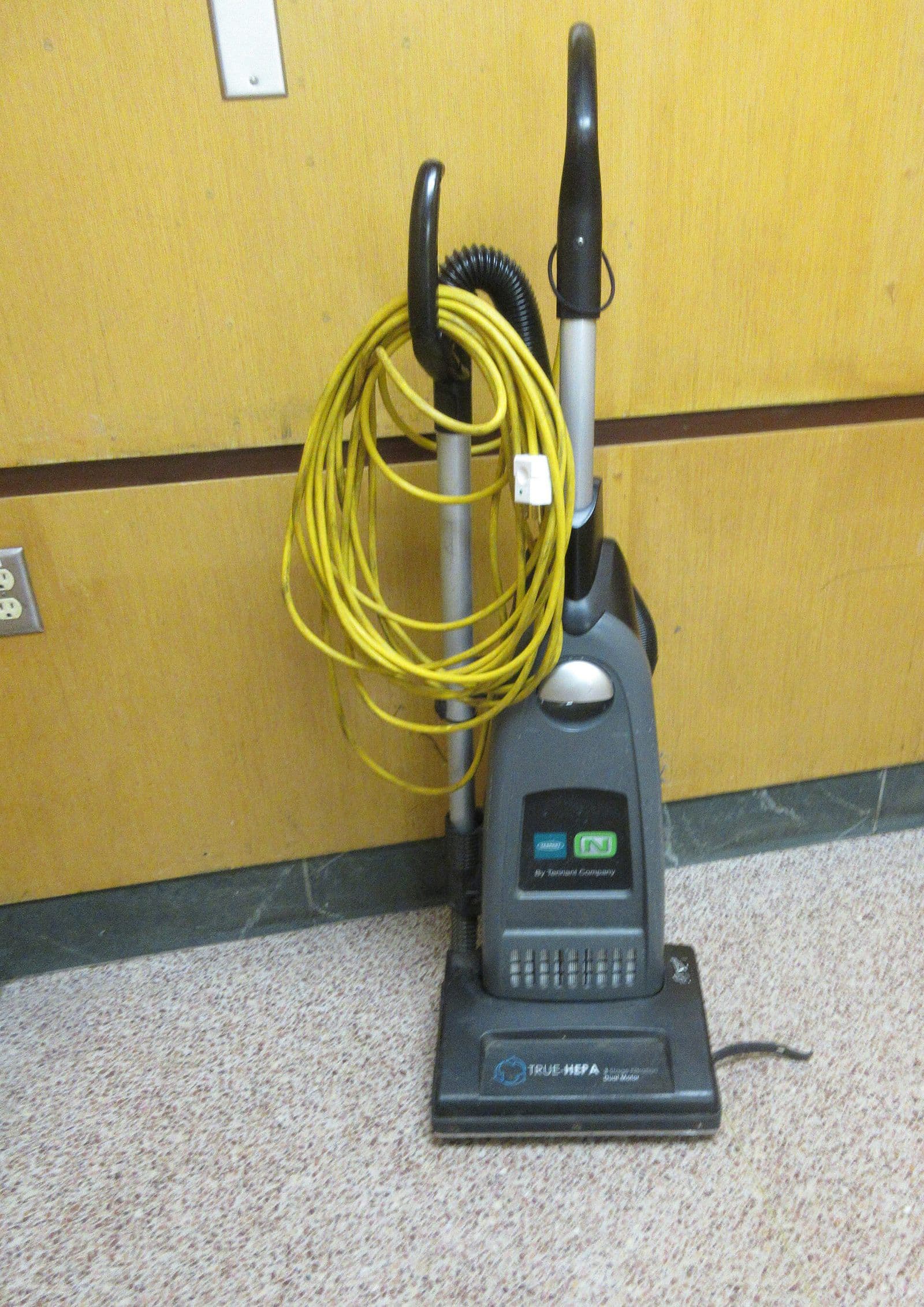
A HEPA vacuum for mold is a cleanup tool for dust and loose spores after the moldy material is removed and the area is dry. A true HEPA filter captures particulates of 0.3 microns with 99.97% efficiency, and the vacuum must be built so all the air drawn into the machine is expelled through the HEPA filter. The EPA recommends HEPA vacuums for the final clean up of remediation areas after materials have been thoroughly dried. A regular household vacuum can blow mold back into the room.
A HEPA vacuum for mold is one of the few pieces of pro equipment that also makes sense for homeowners. But it's easy to misuse. It doesn't remove mold growing in drywall or carpet, and a vacuum with a "HEPA" sticker isn't automatically a sealed HEPA system. This guide explains what true HEPA means, how licensed remediators use HEPA vacs, why your everyday vacuum is the wrong tool, and how to use one safely.
What "true HEPA" means
HEPA stands for high efficiency particulate air. The EPA says a HEPA filter, as officially defined by the U.S. Department of Energy, can theoretically remove at least 99.97% of dust, pollen, mold, bacteria, and other airborne particles at a size of 0.3 microns (µm).
Why 0.3 microns? The EPA explains that it's the most penetrating particle size (MPPS), the size that slips through filters most easily. Particles that are larger or smaller are caught even more efficiently.
A HEPA filter isn't the same as a HEPA vacuum
The filter is only half the story. The federal lead-renovation rule (40 CFR 745.83) gives the clearest legal definition of a HEPA vacuum:
- It's a vacuum cleaner which has been designed with a high-efficiency particulate air (HEPA) filter as the last filtration stage.
- The filter must be capable of capturing particulates of 0.3 microns with 99.97% efficiency.
- The machine must be designed so that all the air drawn into the machine is expelled through the HEPA filter with none of the air leaking past it.
That last point is the one shoppers miss. A filter that meets the standard does little good if air escapes around a loose housing or gasket. The EPA's mold course makes the same point: care must be taken to ensure that the new filter is properly seated on the vacuum so there are no leaks.
What to look for when buying:
| Look for | Why |
|---|---|
| The spec "99.97% at 0.3 microns" stated for the filter | That's the DOE/EPA HEPA standard; vague terms don't tell you the filter meets it |
| HEPA as the last filtration stage | Required by the federal definition |
| A sealed design where all exhaust passes through the filter | So air isn't leaking past it |
| A filter you can change without spilling the contents | EPA says workers changing filters should wear PPE because captured mold is still there |
Why a regular vacuum can spread mold spores
A normal vacuum collects dust in a bag or bin and pushes air out the exhaust. If the filter is coarse or air leaks around it, fine particles go back into the room.
Researchers have measured this. A 2013 study in Applied and Environmental Microbiology tested 21 vacuums and found that emission of bacteria and molds (Penicillium/Aspergillus) can reach values as high as 1E5 cell equivalents/min, or up to about 100,000 cell equivalents a minute in the exhaust. The authors said the results highlight the potential capability of vacuum cleaners to disseminate appreciable quantities of molds indoors. Results varied a lot: in many tests mold emissions were below detection, and others were high.
Moving air in general spreads mold. The EPA and CDC flood guide warns: Do not use fans if mold has already started to grow, because the fans may spread the mold. A vacuum's exhaust is a small fan aimed at the floor.
Shop vacs and wet vacs have their own rules. The EPA says wet vacuums should be used only when materials are still wet, otherwise they may spread mold spores. The NIH's mold procedures add that wet vacuums should not be used to vacuum porous materials, such as gypsum board, and that mold and spores can stick to tanks and hoses and may grow inside the unit itself. A wet/dry vac is good for pulling up flood water; it's not a substitute for HEPA.
How mold remediation pros use a HEPA vacuum
In professional work, the HEPA vac is a finishing tool, not the main event. The EPA and NIH guidance lay out where it fits:
- Contain the area. For larger jobs, the EPA says the containment area must be maintained under negative pressure relative to surrounding areas, which can be done with a HEPA-filtered fan unit exhausted outside of the building.
- Remove what can't be cleaned. The NIH says physically removing mold contamination is the primary means of remediation. Moldy drywall and insulation are cut out and bagged. The EPA says these materials should be double-bagged in 6-mil or thicker polyethylene bags.
- Clean hard surfaces. Mold can generally be removed from hard surfaces by wiping or scrubbing with water and detergent.
- Dry everything.
- HEPA vacuum last. The EPA recommends HEPA vacuums for the final clean up of remediation areas after materials have been thoroughly dried, and also for cleaning up dust that has settled outside the remediation area.
- Handle the vacuum as contaminated. The filter and contents of the HEPA vacuum must be disposed of in well-sealed plastic bags.
That order matters. A HEPA vac run over wet, actively moldy drywall doesn't remediate anything; it just collects some surface spores while the source stays in the wall. To see the whole sequence, read our mold remediation process guide. After cleanup, a separate company may do clearance testing to confirm the job passed.
HEPA vacuum mold removal at home: when it helps
For homeowners, a HEPA vac is most useful for:
- Settled dust after a small cleanup. Once you've scrubbed and dried a small patch, a HEPA pass over nearby floors and sills picks up loose spores.
- Belongings with settled spores. TDLR says personal belongings without mold growth can be kept, but these items may need a deep cleaning to remove mold particles (spores) that have settled in the fabric. HEPA vacuuming is one way to do that on upholstery and fabric that isn't moldy itself (see mold on furniture and mold in mattress).
- Hard floors and sealed surfaces after the moisture source is fixed.
It won't fix:
- Moldy carpet. The EPA says absorbent or porous materials, such as ceiling tiles and carpet, may have to be thrown away if they become moldy. See mold in carpet.
- Mold inside walls, insulation or ductwork. See mold in walls and mold in AC vents.
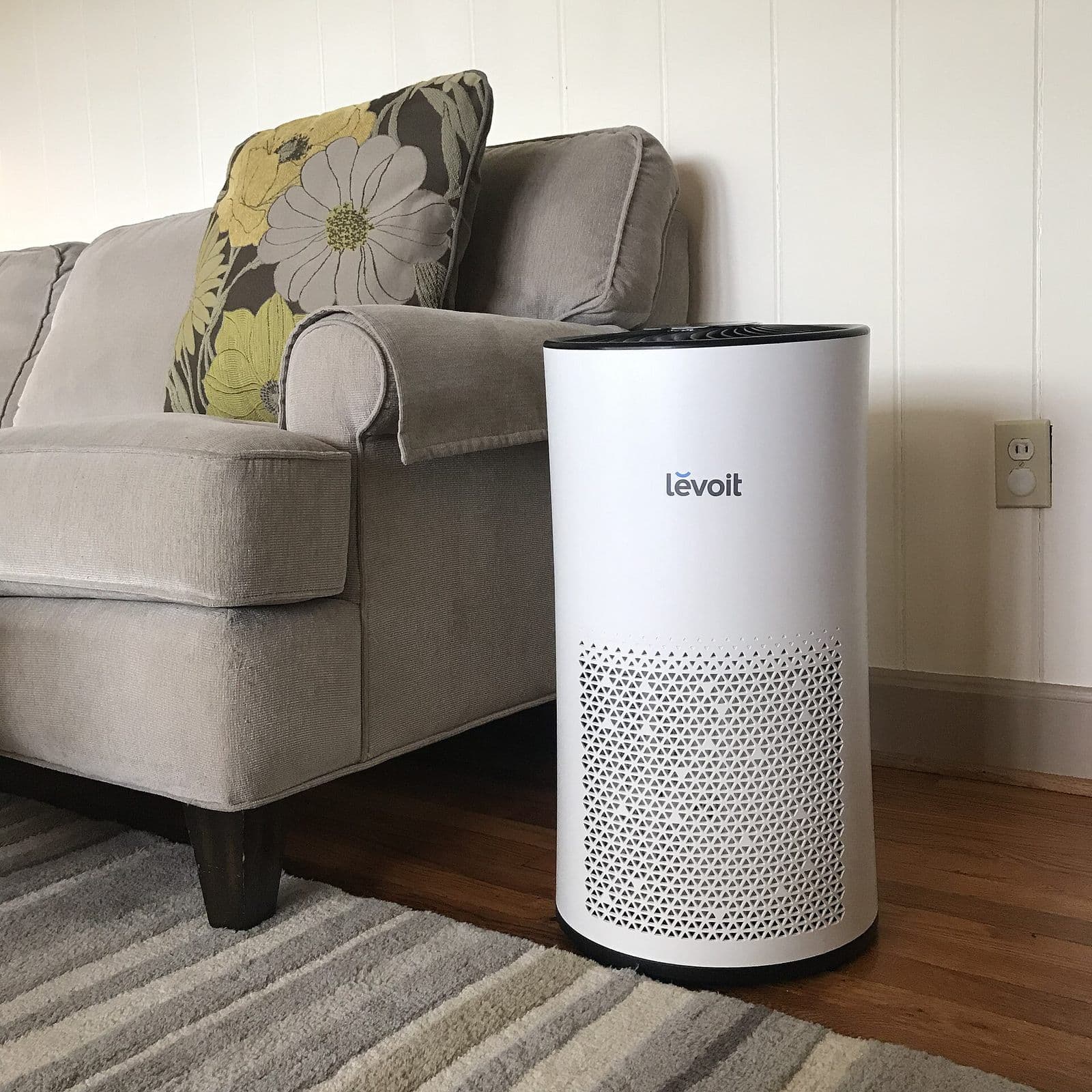
- Airborne spores in the whole house. A vacuum cleans surfaces. For air, see our air purifier for mold guide, which covers HEPA air cleaners.
How to use a HEPA vacuum for mold safely
- Fix the moisture and finish the scrubbing first. The EPA's HEPA step comes after materials have been thoroughly dried.
- Wear your gear. The EPA minimum for small mold jobs is gloves, N-95 respirator, goggles/eye protection. See mold removal protective gear.
- Check the filter seating before you start, so there are no leaks.
- Go slowly. An EPA training photo shows workers taking care to disturb the mold as little as possible while vacuuming. Fast, aggressive strokes kick up dust.
- Empty it outdoors into a sealed bag. The EPA says the filter and contents of the HEPA vacuum must be disposed of in well-sealed plastic bags. Wear your mask while you do it, because when changing the vacuum filter, workers should wear PPE.
- Clean the attachments. Wipe hoses and tools so you don't carry spores to the next room.
- Change your clothes and shower. The EPA and CDC flood guide recommends you shower and change your clothes after leaving a mold site.
Should you buy or rent a HEPA vacuum?
If you're dealing with one small spot, a careful damp wipe may be all you need, since the EPA's basic method for hard surfaces is to scrub mold off hard surfaces with detergent and water, and dry completely. A HEPA vac becomes worth having if you have allergies or asthma in the home, recurring humidity problems, or a lot of belongings to clean after a leak. In humid parts of Texas, pairing it with a dehumidifier does more to prevent repeat problems than vacuuming alone. The EPA recommends keeping indoor humidity below 60% relative humidity (RH), ideally 30-50%, if possible.
When to call a professional
Call a licensed company when the mold is bigger than about 10 square feet (the EPA's DIY threshold), followed a flood, or is inside walls or HVAC. In Texas, TDLR says that in most instances areas of visible mold less than 25 contiguous square feet in area may be cleaned or removed by people who are not licensed; bigger jobs generally need a licensed remediator, who will bring containment, air filtration and HEPA vacs.
Texas law says a license holder may not perform both mold assessment and mold remediation on the same project. Hire a mold testing company to assess, and a separate mold removal company to remediate. We list both in Houston, Dallas, Lubbock and across Texas. Check any license with our license check and see how we verify every company. For costs, see mold remediation cost.
FAQ
What is a HEPA vacuum for mold?
It's a vacuum with a HEPA filter as the last filtration stage, built so all air passes through that filter. The filter captures particulates of 0.3 microns with 99.97% efficiency. It's used to pick up settled spores and dust after mold cleanup.
Does HEPA vacuum mold removal get rid of mold?
It removes loose spores and dust, not mold growing inside materials. The EPA recommends HEPA vacuums for the final clean up of remediation areas after materials have been thoroughly dried, after moldy materials are removed.
How do pros use a mold remediation HEPA vacuum?
As a final step, inside a contained area kept under negative pressure with a HEPA-filtered fan unit exhausted outside of the building. They also HEPA-vacuum dust that settled outside the work area and bag the filter contents in sealed plastic.
Can I use a regular vacuum on mold?
It's a poor choice. A 2013 study found vacuum exhaust could release molds at up to 1E5 cell equivalents/min. The EPA also warns that wet vacuums may spread mold spores if used on materials that aren't wet.
Is a HEPA filter vacuum for mold removal worth buying?
It's worth it if you have recurring moisture issues, allergy or asthma concerns, or many belongings to clean. TDLR says items may need a deep cleaning to remove mold particles (spores) that have settled in the fabric. For one small patch on tile, scrubbing and drying is usually enough.
Licensed Mold Pros directory
Find a licensed mold removal company
Removal companies hold a Texas mold remediation license. They remove the mold to a plan written by a separate, licensed testing company.
Sources
- EPA: What is a HEPA filter? (accessed Oct 2026)
- 40 CFR 745.83 Definitions (Legal Information Institute, Cornell Law School) (accessed Oct 2026)
- EPA: Mold Course Chapter 4 (accessed Oct 2026)
- EPA: Mold Course Chapter 6 (accessed Oct 2026)
- EPA: Mold Remediation in Schools and Commercial Buildings, Chapter 2 (accessed Oct 2026)
- EPA: Mold Remediation in Schools and Commercial Buildings, Chapter 3 (accessed Oct 2026)
- EPA: What are the basic mold cleanup steps? (accessed Oct 2026)
- EPA: A Brief Guide to Mold, Moisture and Your Home (accessed Oct 2026)
- EPA/CDC: Homeowner's and Renter's Guide to Mold Cleanup After Disasters (PDF) (accessed Oct 2026)
- National Institutes of Health: Moisture and Mold Remediation Standard Operating Procedures (PDF) (2023)
- Veillette et al.: Microbial Contents of Vacuum Cleaner Bag Dust and Emitted Bioaerosols and Their Implications for Human Exposure Indoors, Appl. Environ. Microbiol. (PMC) (Oct 2013)
- TDLR: Help! I have mold (Mold Remediation Consumer Protection) (Jan 2025)
- Texas Occupations Code § 1958.155 (texas.public.law) (accessed Oct 2026)
We link every number, rule and health claim to its source. See our editorial policy.