On this page
- What hydrogen peroxide is (and what's in the bottle)
- Does peroxide kill mold? What the studies show
- Why killing mold isn't the goal
- Hydrogen peroxide vs bleach for mold
- Never mix peroxide with bleach or other cleaners
- Hydrogen peroxide mold removal: where it works and where it doesn't
- How to use hydrogen peroxide for mold on a small patch
- Is hydrogen peroxide safe to use on mold?
- When to call a professional instead
- FAQ
- Sources
Short answer
Hydrogen peroxide for mold works best as a cleaner on small patches of hard, non-porous surfaces. Drugstore peroxide is a low concentration (3-9%), and the studies that show it killing mold spores mostly used stronger mists in sealed rooms. The EPA says it is not enough to simply kill the mold. It must also be removed, so scrub, dry, and fix the moisture. Peroxide will not rescue moldy drywall, carpet or insulation.
Hydrogen peroxide for mold is a popular choice because it doesn't smell like bleach and it's already in most medicine cabinets. It can be a useful tool. But the brown bottle has limits, and the research behind it is thinner than many cleaning blogs suggest. This guide covers what peroxide does, what the peer-reviewed studies found, how to use it safely, and when to stop and call a professional.
What hydrogen peroxide is (and what's in the bottle)
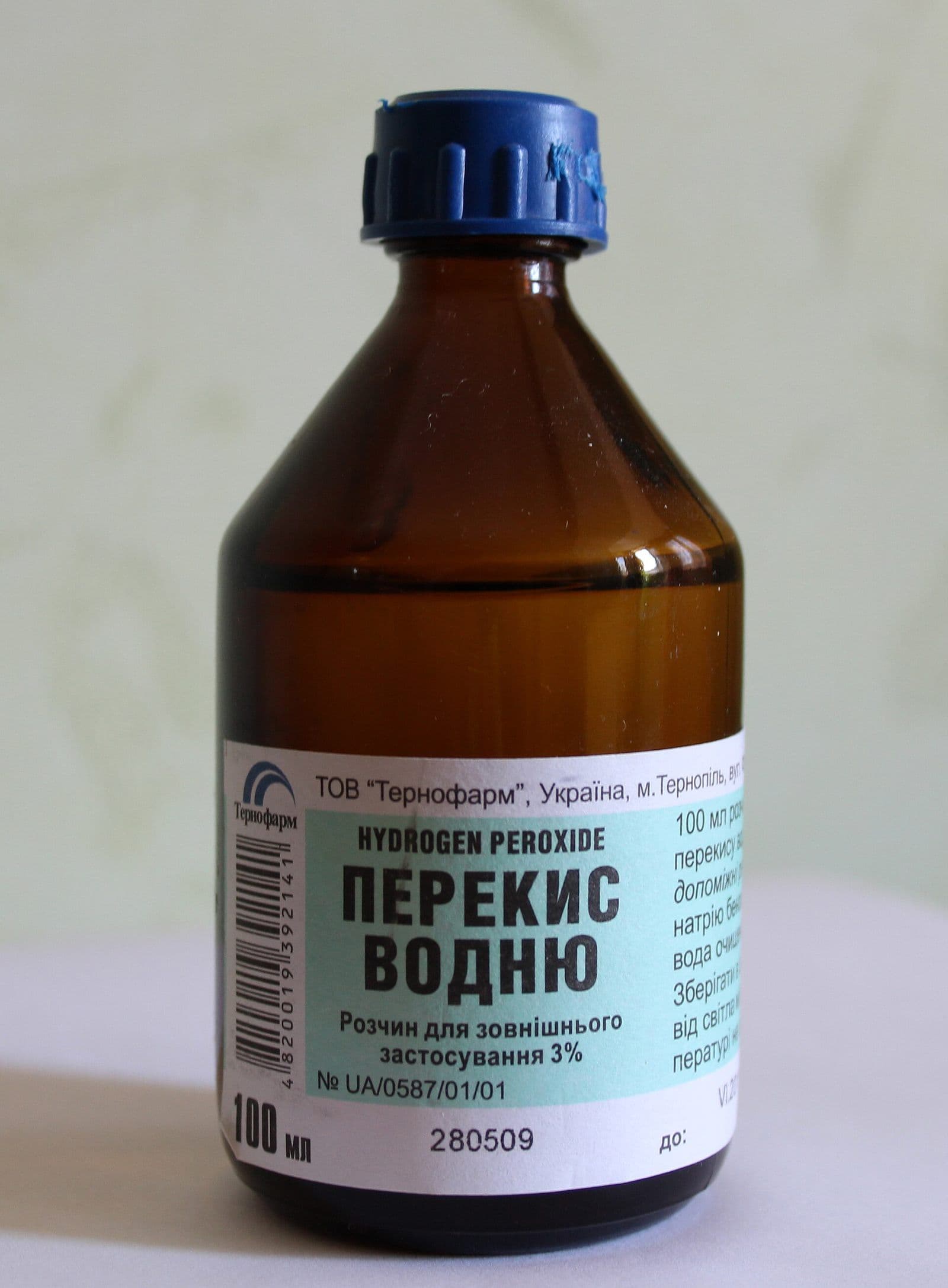
The brown bottle at the drugstore is a weak solution. The CDC's toxic substances agency (ATSDR) says household products contain hydrogen peroxide at low concentrations (3-9%), and that it is used at home as a clothes and hair bleach. That second fact matters: peroxide can lighten fabric, carpet and some finishes, so test it on a hidden spot first.
Most of the peroxide sold for first aid is 3%. That is the strength this guide assumes. Stronger "food grade" or industrial peroxide is a different and more hazardous product, covered in the safety section below.
Does peroxide kill mold? What the studies show
Yes, under the right conditions, but the best evidence comes from settings very different from your bathroom.
Peroxide mist on steel surfaces. A 2020 study in the journal Foods sprayed a mist made from 5% hydrogen peroxide into a sealed test room. Exposure to H2O2 mist for 2 or 4 h lead to >3 log reduction in mould spores in the majority of the tests. A 3-log reduction means about 99.9% fewer live spores. But not every mold reacted the same way: the authors found one species, P. variotii, is more resistant to H2O2 compared to the other moulds tested. The spores in that study sat on stainless steel coupons, not drywall.
Peroxide mist in a water-damaged room. A 2011 German study fogged rooms with 5-6% peroxide. On test surfaces, A. brasiliensis was reduced >4 log on vertical and horizontal surfaces. In a real room with heavy mold, though, the wall and plaster showed smaller reductions, and the authors concluded that the depth effect of the hydrogen peroxide mist is limited. They also said the system is not intended to be a complete replacement for manual cleaning and surface disinfection.
Mold coming back. A 2015 review of antifungal cleaners in the International Journal of Environmental Research and Public Health summarized earlier work that tested a 17% hydrogen peroxide solution and bleach against indoor molds. That earlier study reported that two weeks after the treatment, fungal growth was found to be entirely uninhibited. The same review noted that viable spores inside porous materials may be unaffected and that most antifungal products work mainly on hard non-porous surfaces.
What that means for you. Peroxide can kill mold spores in a lab or sealed room. A quick spray of 3% peroxide on a wall is a far weaker treatment than any of those tests. And none of the studies show that peroxide fixes the reason mold grew. The plain conclusion: treat peroxide as a cleaning aid, not a cure.
Why killing mold isn't the goal
The EPA is direct about this. A biocide (a mold-killing chemical) is not recommended as a routine practice during mold cleanup. The reason: dead mold is allergenic and may cause allergic reactions in some people, so it is not enough to simply kill the mold. It must also be removed.
The EPA also says that in most cases, it is not possible or desirable to sterilize an area. Spores are everywhere. What stops regrowth is drying. The EPA calls moisture control the key to mold control, and it recommends keeping indoor humidity below 60% relative humidity (RH), ideally 30-50%, if possible. In humid parts of Texas, a dehumidifier for mold usually does more long-term good than any spray.
Hydrogen peroxide vs bleach for mold
| 3% hydrogen peroxide | Household chlorine bleach | |
|---|---|---|
| Typical household strength | 3-9% for household products | CDC: dilute to no more than 1 cup of household laundry bleach in 1 gallon of water |
| Kills mold spores in studies | Yes as a mist in sealed rooms (2020, 2011) | A biocide, but EPA says biocides are not recommended as a routine practice |
| Fumes | 3% peroxide can cause respiratory irritation | Must ventilate the area and exhaust the air to the outdoors |
| Bleaches fabric | Yes, used as a clothes and hair bleach | Yes |
| Porous materials (drywall, carpet) | No lasting fix | No lasting fix; TDLR says bleach on drywall is not a permanent effective solution |
| Mixing danger | Do not mix with bleach | Never mix bleach with ammonia or other cleaners |
For hydrogen peroxide vs bleach for mold, neither is the EPA's first choice. The EPA's basic instruction for hard surfaces is to scrub mold off hard surfaces with detergent and water, and dry completely. Peroxide's main advantages over bleach are that it smells less harsh and you don't need to dilute it. Its main drawback is the same as bleach's: it does nothing for mold inside porous material or for the leak behind it.
We compare bleach and vinegar in detail in vinegar vs bleach for mold, so we won't repeat that here.
Never mix peroxide with bleach or other cleaners
Use one product at a time. The Washington State Department of Health warns that bleach also reacts with some oven cleaners, hydrogen peroxide, and some insecticides. It also explains that bleach plus ammonia makes toxic gases called chloramines, and bleach plus an acid gives off chlorine gas. The CDC says to never mix bleach with ammonia or other cleaners because it will produce a poisonous gas.
The EPA and CDC flood cleanup guide puts it simply: do not mix cleaning products together. If you tried bleach first and it didn't work, rinse the area with water, let it air out, and only then try peroxide.
Hydrogen peroxide mold removal: where it works and where it doesn't
The surface decides more than the product. TDLR says mold growth should be cleaned from non-porous surfaces such as concrete, metal, glass, tile, and solid wood, but is difficult to clean from absorbent (porous) surfaces such as drywall, carpet, fleecy furnishings and insulation, so those should be removed and discarded.
Reasonable places to use 3% peroxide:
- Glazed tile and grout lines in a shower or bathroom
- Glass, sealed countertops, plastic and metal
- Sealed or finished wood (test first, since it can lighten finishes)
- Concrete (see mold on concrete)
Places it won't fix the problem:
- Drywall, ceiling tiles, carpet pad and insulation. The EPA says that because mold will infiltrate porous substances, completely removing it can be difficult, if not impossible.
- Anything still wet from a leak you haven't fixed.
- Mold you can see coming through a wall from inside. That's a sign of mold in walls, not a surface stain.
How to use hydrogen peroxide for mold on a small patch
Use this only for a small area. The EPA says you can usually handle it yourself if the moldy area is less than about 10 square feet.
- Fix the water first. Find the drip, leak or condensation. Otherwise the mold returns.
- Gear up. The EPA's minimum for small areas is gloves, N-95 respirator, goggles/eye protection. Choose goggles that do not have ventilation holes. See our mold removal protective gear guide.
- Ventilate. Open a window or run an exhaust fan. Inhaling household-strength peroxide can cause respiratory irritation.
- Test a hidden spot. Peroxide is a bleaching agent, so check for color change.
- Apply 3% peroxide undiluted with a spray bottle or cloth until the area is wet. Let it sit for several minutes. There's no EPA-set contact time for drugstore peroxide on mold, so don't treat any blog's "10 minutes" as a guarantee.
- Scrub and wipe. Use a stiff brush on grout and a cloth on smooth surfaces. Physically removing the growth is the step that counts.
- Dry completely. The EPA's cleanup instruction ends with dry completely.
- Bag the waste. Put used rags and sponges in a sealed plastic bag.
- Watch the spot. If mold returns within weeks, there's still moisture, possibly inside the wall.
If you want a mold product with tested claims and a contact time on the label, read our guide to mold removal spray, which explains EPA-registered products.
Is hydrogen peroxide safe to use on mold?
At 3%, it's one of the milder options, but it is not harmless. ATSDR says:
- Eyes: Eye exposure to 3% hydrogen peroxide may result in pain and irritation, but severe injury is rare.
- Skin: Skin contact can cause irritation and temporary bleaching of the skin and hair.
- Breathing: Inhalation of household strength hydrogen peroxide (3%) can cause respiratory irritation.
- Swallowing: Swallowing dilute solutions may result in vomiting, mild gastrointestinal irritation.
Keep the bottle away from children, and don't pour peroxide into an unlabeled spray bottle that someone could mistake for water. Avoid higher-strength peroxide for home mold cleanup; the risks rise with concentration and the benefit on a wall doesn't.
If you have asthma, a weakened immune system, or symptoms you think are tied to mold, the cleanup is a job for someone else. A doctor, not a mold test or a cleaning product, diagnoses illness. Our mold exposure guide explains what the CDC and EPA say about health effects.
When to call a professional instead
Skip DIY if the mold covers more than about 10 square feet, the EPA's threshold for hiring help, or if it came from a flood or sewage. In Texas, TDLR says that in most instances areas of visible mold less than 25 contiguous square feet in area may be cleaned or removed by people who are not licensed. Larger jobs generally need a licensed mold remediation contractor.
Texas law also keeps testing and removal separate: a license holder may not perform both mold assessment and mold remediation on the same project. If you need to know how far the mold has spread, hire a mold testing company first. For the cleanup, hire a separate mold removal company (we also list companies in Dallas, Austin, San Antonio and the rest of Texas). Confirm any license with our license check and see how we verify every listing. For a full walk-through of DIY methods, see how to get rid of mold.
FAQ
Does peroxide kill mold?
It can. Lab and room studies using a 5-6% peroxide mist showed large reductions in mold spores, with >3 log reduction in mould spores in the majority of the tests in one study. But drugstore peroxide is 3%, and the EPA says killing isn't enough: it must also be removed.
Is hydrogen peroxide for mold better than bleach?
Neither is the EPA's first choice; it recommends detergent and water, then drying completely for hard surfaces. Peroxide has milder fumes and needs no mixing. Both fail on porous materials like drywall and carpet.
Can I mix hydrogen peroxide and bleach?
No. Washington State's health department says bleach also reacts with some oven cleaners, hydrogen peroxide, and some insecticides. Use one product, rinse, and air out the room before trying another.
Does hydrogen peroxide mold removal work on drywall?
Not as a lasting fix. TDLR says mold is difficult to clean from absorbent (porous) surfaces such as drywall, and those materials should be removed and discarded. Even a peroxide fog study found the depth effect of the hydrogen peroxide mist is limited.
What concentration of hydrogen peroxide should I use for mold?
Use the standard 3% household product, full strength. ATSDR says household products contain peroxide at low concentrations (3-9%), and even 3% can irritate eyes, skin and airways, so wear gloves and unvented goggles and ventilate the room.
Licensed Mold Pros directory
Find a licensed mold removal company
Removal companies hold a Texas mold remediation license. They remove the mold to a plan written by a separate, licensed testing company.
Sources
- CDC/ATSDR: ToxFAQs for Hydrogen Peroxide (last reviewed July 27, 2015; accessed Oct 2026)
- Kure, Langsrud and Møretrø: Efficient Reduction of Food Related Mould Spores on Surfaces by Hydrogen Peroxide Mist, Foods (PMC) (Dec 2020)
- Koburger et al.: Decontamination of room air and adjoining wall surfaces by nebulizing hydrogen peroxide, GMS Krankenhaushygiene Interdisziplinär (2011)
- Rogawansamy et al.: An Evaluation of Antifungal Agents for the Treatment of Fungal Contamination in Indoor Air Environments, Int. J. Environ. Res. Public Health (PMC) (2015)
- EPA: Mold Course Chapter 1 (accessed Oct 2026)
- EPA: Mold Course Chapter 4 (accessed Oct 2026)
- EPA: Mold Course Chapter 6 (accessed Oct 2026)
- EPA: What are the basic mold cleanup steps? (accessed Oct 2026)
- EPA: A Brief Guide to Mold, Moisture and Your Home (accessed Oct 2026)
- EPA: Mold Remediation in Schools and Commercial Buildings, Chapter 2 (accessed Oct 2026)
- EPA/CDC: Homeowner's and Renter's Guide to Mold Cleanup After Disasters (PDF) (accessed Oct 2026)
- CDC: Mold (accessed Oct 2026)
- Washington State Department of Health: Dangers of Mixing Bleach with Cleaners (accessed Oct 2026)
- TDLR: Help! I have mold (Mold Remediation Consumer Protection) (Jan 2025)
- Texas Occupations Code § 1958.155 (texas.public.law) (accessed Oct 2026)
We link every number, rule and health claim to its source. See our editorial policy.