On this page
Short answer
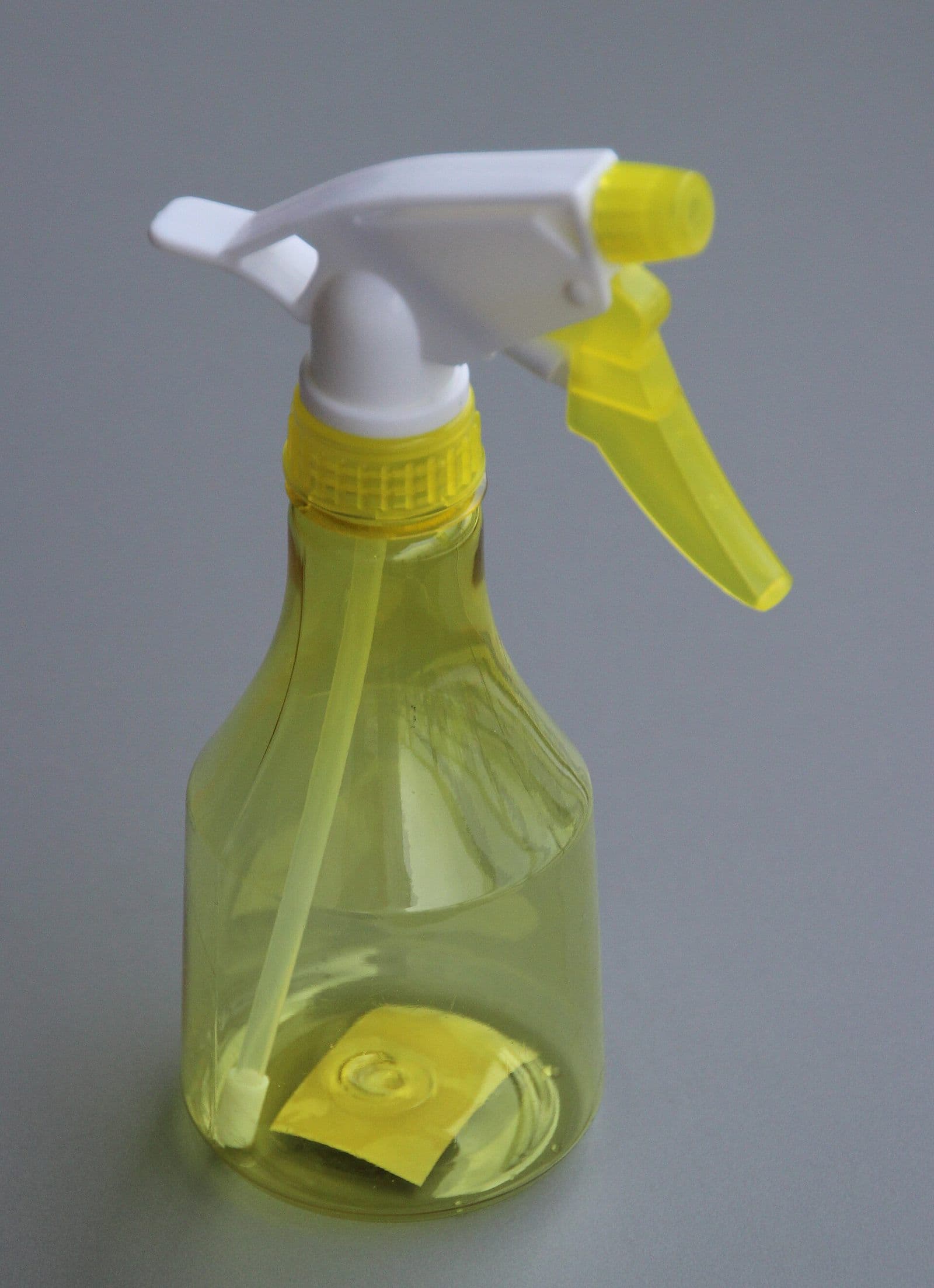
A mold removal spray can help on small patches of hard, non-porous surfaces if you follow the label exactly, including the contact time. Sprays that claim to kill mold are pesticides, and U.S. laws require EPA to register all pesticides, so look for an EPA registration number. No spray fixes mold inside drywall, carpet or insulation, and the EPA says it is not enough to simply kill the mold. It must also be removed.
The mold removal spray aisle is crowded with bottles that say "kills," "removes," "eliminates" and "prevents." Those words aren't interchangeable. Some products are registered with the EPA to kill mold on specific surfaces in a specific time. Others only lighten the stain. Others claim to keep mold from coming back for a limited period. This guide shows you how to tell them apart, how to use one properly, and when a spray is the wrong tool.
What a mold removal spray is, legally
A spray that claims to kill or control mold is an antimicrobial pesticide. The EPA defines antimicrobial pesticides as substances or mixtures of substances used to destroy or suppress the growth of harmful microorganisms, including fungi, on surfaces. More than 4000 antimicrobial products are currently registered with EPA.
That registration matters for you in two ways:
- There's a number to check. EPA's sample label shows the format: EPA REG NO. 55555-55-55555. The EPA says the only way to accurately identify a product is by the EPA registration number, not by brand name.
- The directions are binding. Every pesticide label carries the statement It is a violation of Federal law to use this product in a manner inconsistent with its labeling. As the EPA puts it, the label is the law.
A two-part registration number (like 1234-12) is the primary product. A three-part number means a distributor's version that, per the EPA, has the same composition and efficacy as its primary product.
Mold killer vs stain remover vs mold preventer
These three claims show up on mold sprays. They mean different things.
| Label claim | What it means | What to check |
|---|---|---|
| Kills mold / fungicidal / mildewcidal (a "mold kill spray") | Registered to kill named mold on named surfaces | EPA Reg. No., which surfaces, how long the surface must stay wet |
| Removes mold stains | Cleans or bleaches the visible stain | Whether it has an EPA Reg. No. at all; cosmetic claims may not mean the mold was killed or removed |
| Prevents mold / fungistat / mildewstat | Slows or stops new growth for a limited time | How many days the protection lasts, and on which surfaces |
The EPA has addressed this split. In a 2012 draft notice on mold-related products, it described antimicrobials that bear a label claim to inhibit or destroy mold or mildew growth on hard, nonporous and porous surfaces, and said that products intended only for aesthetic purposes would be clearly distinguishable from public health products. That notice was published as a draft, so read each product's own label rather than assuming a standard wording.
What a real mold-control label looks like
Here is how one EPA-accepted mold-control spray label (available in the EPA's public label database) is written. It's a useful example of the fine print, not an endorsement:
- Kill claims are limited to hard surfaces. It claims to kill mold and mildew on hard, non-porous surfaces.
- There's a contact time. The footnote says Allow surfaces to remain wet for 10 minutes.
- Cleaning comes first. Step one of the directions is Clean surfaces, then spray until thoroughly wet.
- "Prevents" has an expiry. The prevention claim is qualified: For 7 days on hard non-porous surfaces and untreated wood, 28 days on cotton fabrics. The label tells you to reapply weekly on hard surfaces.
- The label lists protective gear. For smaller areas it recommends an N-95 respirator, gloves and goggles/eye protection.
That's the pattern to look for on any mold spray: which surfaces, how long wet, what to do first, and how long any prevention lasts.
Why spraying alone isn't mold removal
The phrase "spray on mold and walk away" is the most common mistake. The EPA's Mold Course says biocides are not recommended as a routine practice during mold cleanup, because dead mold is allergenic and may cause allergic reactions. The mold must also be physically removed. The EPA also says that in most cases it is not possible or desirable to sterilize an area; what keeps mold from regrowing is fixing the moisture.
So even the best mold killer spray is one step in a process:
- Fix the water source.
- Scrub off the growth (with detergent and water, or a registered cleaner per its label).
- Apply a registered product only if you choose to, following its contact time.
- Wipe and dry completely.
The EPA's own baseline for hard surfaces needs no special product at all: scrub mold off hard surfaces with detergent and water, and dry completely. TDLR does suggest mold-killing products for bathrooms. Its Texas prevention tips include Clean bathroom with mold-killing products.
Where mold removal sprays don't work
Porous materials are the hard limit. The EPA says that because mold will infiltrate porous substances and grow on or fill in empty spaces or crevices, completely removing mold can be difficult, if not impossible. A 2015 review of antifungal products found that most work mainly on hard non-porous surfaces.
TDLR is specific about Texas homes. It says moldy drywall, carpet, fleecy furnishings and insulation should be removed and discarded, and that merely applying a chemical such as bleach to drywall, without removing the mold source, is not a permanent effective solution. Painting over it doesn't work either: painting over mold is also not an effective solution.
Places a spray usually won't solve the problem:
- Mold in walls or behind baseboards
- Mold in carpet and pad
- Mold on the ceiling from a roof or AC leak
- Mold in the attic over large areas of decking
- Mold in AC vents (never spray products into ductwork unless the label lists that use)
How to choose a mold spray (instead of "the best" one)
We don't rank brands. A spray is "best" only if its label fits your surface and your situation. Check these points on the bottle:
- EPA Reg. No. on the label if you want a product that kills mold. No number means no EPA-reviewed kill claim.
- Surfaces listed. If your surface isn't on the label, don't use it there.
- Contact time. If the label says the surface must stay wet for 10 minutes, a quick spritz that dries in two won't do what the label claims.
- Active ingredient. The EPA says the label lists active ingredients with their percentages. Know whether it contains bleach, since that decides what you must never mix it with.
- Precautions and first aid. Sample labels list warnings like CAUSES MODERATE EYE IRRITATION and first aid steps. Read them before you start.
- "Prevents" claims. Look for how many days it lasts. Prevention from a spray is temporary; humidity control isn't.
If you'd rather use a household product, we cover the evidence in hydrogen peroxide for mold, baking soda for mold, borax for mold and vinegar vs bleach for mold.
How to use a mold kill spray safely
This is for small areas only. The EPA says you can usually handle mold yourself if it covers less than about 10 square feet.
- Read the whole label first. The EPA's advice: Read the entire label.
- Gear up. EPA's minimum for small mold jobs is gloves, N-95 respirator, goggles/eye protection. For bleach-based or strong cleaners, the EPA recommends gloves made of natural rubber, neoprene, nitrile, polyurethane, or PVC. An N-95 filters particles but, per NIOSH, does not filter out harmful gases or vapors, so ventilation still matters. See mold removal protective gear.
- Ventilate. The EPA says that if disinfectants or biocides are used, always ventilate the area and exhaust the air to the outdoors.
- Clean, then spray. Remove loose growth, apply until wet, and keep it wet for the full contact time.
- Wipe and dry. Remove residue and dead mold, then dry the area completely.
- Store it safely. Keep sprays capped, labeled and out of reach of children.
Never mix sprays or follow one with another
The CDC says to never mix bleach with ammonia or other cleaners because it will produce a poisonous gas. The Washington State Department of Health explains that bleach plus ammonia makes toxic gases called chloramines, bleach plus an acid releases chlorine gas, and bleach also reacts with some oven cleaners, hydrogen peroxide, and some insecticides. Don't spray a second product on a spot you just treated. Rinse and air out the room first.
When to call a professional instead
Skip the sprays and call for help when mold covers more than about 10 square feet, comes back after cleaning, follows a flood, or affects drywall, carpet or ductwork. In Texas, TDLR says that in most instances areas of visible mold less than 25 contiguous square feet in area may be cleaned or removed by people who are not licensed. Bigger jobs generally need a licensed mold remediation contractor.
Texas law says a license holder may not perform both mold assessment and mold remediation on the same project. Use a mold testing company to map the problem and a separate mold removal company to fix it. We list both across Texas, including Corpus Christi and El Paso. Check any license with our license check, and read how we verify companies. For what professionals do differently, see the mold remediation process.
FAQ
Does a mold removal spray actually remove mold?
Not by itself. Kill claims cover hard, non-porous surfaces, and the EPA says it is not enough to simply kill the mold. It must also be removed. Scrub, wipe and dry after the contact time.
What is the best mold killer spray?
We don't rank brands. Choose one with an EPA registration number, your surface listed on the label, and a contact time you can follow. The EPA says the only way to accurately identify a product is by the EPA registration number.
Can I just spray on mold and leave it?
Leaving dead mold behind isn't enough, because dead mold is allergenic and may cause allergic reactions. Follow the label, then wipe the surface clean and dry it.
Do mold kill sprays work on drywall?
No spray fixes moldy drywall. TDLR says applying a chemical to drywall without removing the mold source, is not a permanent effective solution. Moldy drywall should be removed.
Are mold removal sprays that "prevent" mold worth it?
They can help on hard surfaces, but protection is temporary. One EPA-accepted label limits its prevention claim to 7 days on hard non-porous surfaces and untreated wood, 28 days on cotton fabrics. Keeping humidity down lasts longer.
Licensed Mold Pros directory
Find a licensed mold removal company
Removal companies hold a Texas mold remediation license. They remove the mold to a plan written by a separate, licensed testing company.
Sources
- EPA: What are Antimicrobial Pesticides? (updated Jan 29, 2026)
- EPA: Selected EPA-Registered Disinfectants (updated Aug 24, 2026)
- EPA: EPA Explains... How to Read a Pesticide Product Label (updated Dec 9, 2025)
- EPA: Introduction to Pesticide Labels (updated June 2, 2026)
- EPA (archive): Draft PR Notice on Mold-Related Label Claims (Dec 12, 2012)
- EPA Pesticide Product Label System: Accepted label, EPA Reg. No. 82552-3 (PDF) (Oct 18, 2022)
- EPA: Mold Course Chapter 1 (accessed Oct 2026)
- EPA: Mold Course Chapter 4 (accessed Oct 2026)
- EPA: Mold Course Chapter 6 (accessed Oct 2026)
- EPA: What are the basic mold cleanup steps? (accessed Oct 2026)
- EPA: A Brief Guide to Mold, Moisture and Your Home (accessed Oct 2026)
- CDC: Mold (accessed Oct 2026)
- CDC/NIOSH: Community Respirators and Masks (updated Oct 28, 2026)
- Washington State Department of Health: Dangers of Mixing Bleach with Cleaners (accessed Oct 2026)
- Rogawansamy et al.: An Evaluation of Antifungal Agents for the Treatment of Fungal Contamination in Indoor Air Environments (PMC) (2015)
- TDLR: Help! I have mold (Mold Remediation Consumer Protection) (Jan 2025)
- Texas Occupations Code § 1958.155 (texas.public.law) (accessed Oct 2026)
We link every number, rule and health claim to its source. See our editorial policy.