On this page
- Can mold grow on cement and concrete?
- Efflorescence vs mold: how to tell the difference
- How to remove mold on concrete floors and walls
- Removing efflorescence
- Mold on concrete floors under carpet and flooring
- Mold on concrete walls
- Garages, patios and outdoor concrete
- How to prevent mold on concrete
- When to call a professional
- FAQ
- Sources
Short answer
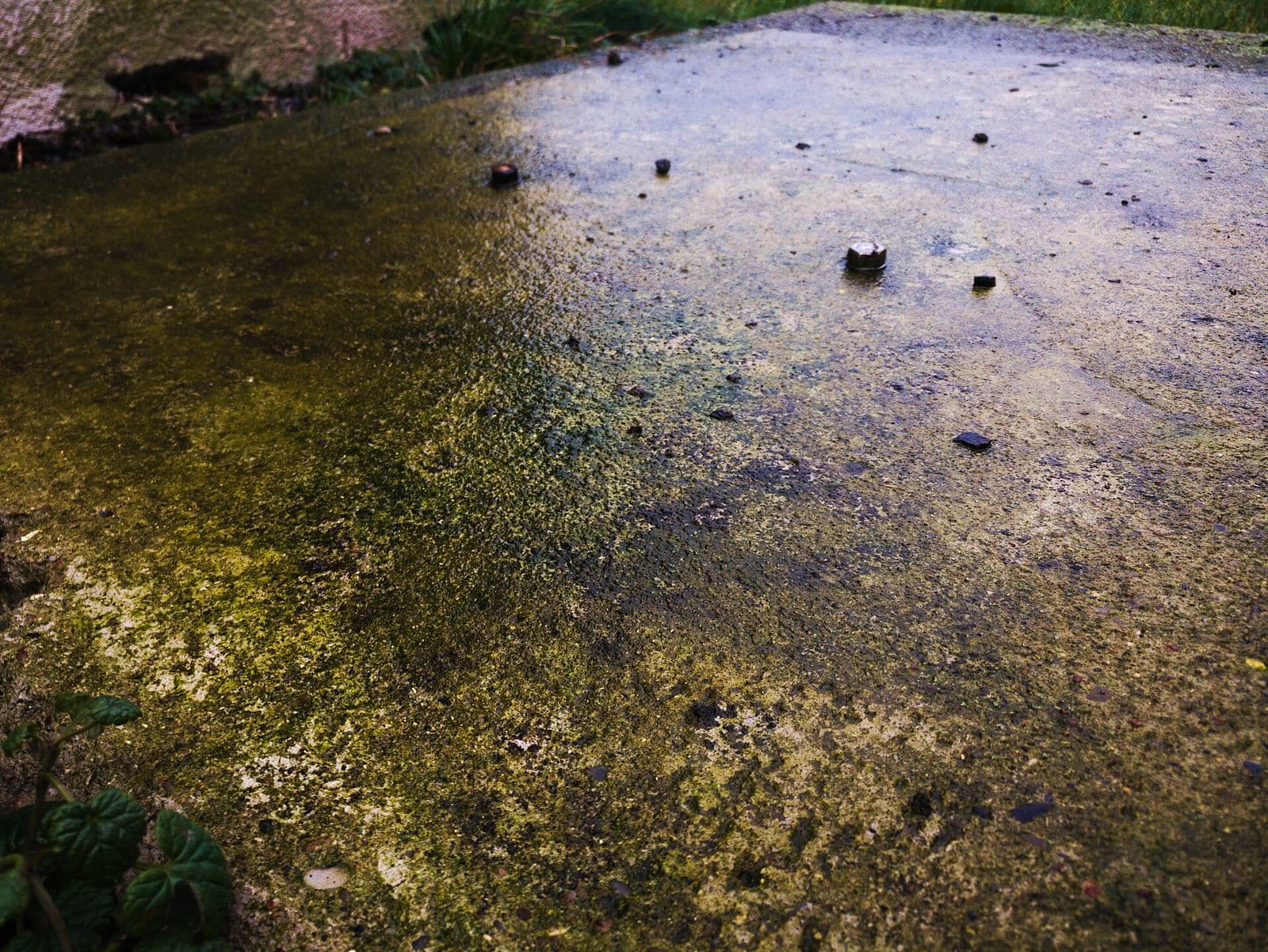
Mold on concrete usually grows on the dirt, dust and residue sitting on the surface, fed by moisture coming through or condensing on the concrete. Virginia Cooperative Extension says mold can grow on concrete with a layer of organic dirt on the surface. Because concrete is a hard surface, TDLR says mold growth should be cleaned from non-porous surfaces such as concrete: scrub with detergent and water, dry it, and fix the moisture. White, crusty deposits that dissolve in water are usually efflorescence (salt), not mold.
Concrete feels like the last thing that should grow mold. It's stone, after all. But mold on concrete floors, walls, garage slabs and patios is common, and the reason tells you how to fix it. This guide answers whether mold can grow on cement, how to clean it, how to tell efflorescence from mold, and how to stop it coming back.
Can mold grow on cement and concrete?
Yes, though the concrete itself isn't the food. Mold needs organic material. Virginia Cooperative Extension explains that molds are mostly found on materials like paper and wood, but can also grow on non-cellulose materials such as plastic, metal, or concrete with a layer of organic dirt on the surface. That layer can be skin cells, grease, oils, food waste or insect droppings. NDSU Extension adds that mold grows on organic materials, such as paper, dirt, wood and soap scum.
Moisture is the other half. The EPA says moisture is the most important factor influencing mold growth indoors, and lists basement walls among common indoor mold sites. Concrete supplies moisture in two ways:
- Water moving through it. NDSU says moisture seeping through concrete walls and floors will cause moist conditions likely to cause mold growth on or in walls, carpeting and stored items.
- Condensation on it. The EPA explains that when warm, humid air contacts a cold surface, condensation may form.
Mold also moves fast once it has water. Virginia Cooperative Extension says some spores can begin to germinate in as little as four to 12 hours, and when building materials get wet, mold can become extensive within 24 to 48 hours.
Efflorescence vs mold: how to tell the difference
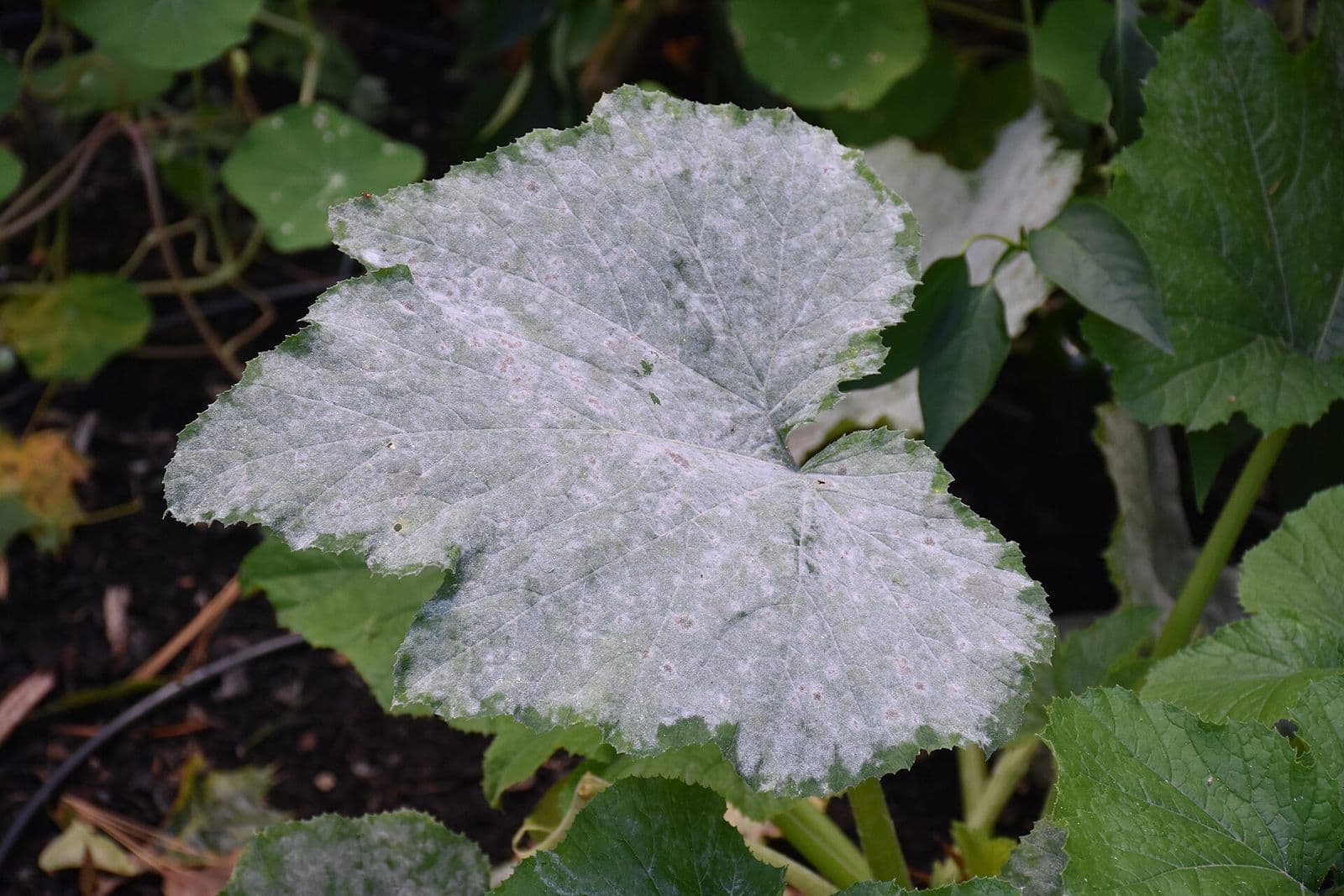
A lot of "white mold" on concrete walls and floors isn't mold. It's efflorescence.
NIH's facilities division describes efflorescence as a white or light colored substance on the surface of concrete, brick, cast stone and other types of masonry walls. It's salt carried to the surface by water moving through the wall. The salt itself is not harmful, but persistent or heavy efflorescence may indicate excess internal moisture or rising damp.
The water test. NDSU Extension says moisture coming through a basement floor or wall may leave a light-colored salt that is sometimes mistaken for mold, and that the deposits should quickly dissolve and disappear when wet with water if they are a salt.
Efflorescence vs mold on concrete
| Clue | Efflorescence | Mold |
|---|---|---|
| Color | White or light colored (NIH) | Can be a velvety growth of almost any color, or a powdery deposit (NPS) |
| Water test | Dissolves when wet (NDSU) | Doesn't dissolve |
| Other signs | Can form a horizontal "tide mark" band on damp masonry (NPS) | Often first noticed as a characteristic musty odor (NPS) |
| What it means | Water is moving through the concrete | Water plus organic material |
The tide mark is a classic sign. National Park Service guidance on damp masonry describes a whitish stain or horizontal tide mark of efflorescence that rises and falls with the seasons where moisture evaporates from the wall.
Both can show up together. Efflorescence means water, and water is what mold needs. If you're not sure, our how to test for mold guide covers your options, but the cleanup and moisture fix are often the same either way.
How to remove mold on concrete floors and walls
Concrete is one of the easier materials to clean because it's hard and doesn't need to be thrown out. The EPA's advice for hard surfaces: scrub mold off hard surfaces with detergent and water, and dry completely.
Size check first. The EPA says that if the moldy area is less than about 10 square feet, in most cases you can handle it yourself.
Gear. Wear gloves, goggles and an N95. The CDC recommends at least a NIOSH Approved N95 respirator. NDSU suggests you dampen moldy materials before removal to cut down on airborne spores.
1. Remove standing water and dry the concrete
If the floor is wet, the EPA's guidance for concrete is to remove water with water extraction vacuum and speed drying with dehumidifiers, fans and/or heaters.
2. Scrub with detergent and water
Use a stiff brush on rough concrete and scrub the surface with detergent and water. For outdoor concrete such as foundations and patios, University of Georgia Extension says to wet the surface with water first, wash from the bottom up to reduce streaking, and rinse. For stubborn spots, it suggests applying moistened detergent, leaving it about 5 minutes, then scrubbing and rinsing.
3. Vacuum the dust
Once dry, vacuum the area with a HEPA vacuum. The EPA lists wet vacuuming and HEPA vacuuming as the cleanup methods for concrete or cinder block at every size of job (EPA Table 2).
4. Disinfect only if needed
Detergent and scrubbing remove mold, and removal is the goal. The EPA says bleach is not recommended as a routine practice during mold cleanup. If you choose to disinfect concrete, for example after floodwater, NDSU says up to 1½ cups of bleach per gallon of water is recommended for wood and concrete surfaces that couldn't be thoroughly cleaned, with the surface kept wet about 15 minutes, then rinsed. The CDC's general advice is no more than 1 cup of bleach in 1 gallon of water. Ventilate well, and never mix bleach with other cleaners. Our vinegar vs bleach for mold guide covers the tradeoffs.
5. Dry it fast and fix the water
Rinse, then dry quickly with fans and a dehumidifier. If you skip the moisture fix, the mold will come back on the next layer of dust.
Removing efflorescence
If the water test says it's salt, mold cleaning isn't the right job. NIH says excessive efflorescence can be gently washed with water or a mild detergent or an acidic solution that dissolves the salts. It warns that sandblasting and wire brushes are abrasive and not recommended, especially on brick and soft stone, and that washing can draw out more salt, so repeated washing may be needed. The NPS recommends removing efflorescence with non-metallic bristle brushes.
The real fix is the water. NIH says the wall should be examined for defective mortar joints, flashing and other entry points, and that the fix may be invasive or as simple as regrading or the maintenance of drains, gutters and other water conveyance systems.
Mold on concrete floors under carpet and flooring
On a slab, mold often hides under carpet, pad, rugs or boxes sitting on the concrete. The EPA lists the underside of carpets and pads among hidden mold sites. Once the covering is off, the concrete underneath can usually be cleaned; the carpet and pad are a different story. See our mold in carpet guide.
After a leak or flood, Texas A&M AgriLife Extension notes that if the subflooring is concrete, removal of the floor covering will hasten drying of the slab, though it may not be necessary if that would ruin an otherwise undamaged material. Before new flooring goes down, confirm the slab is dry. The EPA notes moisture meters can be used on materials such as carpet, wallboard, wood, brick and concrete.
Mold on concrete walls
Concrete or block walls in basements, garages and storm rooms grow mold for the same reasons: water through the wall or condensation on it. Clean them with the steps above. Then look at what's touching the wall. Drywall, wood framing, insulation or cardboard boxes against damp concrete are a bigger concern than the concrete: Virginia Cooperative Extension says mold is most commonly found on or in cellulosic building materials, such as paper, wood, or natural fiber textiles. TDLR says mold is difficult to clean from absorbent (porous) surfaces such as drywall, carpet, fleecy furnishings and insulation. Our guides on mold on walls, mold on wood and mold in basement cover those materials.
Garages, patios and outdoor concrete
- Garages. The EPA lists clothes dryers vented into a garage as a moisture problem and says dryers should be vented outside. For stored boxes, follow the conservators' rule and keep things at least four inches above the floor.
- Patios, porches and driveways. UGA Extension's method for concrete porches and patios is washing with a solution of water and a mild detergent, working from the bottom up. If you use bleach outdoors, UGA advises covering nearby plants with plastic.
- Foundations. The EPA lists landscaping, gutters and down spouts that direct water into or under a building as a common moisture problem. Keep water draining away from the slab.
How to prevent mold on concrete
- Control indoor humidity. The EPA recommends below 60 percent (ideally between 30 and 50 percent). NDSU says mold growth is likely with humidity levels above about 70%. A dehumidifier for mold helps in garages and storage rooms.
- Keep it clean. Without a film of dirt, there's less for mold to eat. Sweep and wash concrete floors in damp areas.
- Fix water at the source. Gutters, downspouts, grading, leaking pipes and AC condensate lines.
- Don't trap moisture. Avoid cardboard and carpet directly on a slab that gets damp. The EPA cautions that vapor barriers must be located and installed properly or the building may have moisture problems.
- Dry spills and leaks fast. The EPA says wet materials dried within 24 to 48 hours usually won't grow mold (EPA).
When to call a professional
Call for help if the moldy area is larger than about 10 square feet, if mold keeps coming back after cleaning, if water is actively coming through a wall or slab, or if mold has spread to drywall, framing or flooring. In Texas, TDLR says that in most instances, areas of visible mold less than 25 contiguous square feet in area may be cleaned or removed by people who are not licensed.
To find hidden moisture and mold, start with a licensed mold testing company in Houston, Fort Worth or another city on our Texas page. For cleanup, hire a separate mold removal company: Texas law says a license holder may not perform both mold assessment and mold remediation on the same project. Water coming through a foundation may also need a drainage or foundation contractor. Check any mold company with our license check tool.
If anyone in the home has symptoms, see a doctor; a mold test doesn't diagnose illness. The CDC says individuals with persistent symptoms should see their physician.
FAQ
Can mold grow on cement or concrete?
Yes, when there's moisture and a film of dirt or organic residue on the surface. Virginia Cooperative Extension says mold can grow on concrete with a layer of organic dirt on the surface. Water seeping through the concrete or condensing on it supplies the moisture.
How do I get rid of mold on a concrete floor?
Remove any standing water, scrub with detergent and water using a stiff brush, rinse, and dry quickly with fans and a dehumidifier. Vacuum the dry area with a HEPA vacuum. TDLR lists concrete among non-porous surfaces mold can be cleaned from, so the slab doesn't need to be replaced.
Is it efflorescence or mold on my concrete wall?
Spray it with water. NDSU Extension says salt deposits should quickly dissolve and disappear when wet with water. Mold won't dissolve, may be any color and usually smells musty. Either way, water is getting into the concrete.
How do you clean mold on concrete walls?
Wear gloves, goggles and an N95, dampen the area, scrub with detergent and water, rinse and dry. For outdoor walls, UGA Extension suggests wetting the surface first and washing from the bottom up to reduce streaking. Then find out why the wall is damp.
Should I use bleach on mold on concrete?
It isn't necessary for most jobs. The EPA says bleach is not recommended as a routine practice during mold cleanup; scrubbing removes the mold. After floodwater, NDSU says a bleach solution can disinfect concrete that couldn't be thoroughly cleaned. Never mix bleach with ammonia or other cleaners.
Licensed Mold Pros directory
Find a licensed mold removal company
Removal companies hold a Texas mold remediation license. They remove the mold to a plan written by a separate, licensed testing company.
Sources
- Virginia Cooperative Extension: How Housing Matters, Mold (FCS-3) (accessed Oct 2026)
- NDSU Extension: Remove Mold for a Healthy Home (AE1202) (reviewed Apr 2023)
- NIH Office of Research Facilities: Efflorescence in Masonry Walls (Technical Bulletin Issue 71) (Dec 2017)
- National Park Service: Preservation Brief 39, Holding the Line: Controlling Unwanted Moisture in Historic Buildings (1996, accessed Oct 2026)
- National Park Service: Conserve O Gram 3/4, Mold: Prevention of Growth in Museum Collections (Aug 2007)
- University of Georgia Extension: Remove Stains From Mildew, Mold (accessed Oct 2026)
- Texas A&M AgriLife Extension: Cleaning Flood-damaged Homes (accessed Oct 2026)
- EPA: Mold Cleanup in Your Home (updated June 4, 2026)
- EPA: A Brief Guide to Mold, Moisture and Your Home (updated Feb 18, 2026)
- EPA: Mold Course Chapter 1 (updated Feb 18, 2026)
- EPA: Mold Course Chapter 2 (updated Dec 1, 2025)
- EPA: Mold Remediation in Schools and Commercial Buildings, Chapter 3 (updated Apr 29, 2026)
- EPA: Mold Remediation in Schools and Commercial Buildings, Chapter 4 (Table 1) (updated Sept 8, 2026)
- EPA: Mold Remediation in Schools and Commercial Buildings, Chapter 5 (Table 2) (updated Apr 14, 2026)
- EPA: Should I use bleach to clean up mold? (updated Sept 8, 2026)
- CDC: Mold Cleanup (Feb 16, 2024)
- CDC: Facts About Mold and Dampness (May 29, 2024)
- TDLR: Help! I have mold (Mold Remediation Consumer Protection) (Jan 2025)
- Texas Occupations Code § 1958.155: Conflict of Interest (accessed Oct 2026)
We link every number, rule and health claim to its source. See our editorial policy.