On this page
Short answer
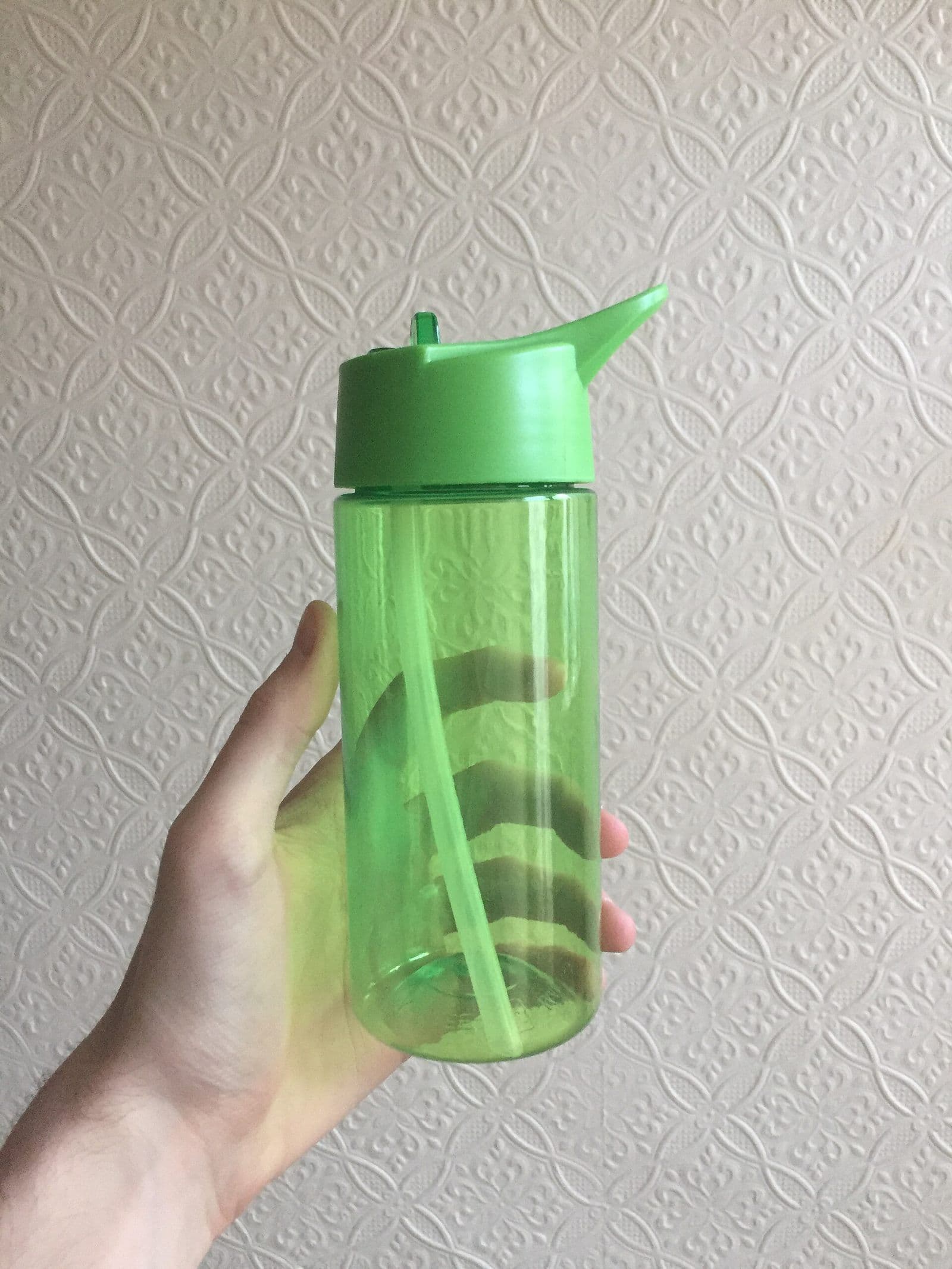
Mold in a water bottle usually grows under the lid's rubber seal, inside the straw and in the mouthpiece, where water and saliva stay trapped. Take it fully apart, scrub every piece with hot soapy water and a brush, then sanitize with 1 teaspoon of unscented chlorine bleach per quart of water, rinse, and let it air-dry completely. For a moldy Brita or filter pitcher, wash the pitcher and replace the filter.
Mold in water bottle lids and straws is common and fixable. A reusable bottle gets wet, sealed and warm, often in a car or gym bag, and it touches your mouth many times a day. This guide covers how to clean a water bottle properly, how to get mold out of lids, straws and seals, when a moldy water bottle should go in the trash, and how to handle mold in a Brita filter or other pitcher.
What causes mold in water bottle lids and straws
Mold and bacteria need water, a little food and time. A bottle gives them all three:
- Water that sits in the bottle, the lid threads, or the straw
- Food from saliva, backwash, and anything other than plain water (sports drinks, coffee, smoothies)
- Time, when the bottle is refilled for days without being washed, or capped while still wet
Bottles do carry germs. NDSU Extension describes a University of Calgary study of 75 schoolchildren's bottles, which found about 9 percent of the bottles contained fecal bacteria and 13 percent of the bottles contained other types of germs from food and saliva.
Where mold hides
| Spot | Why it gets moldy |
|---|---|
| Rubber or silicone seal in the lid | Traps water and saliva in a groove you can't see |
| Straw and straw valve | Narrow, wet, and hard to scrub |
| Mouthpiece or flip cap | Moving parts with small crevices |
| Lid threads | Hold a ring of water after every drink |
| Bottom corners | Hard to reach without a brush |
Table: Where mold hides in a moldy water bottle.
How to clean a water bottle every day
The extension services agree on the basics. NDSU says to wash your water bottle every day with hot, soapy water. Purdue Extension says to wash your water bottle either after every use or daily if you refill throughout the day.
- Take it apart. Remove the lid, straw, seal ring and any valves.
- Wash with soap and hot water. Purdue suggests you fill the water bottle with water and dish soap and soak the other pieces in soapy water.
- Use brushes. NDSU says to use a bottle brush to get all the nooks and crannies clean. A thin straw brush reaches inside straws.
- Rinse well.
- Dry completely before you close it. Purdue says to make sure the bottle is completely dry before reassembling to prevent it from becoming musty.
Can it go in the dishwasher? Check the bottle's label. Even if it's dishwasher-safe, NDSU warns that the dishwasher probably will not clean most bottles thoroughly because of their shape. Hand-scrub the lid and straw either way.
How to get mold out of a water bottle
If you already see black, green or pink spots, wash first, then sanitize.
- Take everything apart, including the seal ring. Pry it out gently with a butter knife or toothpick if needed. Most of the mold is usually behind it.
- Scrub every piece with hot soapy water and brushes.
- Sanitize. NDSU suggests you consider sanitizing the bottle with a mixture of 1 teaspoon of chlorine bleach (unscented) per quart of water. The CDC uses the same strength for drinking water containers: mixing 1 teaspoon of unscented liquid household chlorine bleach in 1 quart (4 cups) of water, then waiting at least 30 seconds before pouring it out. Put the lid, seal and straw in the solution too.
- Rinse and air-dry. NDSU says to let it air-dry completely. The CDC says to let the empty container air-dry before use.
Safety: Use plain unscented bleach, and never mix bleach with ammonia or other cleaners, per the CDC. If you'd rather avoid bleach, see our guides on hydrogen peroxide, baking soda and vinegar vs. bleach, and check what your bottle's maker allows.
When to throw it out
Replace the part, or the bottle, if:
- Mold stays in a seal, valve or straw after scrubbing and sanitizing
- A soft straw or seal is stained deep into the material
- The lid has crevices you can't take apart or reach
- It still smells musty after a full clean and dry
Many brands sell replacement lids, straws and gaskets, which is cheaper than a new bottle.
Mold in Brita filter and filter pitchers
Filter pitchers get moldy too, in the reservoir, the lid, the spout and sometimes the filter itself.
Consumer Reports explains why: a water-filled carafe can become a breeding ground for microorganisms when left at room temperature, and the bacterial growth may or may not be visible, for example occurring in the spout of the carafe or hidden in the filter. In that 2010 article, it noted that most makers recommend keeping the pitcher in the refrigerator, and quoted Brita's manual: we recommend that you store your Brita system in the refrigerator. If you keep it on the counter, Brita advised you replace any filtered water that has been left sitting for several days or more.
What to do about a moldy pitcher:
- Remove and throw away the filter if you see mold on it or in the reservoir around it. A filter can't be scrubbed clean inside.
- Wash every part of the pitcher (reservoir, lid, spout) with warm soapy water and a soft brush. Check your manual on whether it's dishwasher-safe.
- Sanitize if needed with the same 1 teaspoon per quart bleach solution, then rinse well and air-dry.
- Install a new filter and prepare it as the manufacturer directs.
How often to replace the filter? The CDC says to maintain and replace all water filters according to the manufacturer's instructions, including pitcher, countertop, refrigerator and faucet filters. Consumer Reports says it's usually every two months or 40 gallons, whichever comes first, and that slow flow means it's likely that the filter is clogged and it's time to replace it. Don't stretch it: Consumer Reports has warned that an overloaded filter may harbor microorganisms.
Keep your bottle mold-free
| Habit | Why |
|---|---|
| Wash daily with hot soapy water and a brush | NDSU and Purdue both recommend it |
| Take the lid apart, including the seal | Most mold grows where you can't see it |
| Dry fully before capping | Prevents it from becoming musty |
| Store empty and open | No standing water |
| Rinse right away after drinks other than water | Leftover residue gives mold something to feed on |
| Replace worn seals and straws | Scratched or stained parts are hard to clean |
| Keep filter pitchers in the fridge | Room temperature water grows microbes, per Consumer Reports |
Table: How to stop a water bottle from getting moldy again.
Metal straws need the same care. Purdue says to wash them after each use, even if you're just drinking water, with a thin brush, and dry them before storing.
Did I get sick from my moldy water bottle?
Stop using a moldy bottle until it's cleaned. The CDC says mold can cause a stuffy nose, sore throat, coughing or wheezing, burning eyes, or skin rash in some people, and that people with asthma or mold allergies may react more strongly. People with weakened immune systems should be more careful; the CDC notes that immune-compromised people and people with chronic lung disease may get infections in their lungs from mold. If you feel sick, see a doctor. A doctor, not a mold test, diagnoses mold-related illness. Our mold exposure and mold allergy guides have more.
When it's more than a water bottle
A moldy bottle is a cleaning job. But if mold keeps showing up on cups, dishes and food in your kitchen, or on things stored in a cabinet, the room itself may be too damp. The EPA recommends keeping indoor humidity below 60 percent (ideally between 30 and 50 percent). Look for leaks under the sink and around the fridge, and read signs of mold in your house and mold in the refrigerator. If your bottle lives in a hot car, our mold in car guide covers what else can grow there.
If you find mold on walls or cabinets, Texas lets homeowners clean small areas: TDLR says areas of visible mold of less than 25 contiguous square feet can be cleaned up by people who are not licensed. For bigger problems, use a licensed mold testing company to find the source and a separate licensed removal company to fix it, since Texas law says a license holder may not perform both mold assessment and mold remediation on the same project.
Find licensed mold testing companies in Austin or Fort Worth, and mold removal companies in Houston or San Antonio. Browse all of Texas, check any license with our license check, and see how we verify listings.
FAQ
How do you get rid of mold in water bottle lids and seals?
Take it fully apart, scrub every piece with hot soapy water and a brush, then sanitize with 1 teaspoon of chlorine bleach (unscented) per quart of water. Rinse and let it air-dry completely. Replace any seal or straw that still shows mold.
Is it safe to drink from a moldy water bottle?
Don't keep using it until it's cleaned. Mold can cause allergy-type symptoms in some people, and the CDC notes people with weakened immune systems or chronic lung disease may get infections in their lungs from mold. If you feel sick, see a doctor.
How do I clean mold in a Brita filter pitcher?
Throw out the moldy filter, wash the reservoir, lid and spout with warm soapy water, sanitize if needed, and install a new filter. Consumer Reports says filters are usually every two months or 40 gallons, whichever comes first. Keep the pitcher in the fridge.
How often should you clean a water bottle?
Every day. NDSU Extension says to wash your water bottle every day with hot, soapy water, and Purdue says after every use or daily if you refill it through the day.
Why does my water bottle keep getting moldy?
Usually because the lid seal or straw isn't taken apart, or the bottle is capped while still wet. Purdue says to make sure the bottle is completely dry before reassembling. Wash it daily, not just when it smells.
Licensed Mold Pros directory
Find a licensed mold removal company
Removal companies hold a Texas mold remediation license. They remove the mold to a plan written by a separate, licensed testing company.
Sources
- NDSU Extension (Prairie Fare): Clean Reusable Water Bottles Thoroughly (accessed Oct 2026)
- Purdue Extension: Cleaning Reusables (Mar 8, 2021)
- CDC: How to Create an Emergency Water Supply (June 27, 2025)
- CDC: Preventing Waterborne Germs at Home (Mar 15, 2024)
- CDC: Mold (Sept 26, 2024)
- Consumer Reports: 5 Things to Know About Water Filter Pitchers (updated Sept 13, 2021)
- Consumer Reports: True or false? It's okay to keep a carafe water filter on the counter (Nov 9, 2010)
- EPA: A Brief Guide to Mold, Moisture and Your Home (updated Feb 18, 2026)
- TDLR: Mold Assessors and Remediators FAQ (accessed Oct 2026)
- Texas Occupations Code § 1958.155 (texas.public.law) (accessed Oct 2026)
We link every number, rule and health claim to its source. See our editorial policy.