On this page
Short answer
A black mold test can tell you whether a sample contains Stachybotrys chartarum, the mold usually called "black mold," but it can't tell you whether it's "toxic" or whether it's making anyone sick. The CDC says no test exists that proves an association between Stachybotrys chartarum and particular health symptoms and that all molds should be treated the same. If you can see dark mold, you don't need a test to act: fix the water and remove it.
Searches for a black mold test usually start the same way: a dark patch on a wall, a musty smell, and a worry that it's the "toxic" kind. This guide explains what a black mold test can and can't tell you, the different ways to test for black mold, why air tests often miss it, and when paying a licensed Texas mold assessor makes sense.
For general home mold checks, see how to test for mold. This guide is only about black mold and "toxic mold" testing.
What a "black mold test" is really testing for
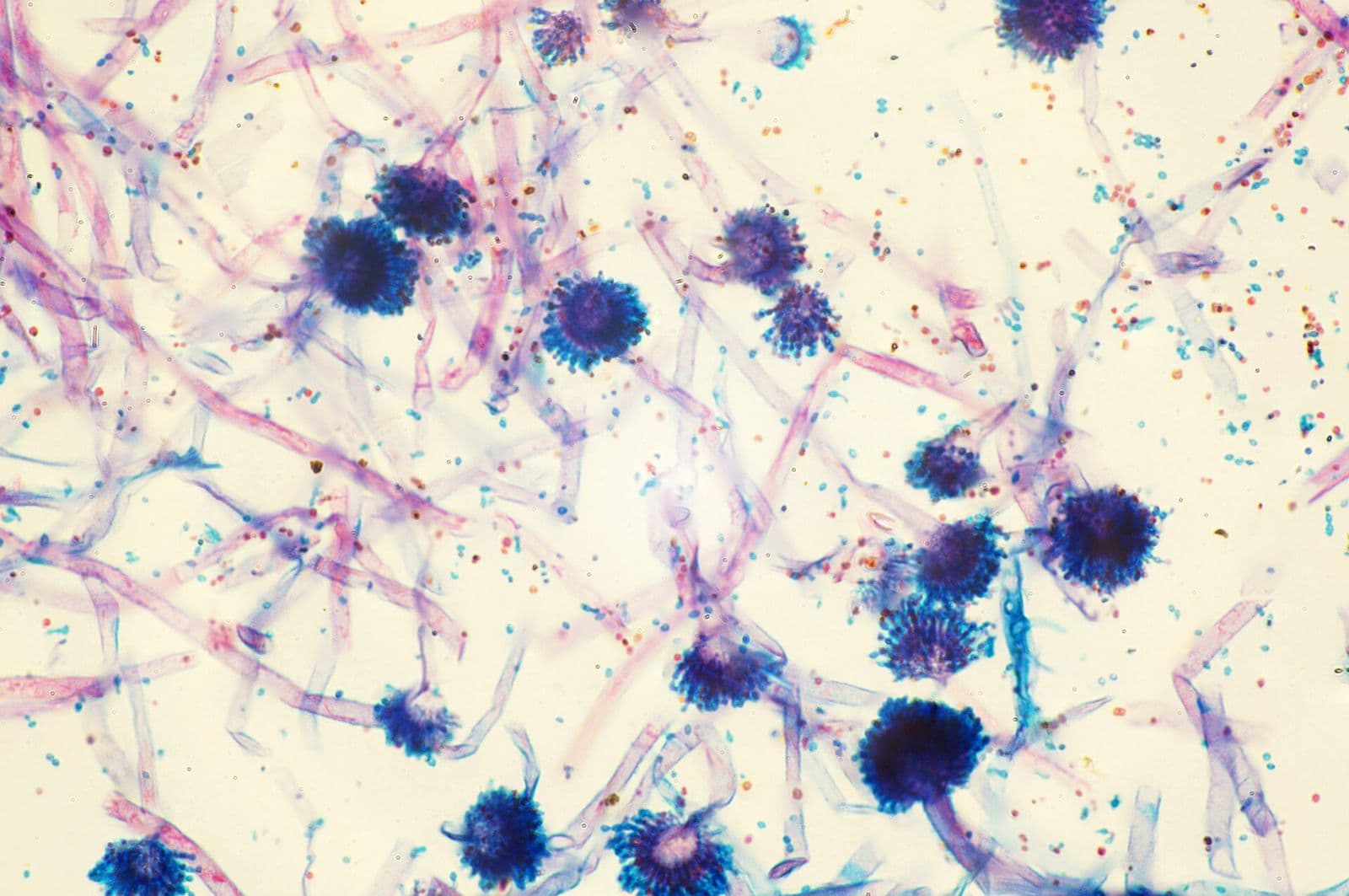
There is no single black mold. The EPA says "black mold" is not a species or specific kind of mold, and neither is "toxic mold." When people say "black mold" they usually mean Stachybotrys chartarum, which the CDC describes as a greenish-black mold. But many common molds also look dark, and the CDC notes that mold can look like spots of many different colors.
So a black mold test is really a test that answers one narrow question: is Stachybotrys in this sample? That's all a lab can tell you about "black mold." It can't grade how dangerous your house is.
There is no "toxic mold test" for your house
The phrase "toxic mold test" is a marketing term. NIOSH says that for molds that can produce toxins, the molds themselves are not toxic or poisonous, and that molds that produce mycotoxins, like Stachybotrys chartarum, should be considered the same as other molds.
There's also no official number that makes a result "toxic." The EPA says no EPA or other federal limits have been set for mold or mold spores, and NIOSH says there are no health-based standards for mold or other biological agents in indoor air. A test for toxic mold can name what's there; nobody can then tell you the level at which it becomes unsafe.
Should you test for black mold at all?
In most homes, no. This is one of the few points where every agency agrees:
- The CDC says CDC does not recommend mold testing and you do not need to know the type of mold.
- The EPA says in most cases, if visible mold growth is present, sampling is unnecessary.
- TDLR says testing to determine what kind of mold is present is not required prior to remediation or cleaning, and that sampling and culturing are not reliable in determining your health risk.
The reason is practical. If the lab says Stachybotrys, you remove it. If the lab says Cladosporium or Aspergillus, you also remove it. The CDC says that if Stachybotrys or other molds are found in a building they should be removed. The result changes nothing about the cleanup.
When a black mold test can be useful
Testing isn't useless; it's just not the first step. The EPA's remediation guide says sampling may help identify some of the mold species present, locate a hidden source, and tell mold apart from soot or dirt. It lists litigation, an unclear source and health concerns as situations where sampling may be considered.
Reasonable reasons to test:
- A dispute with a landlord, seller, insurer or contractor, where you need documentation. See mold in an apartment in Texas and does insurance cover mold.
- A home purchase, where you want to know what you're buying. See mold inspection before buying a house.
- A doctor's request, for a patient with a specific condition. Even then, the test describes the house, not the patient.
- After cleanup, to confirm the job passed. See mold clearance testing.
How to test for black mold: the options
How to test for black mold: what each method can and can't tell you
| Method | Can it identify Stachybotrys? | Main limits |
|---|---|---|
| Looking at it | No; many molds look black | Color does not necessarily indicate danger |
| DIY settle plate (petri dish) | Only if spores happen to land and grow | Catches airborne spores, and Stachybotrys spores do not easily become airborne |
| DIY swab or tape sent to a lab | Often, from a visible patch; sampling can identify some of the mold species present | Tells you what's on that spot only; no safe level to compare to |
| Air sample (spore trap) by a professional | Sometimes | A snapshot of the moment in time in which the sampling occurred; negative results may not represent actual exposures |
| ERMI dust test | Reports DNA from a set of indicator molds | EPA says it is not validated for non-research purposes |
| Licensed mold assessment | Yes, with targeted sampling | Costs more; worth it for hidden mold, disputes or clearance |
Table: black mold test methods. Sources linked in each cell.
DIY black mold test kits
Store kits come in a few types: settle plates you leave open, swabs or tape you press on a patch, and pumps that pull air across a cassette. Our mold test kits guide covers each type, what they cost after lab fees, and the common ways they mislead.
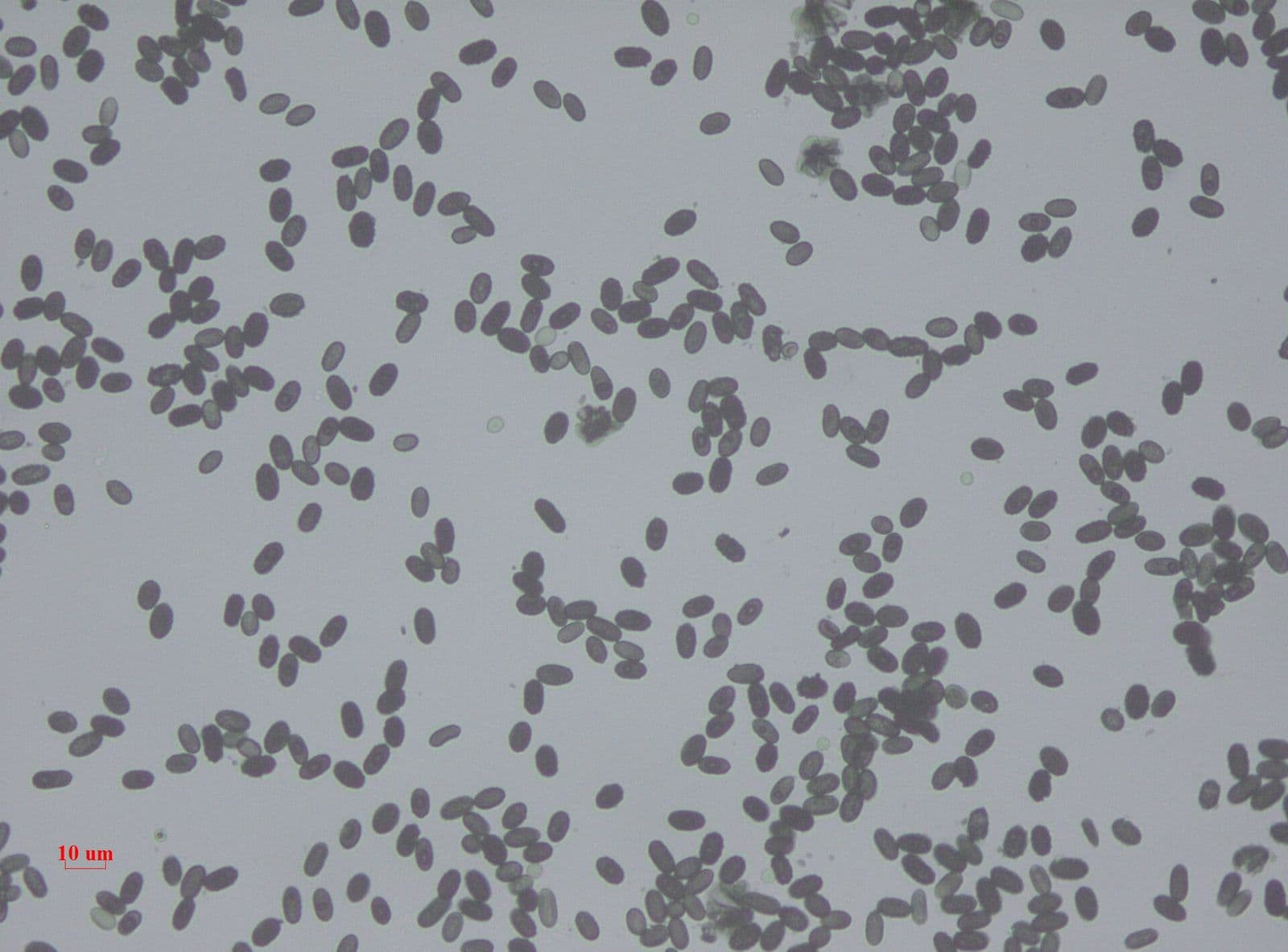
For black mold in particular, the settle-plate kit is a poor fit. A 2016 study in Analytical and Bioanalytical Chemistry explains that Stachybotrys spores are produced in sticky slime heads and do not easily become airborne when they are moist, making detection in the air difficult. A dish waiting for spores to fall can easily miss a patch that's right there on the wall.
Why air tests often miss black mold
The same problem affects professional air sampling. In a large US study of 1,717 buildings, Stachybotrys chartarum was identified in the indoor air in 6% of the buildings studied, while common molds like Cladosporium showed up in 86%. That low rate partly reflects how rarely its spores float.
So a clean air test doesn't prove there's no Stachybotrys behind a wall. NIOSH says thorough visual inspections or detecting problems by musty odors are more reliable than air sampling. The opposite mistake happens too: a test that finds a few spores can frighten people about a house that has no real growth. Our ERMI vs air sampling guide explains how to read the two most common professional tests.
The ERMI "mold DNA" test
ERMI kits analyze DNA from household dust and are sometimes sold as a toxic mold test. The EPA developed ERMI as a research tool, says it has not been validated for non-research purposes, and its fact sheet says that EPA does not recommend the routine public use of ERMI in homes. The same fact sheet adds that inspection for water damage and mold remain the key to current EPA mold-assessment guidance.
What a black mold test can't tell you about your health
No home mold test can tell you whether mold caused your symptoms. The CDC says no test exists that proves an association between Stachybotrys chartarum and particular health symptoms, and that Stachybotrys and other molds may cause health symptoms that are nonspecific. TDLR adds that health effects from exposure to mold can vary greatly depending on the person.
The CDC also notes that a link between infant lung bleeding and Stachybotrys has not been proven. Be wary of any company that uses frightening health claims to sell a test.
If you're worried about your health, see a doctor. A doctor, not a mold test, diagnoses illness. TDLR recommends that people consult a health care provider. Our guides on black mold symptoms, mold exposure tests and is black mold dangerous cover the health side.
Hiring a licensed mold assessor in Texas
If you do want testing, Texas is a good place to get it done right. TDLR licenses Mold Assessment Consultants, Mold Assessment Technicians and Mold Analysis Laboratories, among other mold credentials, and state law says a person may not do mold assessment unless the person holds a mold assessment license. Texas law defines mold assessment to include the collection or analysis of a mold sample.
A licensed assessor does more than take a sample. TDLR says test results cannot be interpreted without physical inspection of the contaminated area or without considering the building and what led to the problem, and that the assessor should establish criteria for interpreting the test results.
Two rules protect you:
- Hire the tester and the remover separately. Texas law says a license holder may not perform both mold assessment and mold remediation on the same project. Be cautious of a removal company offering a "free black mold test." Our guide on why testing and removal are different companies explains.
- Check the license. Use our license check, and read how we verify the companies we list.
Find licensed testers on our city pages for Houston, Dallas, Austin, El Paso and Lubbock. Prices are in our mold testing cost guide, and labs are covered in mold testing labs in Texas.
What to do instead of (or after) a black mold test
- Find the water. Stachybotrys needs constant moisture. Look for leaks, especially around drywall, which is gypsum board.
- Clean small areas. The EPA says you can usually handle an area less than about 10 square feet yourself. See how to get rid of mold.
- Hire licensed removal for big jobs. TDLR says unlicensed people may generally clean areas less than 25 contiguous square feet. Larger jobs go to a licensed mold removal company.
FAQ
Is there a reliable black mold test?
A lab can usually identify the mold in a sample taken from a visible patch; the EPA says sampling can identify some of the mold species present. What no black mold test can do is tell you the mold is "toxic" or that it caused symptoms; the CDC says no test exists that proves an association with particular symptoms.
How do I test for black mold myself?
The most useful DIY method is a swab or tape sample from a visible patch, sent to a lab. Settle-plate kits often miss black mold because its spores do not easily become airborne when they are moist. But if you can see it, the EPA says sampling is unnecessary in most cases.
Can you test for toxic mold?
Not in the way most people mean. NIOSH says the molds themselves are not toxic or poisonous, and there are no health-based standards for mold in indoor air. A test can identify the mold; it can't give it a "toxic" grade.
Is a toxic mold test worth paying for?
Usually not, unless you need documentation for a dispute, a home purchase, or a clearance check after removal. For those, hire a TDLR-licensed mold assessment consultant rather than buying a kit. See is mold testing worth it.
Will a black mold test tell me if mold is making me sick?
No. TDLR says sampling and culturing are not reliable in determining your health risk. See a doctor, who can evaluate your symptoms and any allergy or lung conditions.
Licensed Mold Pros directory
Find a licensed mold testing company
Testing companies hold a Texas mold assessment license. They inspect, sample and write the removal plan, and by law they can't do the removal on the same job.
Sources
- CDC: Facts About Stachybotrys chartarum (May 29, 2024)
- CDC: Mold (Sept 26, 2024)
- CDC/NIOSH: Mold Testing and Remediation (reviewed Feb 25, 2025)
- EPA: Mold Course Chapter 1 (accessed Oct 2026)
- EPA: Mold Testing or Sampling (accessed Oct 2026)
- EPA: Mold Remediation in Schools and Commercial Buildings, Chapter 3 (accessed Oct 2026)
- EPA: A Brief Guide to Mold, Moisture and Your Home (accessed Oct 2026)
- EPA: Environmental Relative Moldiness Index (ERMI) (accessed Oct 2026)
- EPA: The Environmental Relative Moldiness Index (ERMI) fact sheet (Sept 2021)
- Došen I et al., Stachybotrys mycotoxins: from culture extracts to dust samples, Analytical and Bioanalytical Chemistry (PMC) (2016)
- Shelton BG et al., Profiles of Airborne Fungi in Buildings and Outdoor Environments in the United States, Applied and Environmental Microbiology (PMC) (Apr 2002)
- TDLR: Mold Assessors and Remediators FAQ (accessed Oct 2026)
- TDLR: Help! I have mold (Mold Remediation Consumer Protection) (Jan 2025)
- TDLR: Mold Assessors and Remediators program page (accessed Oct 2026)
- Texas Occupations Code § 1958.001, Definitions (texas.public.law) (accessed Oct 2026)
- Texas Occupations Code § 1958.101, License Required (texas.public.law) (accessed Oct 2026)
- Texas Occupations Code § 1958.155 (texas.public.law) (accessed Oct 2026)
We link every number, rule and health claim to its source. See our editorial policy.