On this page
Short answer
Mold in a washing machine usually grows in the rubber door gasket, the detergent dispensers and the drain pump filter, where water and soap residue sit between loads. Wipe the gasket dry after washing, leave the door open, and run the tub-clean cycle (or an empty hot cycle with a cup of bleach) about once a month. In a 2025 Consumer Reports survey, 13 percent of front-load washer owners reported mold or mildew buildup, compared with 3 percent for HE top-loaders.
Mold in washing machine gaskets and drums is common, and it's usually a maintenance problem, not a sign your house has a mold problem. The fix is cleaning the right parts and changing a few habits. This guide covers where washer mold hides, how to remove mold in a washing machine step by step, why front-load washers get it most, and when a smell points to something bigger.
Why washers grow mold
A washer is warm, wet and full of food for mold: detergent residue, fabric softener film, lint and body soil from clothes. Consumer Reports says front-loaders are prone to mold and mildew, two types of fungus that thrive in damp environments.
Bob Vila lists the usual causes of a smelly washer: mildew, plus any residues that may have been attached to clothing, as well as softener or detergent buildup. Consumer Reports adds that mold can develop in various parts of the washer, including the dispensers and the rubber gasket around the opening.
Texas laundry rooms don't help. Much of the state is humid, with the Gulf of Mexico serving as the primary source of moisture for eastern Texas, so a closed washer in a Houston or Beaumont laundry closet dries slowly.
Front load washer mold: why it's worse
Front-loaders get mold far more often than top-loaders. Here are Consumer Reports' 2025 survey numbers:
| Washer type | Owners reporting mold or mildew buildup | Source |
|---|---|---|
| Front-load | 13 percent | Consumer Reports, 2025 survey |
| HE top-load | 3 percent | Consumer Reports |
| Top-load agitator | 1 percent | Consumer Reports |
Table: Front load washer mold vs. top-loaders, by owner reports.
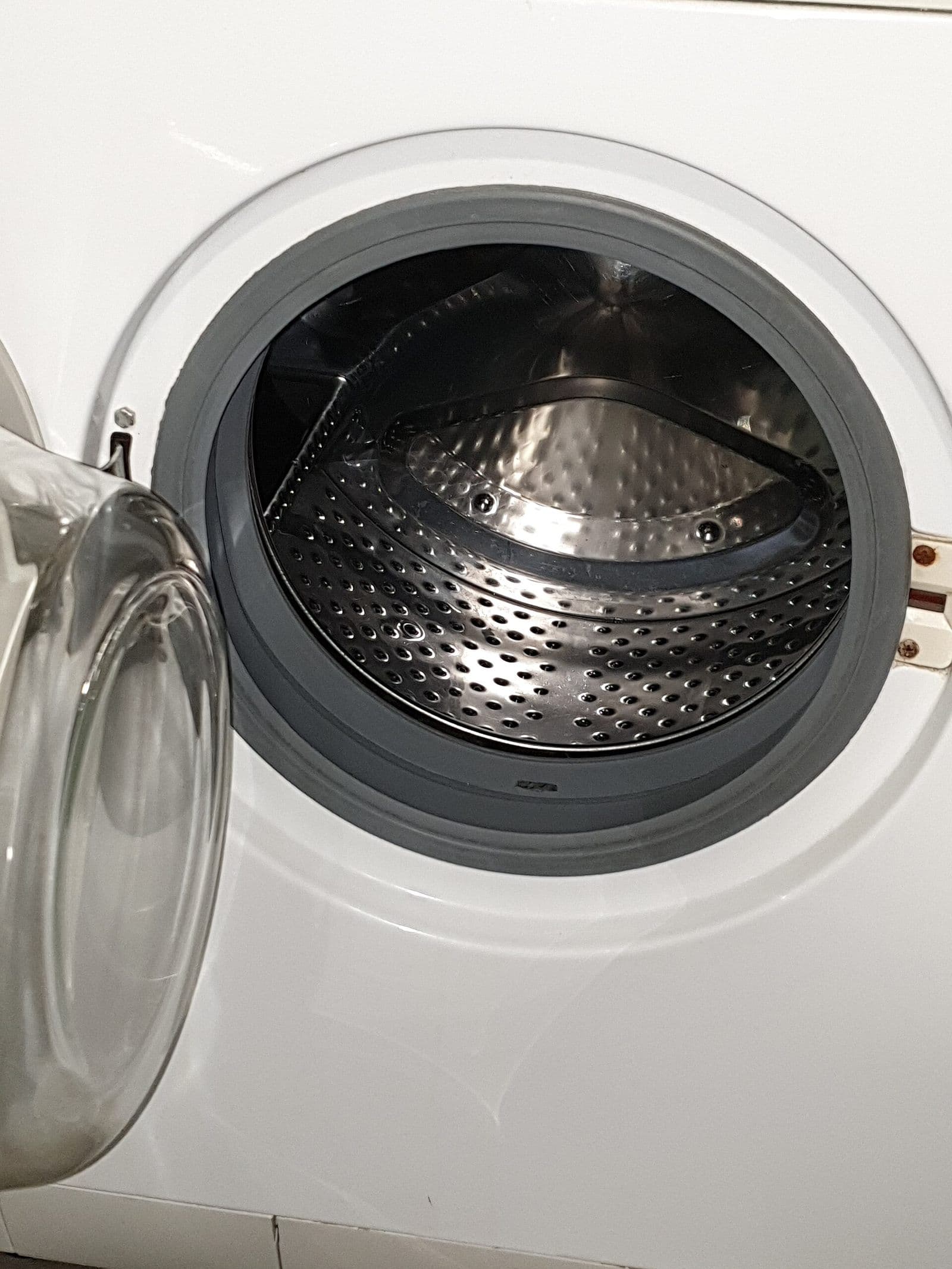
The reason is the door seal. ENERGY STAR explains that front-loading washers use airtight seals to prevent water from leaking while the machine is in use, and that when the machine is not in use, this seal can trap moisture in the machine and lead to mold. Consumer Reports says the gasket, which keeps water in during the wash, traps it after the cycle.
Front-loaders are still worth having for many people. ENERGY STAR says certified front-load washers use about 50% less energy and water than a top load agitator washer. They just need a bit more care.
Washer gasket mold: how to clean the seal
The gasket (also called the door boot) is where most people first see black spots.
- Unplug the washer and put on gloves.
- Pull back the folds. Consumer Reports says to gently pull back the gasket, wipe it clean, then dry. Check for socks, hair ties and lint stuck inside the fold.
- Clean the surface mold. Use a cloth with detergent and water, or a diluted bleach solution if the manufacturer allows it. The CDC's limit for household bleach cleaning is no more than 1 cup of household laundry bleach in 1 gallon of water. Pull the folds gently so you don't tear the rubber.
- Dry it completely with a towel, then leave the door open.
Some dark stains soak into the rubber and won't come out even after the mold is killed. If the gasket is torn, leaking, or still smells after cleaning, check the owner's manual or call an appliance repair company about replacing it.
Never mix cleaners. The CDC warns never mix bleach with ammonia or other cleaners. Bob Vila adds that combining bleach and vinegar is very dangerous. Pick one or the other. Our vinegar vs. bleach guide explains the difference.
How to remove mold in a washing machine: full clean
Once the gasket is done, clean the rest of the machine.
1. Run a cleaning cycle
Consumer Reports says to run the tub-clean feature regularly. If your washer doesn't have one, run the machine on the hottest water-temperature setting with a cup of bleach but no laundry. ENERGY STAR notes that some manufacturers recommend rinsing the washer each month by running a normal cycle with 1 cup of bleach. Always check your owner's manual first, since some brands specify their own cleaner or amounts.
Bob Vila suggests a top-loader may take more bleach (it says to add 4 cups of bleach to the drum) and to follow with a service wash, a cycle at the hottest setting with the drum empty to rinse.
2. Clean the dispensers
Pull out the detergent, bleach and softener drawers if they come out. Scrub them in hot soapy water with an old toothbrush, and wipe the cavity they slide into, where black gunk often collects. ENERGY STAR mentions wiping down the compartments to help reduce the risk of mold or mildew buildup.
3. Clean the drain pump filter
Many front-loaders have a small filter that catches lint and debris. Consumer Reports says it's often located behind a small door at the bottom-right or bottom-left of the washer and recommends cleaning the filter every couple of months. Put a towel and shallow pan down first, because water will come out. Bob Vila notes that the water, lint, and dirt trapped in the filter and tube can cause the washer to smell.
4. Top-loaders: clean the rim
Top-loaders get less mold, but not none. Consumer Reports says periodically wiping down the circular upper rim of the tub and agitator is a good idea. Bob Vila suggests paying special attention to the cracks and crevices around the doors where dirt tends to hide.
What about washer cleaner tablets?
Store-bought washer cleaners can work, but you may not need them. Consumer Reports suggests running the sanitary cycle, or a hot cycle with a bleach-containing washer cleaner, once a month. Plain household bleach used per your manual does the same basic job.
How to keep mold out of your washer
| Habit | Why it helps | Source |
|---|---|---|
| Leave the door open after washing | Lets moisture escape. ENERGY STAR: leave the door ajar for an hour or two after use | ENERGY STAR |
| Open the dispensers between loads | Lets them dry | Consumer Reports |
| Wipe the gasket after the last load | Removes water and residue | Consumer Reports |
| Use only HE detergent in HE machines | Consumer Reports: use only high-efficiency (HE) detergents | Consumer Reports |
| Skip fabric softener | It may leave residue | Consumer Reports |
| Move wet laundry to the dryer right away | Wet clothes left in the drum keep it humid and can get musty | See mold on clothes |
| Monthly cleaning cycle | Bob Vila: about once a month can help prevent washer smells from coming back | Bob Vila |
Table: How to prevent mold in a washer.
One safety note from ENERGY STAR on leaving the door open: make sure children do not climb into the machine while the door is open.
If your laundry room stays humid, a dehumidifier can help the whole space dry out. The EPA recommends keeping indoor humidity below 60 percent (ideally between 30 and 50 percent).
When the smell isn't the washer's fault
Sometimes a washer is clean and the laundry room still smells. Bob Vila says that if your washing machine smells like sewage, even after cleaning, the issue might be a clog in the drain standpipe. That's a plumber's job.
A leaking washer is a bigger concern. A slow leak from a hose, the door seal or the drain can soak the floor and the wall behind the machine without you noticing. Pull the washer out and look for:
- Soft, stained or warped flooring
- Mold on the drywall behind or beside the machine
- A musty smell that stays after the washer is cleaned
The EPA says to dry water-damaged areas and items within 24-48 hours to prevent mold growth. If mold is on the wall or floor, read our guides on mold on walls and mold smell in the house.
When to call a professional
Texas lets you handle small areas yourself. TDLR says areas of visible mold of less than 25 contiguous square feet can be cleaned up by people who are not licensed. A mold-stained gasket is well under that. Hidden mold in the wall or subfloor from a long-term leak may not be.
If you need help figuring out how far a leak has spread, start with a licensed mold testing company. If removal is needed, hire a separate licensed removal company: Texas law says a license holder may not perform both mold assessment and mold remediation on the same project. Our guide on why testing and removal are different companies explains why.
Find licensed mold testing companies in Houston or Austin, and mold removal companies in Dallas, Fort Worth or San Antonio. Browse all Texas cities, verify a license with our license check, and read how we verify companies.
Health
A moldy washer gasket is a nuisance for most people. The CDC says some people exposed to mold get a stuffy nose, sore throat, coughing or wheezing, burning eyes, or skin rash, and that people with asthma or mold allergies can react more strongly. A doctor, not a mold test, diagnoses mold-related illness. See our mold allergy guide.
FAQ
What's the best way to remove mold in washing machine parts?
Clean the gasket and dispensers by hand, then run the tub-clean cycle or the hottest water-temperature setting with a cup of bleach but no laundry. Clean the drain pump filter too. Follow your owner's manual for amounts.
Why does my front load washer get mold?
The airtight door seal can trap moisture in the machine and lead to mold when the washer sits closed. Leave the door ajar for an hour or two after use, wipe the gasket, and skip fabric softener.
How do I get rid of washer gasket mold?
Pull back the folds, wipe the mold off, then dry the rubber completely, as Consumer Reports advises. A diluted bleach solution can help if your manual allows it. Stains that soak into the rubber may not come out, and a torn gasket should be replaced.
Is mold in my washer making my clothes smell?
It can. Mildew and detergent or softener buildup are common causes of washer odor, per Bob Vila, and clothes washed in a musty machine can pick up the smell. Clean the washer, then rewash the clothes; our mold on clothes guide has the steps.
How often should I clean my washer to prevent mold?
Wipe the gasket after the day's last load and run a cleaning cycle about once a month. Consumer Reports recommends cleaning the drain pump filter every couple of months.
Licensed Mold Pros directory
Find a licensed mold removal company
Removal companies hold a Texas mold remediation license. They remove the mold to a plan written by a separate, licensed testing company.
Sources
- Consumer Reports: 5 Things to Know About Front-Load Washers (updated June 14, 2026)
- Consumer Reports: How to Minimize Mold in Your Washing Machine (updated Sept 7, 2025)
- Consumer Reports: 5 Washing Machine Malfunctions and How to Fix Them (Sept 18, 2026)
- ENERGY STAR: Clothes Washers (accessed Oct 2026)
- Bob Vila: Washing Machine Smells: Common Causes and Easy Fixes (updated Dec 10, 2024)
- CDC: Mold (Sept 26, 2024)
- EPA: A Brief Guide to Mold, Moisture and Your Home (updated Feb 18, 2026)
- TDLR: Mold Assessors and Remediators FAQ (accessed Oct 2026)
- NOAA/NCICS: Texas State Climate Summary (accessed Oct 2026)
- Texas Occupations Code § 1958.155 (texas.public.law) (accessed Oct 2026)
We link every number, rule and health claim to its source. See our editorial policy.