On this page
Short answer
Yes, a mold rash is possible. The CDC lists skin rash among mold's effects, and the EPA says touching mold may cause allergic reactions in sensitive individuals and can irritate skin. But skin problems are among the least studied mold effects, and many rashes blamed on mold have other causes. A doctor, not a mold test, should diagnose a rash that doesn't clear.
You found mold at home and now you have an itchy rash. It's natural to connect the two. Sometimes they are connected, often they aren't. This guide explains what the CDC, the National Institutes of Health (NIH), the EPA and allergists say about mold rash, what isn't supported by evidence, and how to protect your skin when dealing with mold.
Can mold cause a skin rash?
Yes, for some people. Here's what the main health agencies say:
- CDC: For some people, mold can cause a stuffy nose, sore throat, coughing or wheezing, burning eyes, or skin rash.
- EPA: Inhaling or touching mold or mold spores may cause allergic reactions in sensitive individuals. Mold can also irritate the eyes, skin, nose, throat, and lungs of both mold-allergic and non-allergic people.
- NIH (NIEHS): Allergic reactions to mold spores may include skin rash, along with eye irritation, nasal congestion and sore throat.
So there are two documented routes to a mold rash: irritation from contact, and an allergic reaction in people sensitive to mold.
What isn't established about mold and skin
The strength of evidence is thin compared with breathing symptoms. When the Institute of Medicine (now part of the National Academies) reviewed the research on damp, moldy buildings for the CDC in 2004, it placed skin symptoms in the inadequate or insufficient evidence category. That means studies weren't strong enough to say either way, not that skin effects never happen.
The American Academy of Allergy, Asthma & Immunology (AAAAI) addressed specific skin conditions in its 2006 position paper on mold:
| Skin condition | What the AAAAI position paper concluded |
|---|---|
| Hives (urticaria), swelling (angioedema), anaphylaxis | Exposure to airborne molds is not recognized as a cause of urticaria, angioedema, or anaphylaxis |
| Eczema (atopic dermatitis) | Exposure to airborne molds is not recognized as a contributing factor in atopic dermatitis, though some people with eczema test positive for mold sensitivity |
| Common fungal skin infections | Determined by local changes in the skin barrier, resident microflora, or both, not by mold in the home |
Table: what allergists concluded about mold and specific skin conditions (AAAAI, 2006).
That paper is from 2006, and science moves. But we didn't find a more recent statement from a major medical body that reverses those conclusions. The safest reading: mold can irritate skin or trigger an allergic rash in some people, but hives, eczema flares and fungal infections usually have other explanations.
Mold allergy rash
Cleveland Clinic lists itchy eyes or a rash among the minor symptoms of mold allergy. Most people with mold allergy have nose and eye symptoms rather than skin symptoms. The AAAAI's list of mold allergy symptoms centers on itchy nose, mouth and lips, sneezing, itchy watery eyes, runny nose and nasal congestion.
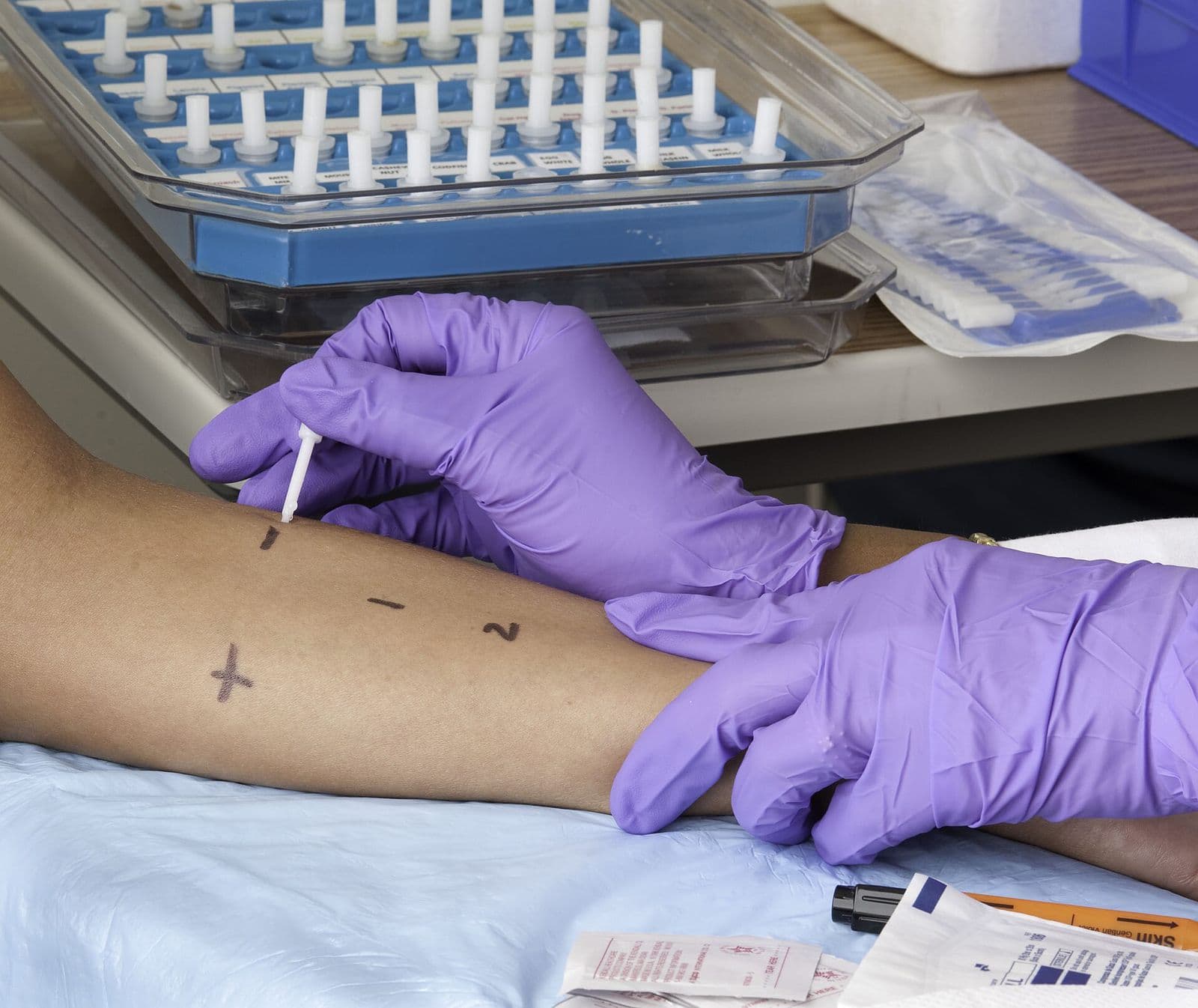
If you get a rash plus sneezing, congestion or itchy eyes around mold, allergy is more likely. An allergist can confirm it with skin or blood tests. See our mold allergy guide for testing and treatment.
Mold on skin rash: contact dermatitis
When skin reacts to something it touched, doctors call it contact dermatitis. MedlinePlus describes it as a condition where the skin becomes red, sore, or inflamed after direct contact with a substance. Its page covers contact dermatitis in general and doesn't single out mold, but it explains the two types that matter here:
| Type | What causes it | What it looks like |
|---|---|---|
| Irritant contact dermatitis | Not caused by an allergy, but rather the skin's reaction to irritating substances or friction; the most common type | Dry, red, and rough skin |
| Allergic contact dermatitis | An allergic reaction to something the skin touched | Itching that can be severe; reactions usually appear 24 to 48 hours after exposure |
Table: two types of contact dermatitis, from MedlinePlus.
A detail many people miss: irritant dermatitis comes from irritating substances in general, so the cleaners you use on mold can be the cause rather than the mold itself. That's another reason to wear gloves. Our vinegar vs bleach guide covers safer handling.
What to do for a rash
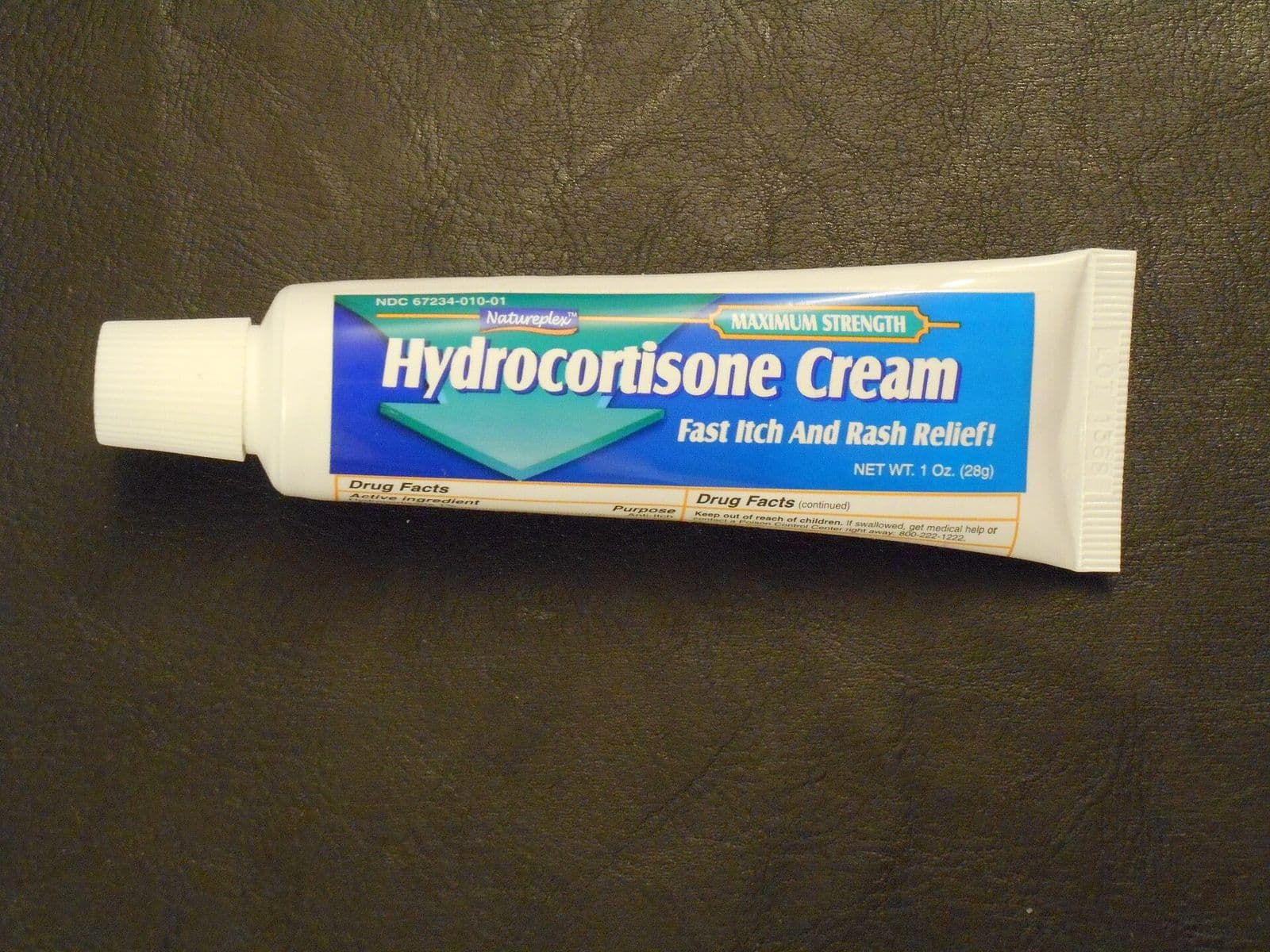
For contact dermatitis in general, MedlinePlus says treatment includes washing the area with a lot of water, and providers commonly prescribe topical corticosteroids. It advises against using those creams for long periods without guidance. Stop touching the moldy item, wash your skin and clothes, and see a provider if the rash doesn't improve.
Rashes that look like "mold" but aren't
Some itchy, scaly rashes really are fungal, just not from household mold.
Ringworm is the big one. The CDC says it's a common fungal infection of the scalp, skin, or nails that causes an itchy, scaly, often ring-shaped rash. It's caused by fungi such as Trichophyton, and it spreads through skin-to-skin contact with infected people or animals, shared towels and bedsheets, and surfaces like locker room floors. It doesn't come from mold on your walls, and it needs different treatment.
Fungal skin infections in very ill people. Rarely, molds like Aspergillus cause skin infections in people with severely weakened immune systems. MedlinePlus lists skin sores among possible symptoms of aspergillosis forms beyond the lungs, and the CDC notes occasional outbreaks of skin aspergillosis linked to contaminated medical devices. This is not a risk for healthy people touching household mold.
This is why a doctor should look at a persistent rash. A fungal infection, an allergy and an irritant reaction look similar but are treated very differently.
How to protect your skin around mold
Prevention is simple:
- Don't touch mold bare-handed. The EPA says avoid touching mold or moldy items with your bare hands.
- Wear long gloves. The EPA recommends long gloves that extend to the middle of the forearm. The CDC suggests non-latex, vinyl, nitrile, or rubber gloves.
- Protect eyes and lungs too. The CDC recommends at least a NIOSH Approved N95 respirator and goggles for cleanup.
- Wash clothes and bedding exposed to mold. Our mold on clothes guide explains how.
If you have a mold allergy, the CDC advises that people with allergies not take part in cleanup.
When to see a doctor about a mold rash
See a doctor, dermatologist or allergist if:
- The rash is severe, or doesn't get better after treatment. MedlinePlus says to contact your provider in those cases, and for signs of infection such as fever or increasing tenderness, redness or warmth.
- You also have breathing symptoms, like wheezing or a cough.
- The rash is ring-shaped or scaly, which may be a fungal infection like ringworm.
- You have a weakened immune system. MedlinePlus says to contact a provider right away if you have a weakened immune system and develop a fever.
Emergency care: If a rash comes with trouble breathing, Cleveland Clinic says to go to an emergency room right away if you have severe breathing problems.
A home mold test can't diagnose a rash. The CDC does not recommend mold testing to judge health effects. Tell your doctor about the mold at home so they have the full picture. For a broader look at mold and health, see mold exposure and black mold symptoms.
Removing the mold
Whatever's causing your rash, mold at home should go. The CDC says if you see or smell mold, you should remove it. In Texas, TDLR says areas of visible mold of less than 25 contiguous square feet can be cleaned up by people who are not licensed.
For larger or hidden mold, hire a licensed mold testing company to find it and plan the cleanup, and a separate licensed mold removal company to remove it. Texas law says a license holder may not perform both mold assessment and mold remediation on the same project. Find licensed companies in Houston, Austin, El Paso or Lubbock, or browse the Texas directory. Verify any license with our license check tool.
FAQ
Can mold cause a skin rash?
Yes, for some people. The CDC lists skin rash among mold's possible effects, and the EPA says mold can irritate skin and cause allergic reactions in sensitive people. Evidence on skin effects is weaker than for breathing symptoms.
What does a mold rash look like?
There's no single "mold rash" look. Irritant reactions tend to be dry, red, and rough, and allergic contact reactions are often very itchy and show up a day or two after contact. A ring-shaped, scaly rash is more likely ringworm, which isn't caused by household mold.
Is a mold allergy rash the same as hives?
Not usually. The AAAAI position paper said airborne mold is not recognized as a cause of urticaria (hives). Cleveland Clinic lists a rash as a minor mold allergy symptom. A doctor can work out what's causing yours.
How do you treat a rash from mold on skin?
Stop the contact and wash the skin well. MedlinePlus says contact dermatitis treatment includes washing the area with a lot of water, and providers often prescribe a steroid cream. See a provider if it's severe or doesn't improve.
Can a mold test tell me if my rash is from mold?
No. A home test measures mold in the building, not your skin's reaction. The CDC does not recommend mold testing for health decisions. A doctor diagnoses the rash.
Licensed Mold Pros directory
Find a licensed mold removal company
Removal companies hold a Texas mold remediation license. They remove the mold to a plan written by a separate, licensed testing company.
Sources
- CDC: Mold (updated Sept 26, 2024)
- CDC: Mold Clean Up Guidelines and Recommendations (updated Feb 16, 2024)
- CDC: About Ringworm (updated Feb 9, 2026)
- CDC: Clinical Overview of Aspergillosis (updated Oct 5, 2026)
- EPA: A Brief Guide to Mold, Moisture and Your Home (updated Feb 18, 2026)
- NIH/NIEHS: Mold (last reviewed Mar 6, 2026)
- NIH/MedlinePlus: Contact dermatitis (reviewed Aug 2, 2025)
- NIH/MedlinePlus: Aspergillosis (reviewed May 12, 2025)
- Massachusetts Department of Public Health, archived by CDC: bulletin summarizing the IOM report Damp Indoor Spaces and Health (Oct 2004)
- AAAAI Position Paper: The medical effects of mold exposure (Bush, Portnoy, Saxon, Terr, Wood), J Allergy Clin Immunol 2006;117:326-33 (Feb 2006)
- AAAAI: Mold Allergy (July 8, 2026)
- ACAAI: Mold Allergies (reviewed Apr 23, 2018)
- Cleveland Clinic: Mold Allergy (updated Aug 7, 2025)
- TDLR: Mold Assessors and Remediators Frequently Asked Questions (accessed Oct 2026)
- Texas Occupations Code § 1958.155 (accessed Oct 2026)
We link every number, rule and health claim to its source. See our editorial policy.